Common myths about AI
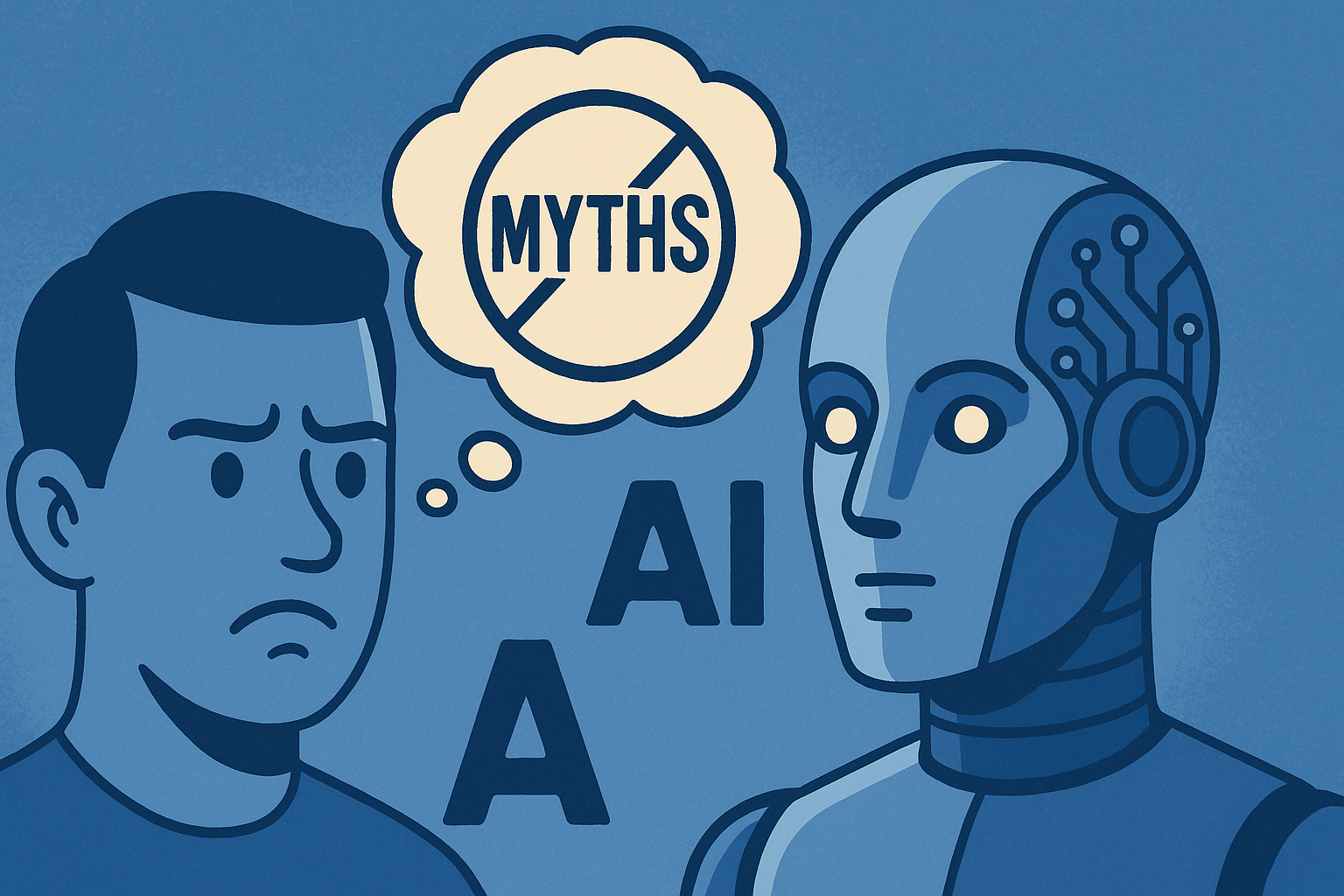
As Artificial Intelligence (AI) becomes more prevalent, misconceptions about its capabilities, risks, and future continue to spread. Disentangling fact from fiction is essential for a realistic understanding of AI’s role in society.
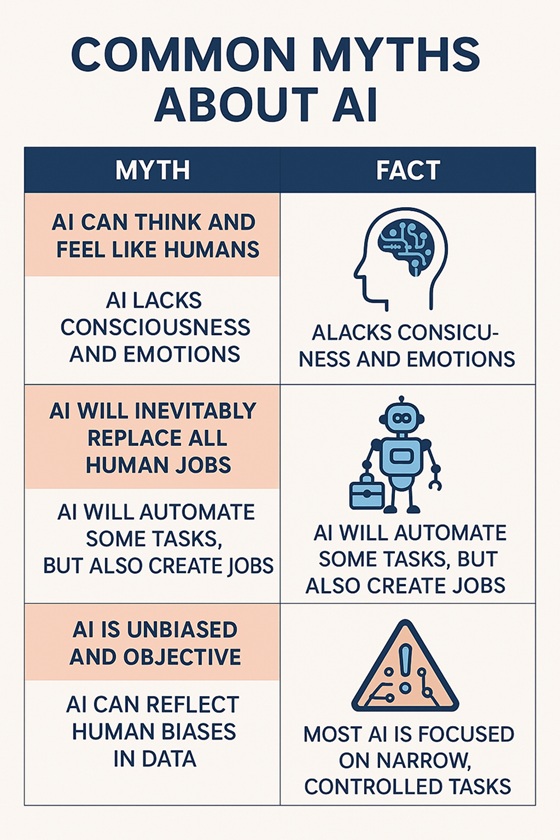
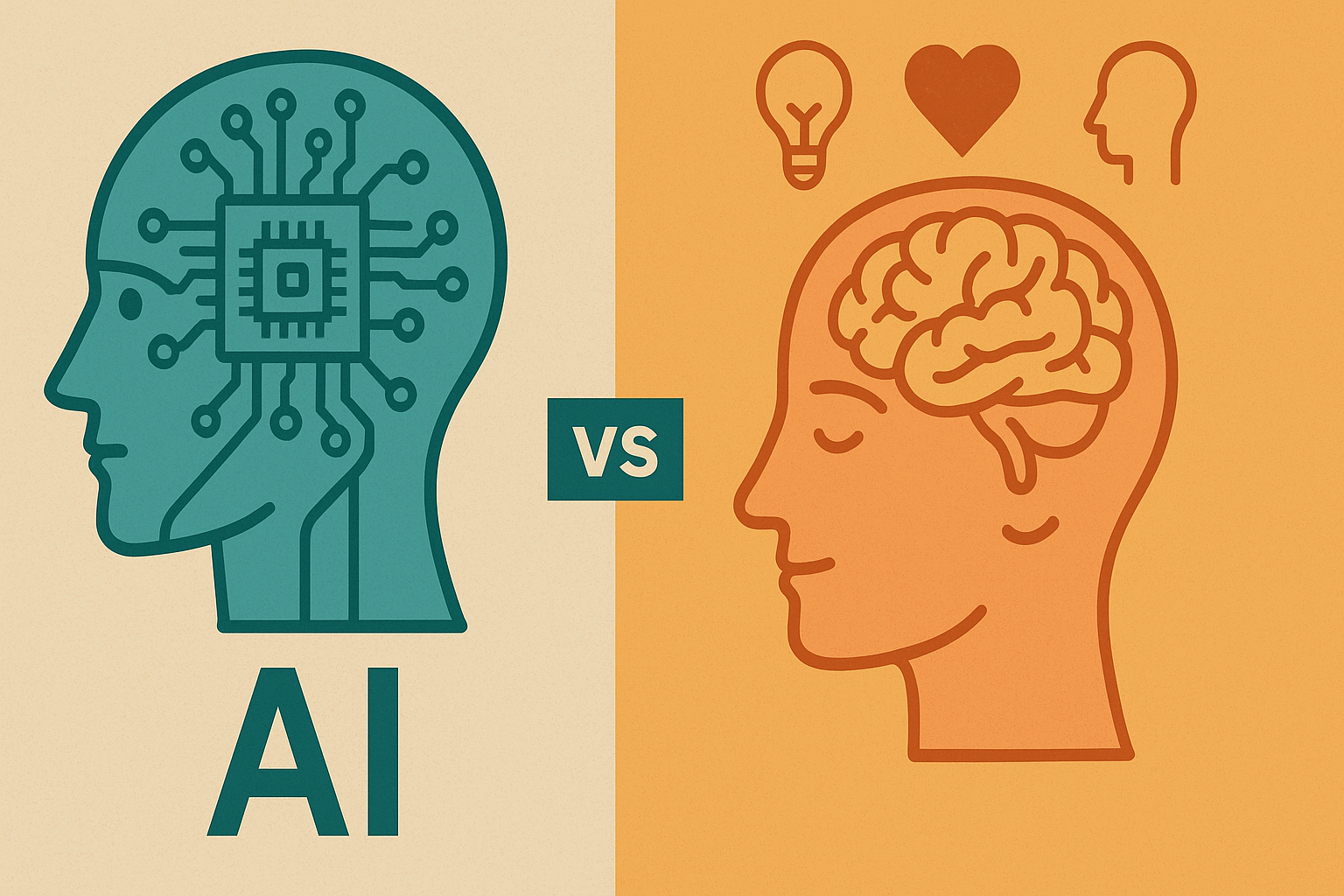
One of the most persistent myths is that AI can think and feel like humans. In reality, today’s AI systems, including advanced language models, do not possess consciousness, emotions, or genuine understanding. They operate by recognizing patterns and optimizing outputs based on data, not by forming thoughts or intentions.
Another common myth is that AI will inevitably replace all human jobs. While AI will automate certain tasks, particularly those that are repetitive and rules-based, it will also create new types of jobs that demand creativity, emotional intelligence, critical thinking, and AI oversight. The future workforce will be reshaped, not eradicated, by AI.
Many believe that AI is inherently unbiased and objective. However, AI systems learn from historical data, which often contains human biases. Without careful design, testing, and monitoring, AI can replicate and even amplify these biases, leading to unfair or discriminatory outcomes. Recognizing and addressing bias is a major challenge in AI ethics.
Another misconception is that all AI is dangerous or uncontrollable. While there are legitimate concerns about powerful AI systems, especially as research moves toward Artificial General Intelligence (AGI), most of today’s AI operates within narrow, heavily regulated domains. Fear-based narratives often exaggerate current capabilities and obscure more pressing issues like data privacy, accountability, and misuse of existing AI tools.
Finally, a popular myth is that AI development is solely in the hands of a few tech giants. Although major companies have significant influence, AI innovation is also being driven by universities, open-source communities, startups, and cross-disciplinary collaborations worldwide. The future of AI is not monolithic; it is diverse and increasingly decentralized.
In summary, demystifying AI requires a careful, evidence-based understanding of what AI can and cannot do. Dispelling these myths is crucial to fostering responsible development, informed policymaking, and constructive public discourse about the technology shaping our future.