Strong AI vs Weak AI: What’s the difference
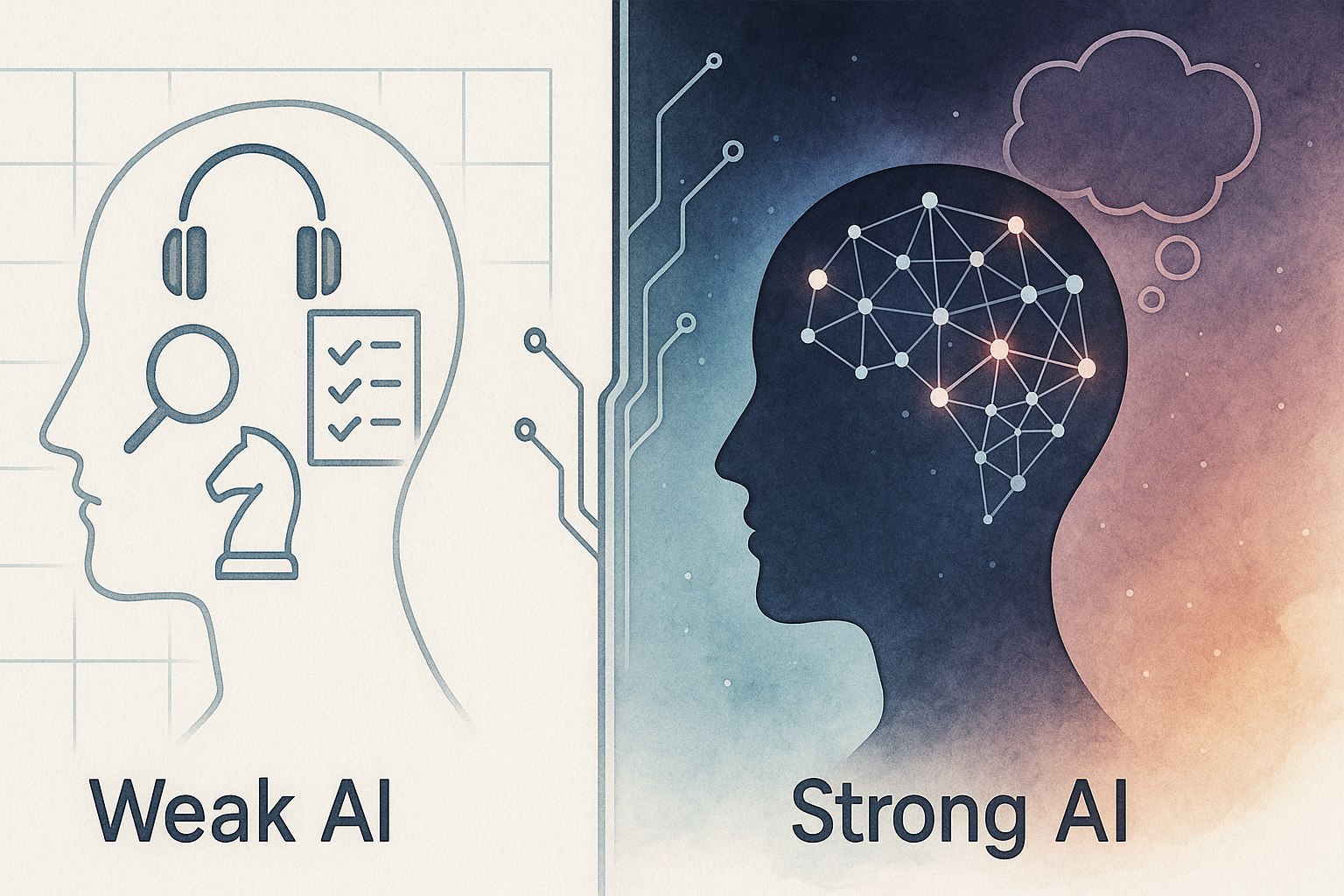
One of the foundational distinctions in the study and development of Artificial Intelligence is between Strong AI and Weak AI—a conceptual divide that speaks not only to technological capability but to philosophical ambition and cognitive modeling.
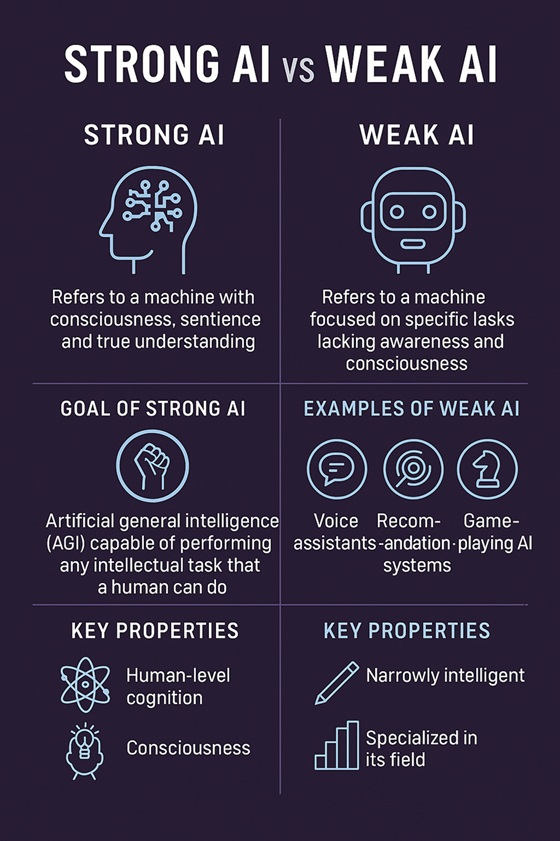
Weak AI, also known as Narrow AI, refers to systems that are designed and trained to perform specific tasks. These systems operate under well-defined constraints and do not possess consciousness, self-awareness, or genuine understanding. Virtually all AI in existence today—including voice assistants like Siri and Alexa, recommendation engines, image classifiers, and large language models like ChatGPT—falls into this category. These systems can process language, recognize images, detect fraud, and play strategic games at superhuman levels, but they do so without any underlying comprehension. They are functionally intelligent, but not mentally so.
In contrast, Strong AI, sometimes referred to as Artificial General Intelligence (AGI), is a hypothetical form of AI that would exhibit human-level cognitive capabilities. A Strong AI system would not only perform tasks across multiple domains but would also possess an independent mind capable of learning, reasoning, understanding emotions, forming beliefs, and exercising autonomous decision-making across novel situations—akin to a human being. It would demonstrate consciousness, self-awareness, and the ability to reflect on its own thoughts, something no existing AI system can do.
The implications of achieving Strong AI are profound—touching on ethics, law, security, and philosophy. If machines could genuinely think and feel, it would challenge our understanding of personhood, rights, and societal roles. However, despite dramatic advances in machine learning and neural networks, Strong AI remains theoretical. There is no known architecture today that convincingly replicates or simulates human-level general intelligence.
In summary, Weak AI is task-specific and utilitarian, while Strong AI is aspirational and human-like. Understanding the difference is essential—not just for researchers, but for policymakers and the public—so that expectations, responsibilities, and risks are aligned with technological realities.