Why AI matters for the future
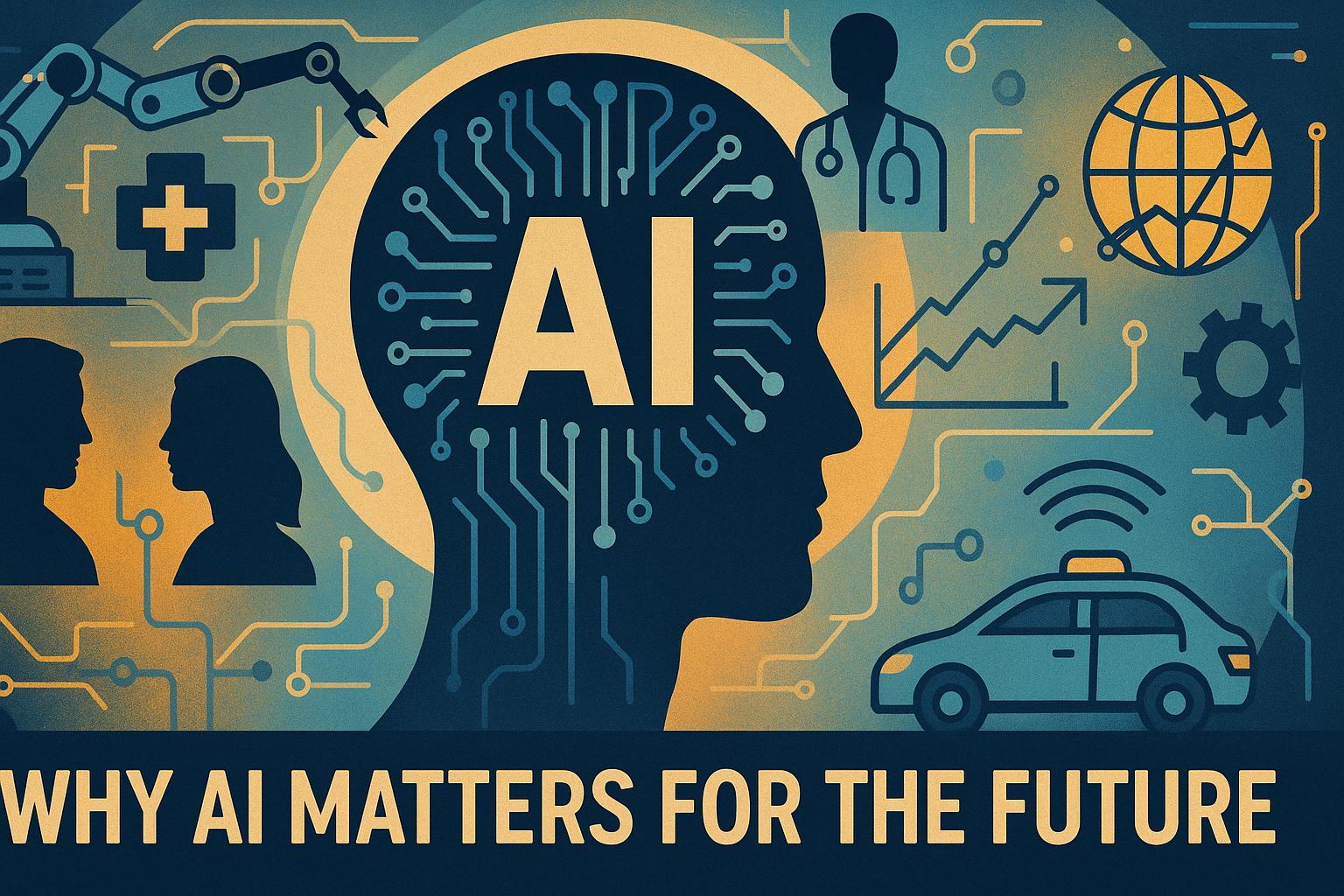
Why AI matters for the future
Artificial Intelligence (AI) is no longer a distant vision of science fiction; it is an active force reshaping industries, economies, and societies. As AI technologies advance, their significance for the future cannot be overstated. AI is poised to influence almost every aspect of human life—making its responsible development and deployment a defining challenge and opportunity of the 21st century.
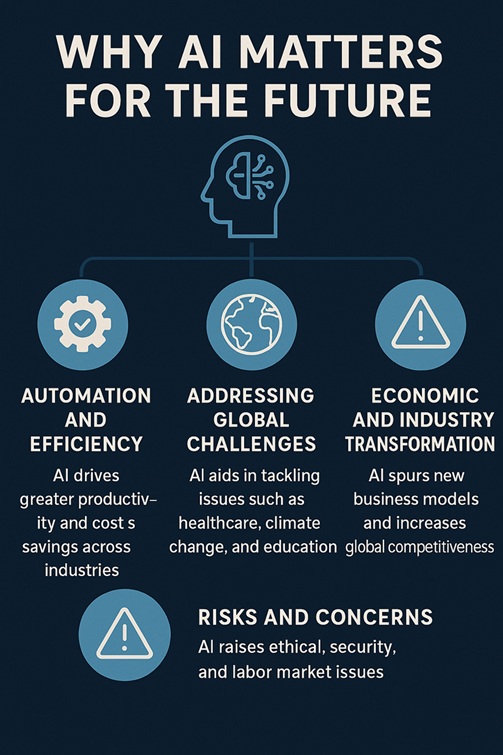
First, AI drives unprecedented levels of automation and efficiency across sectors. From manufacturing and logistics to healthcare and finance, AI optimizes operations, reduces human error, and enables scalability. Machine learning models can analyze vast datasets far beyond human capacity, offering actionable insights, predictive analytics, and faster decision-making, which are crucial for innovation and competitiveness.
Second, AI holds the potential to address some of humanity’s grandest challenges. In medicine, AI algorithms are accelerating drug discovery, improving diagnostics, and personalizing treatment plans. In environmental science, AI models help predict climate patterns, optimize energy consumption, and enable smarter resource management. In education, AI tools are making personalized learning accessible to millions worldwide, bridging gaps in knowledge and opportunity.
Moreover, AI is catalyzing entirely new industries and economic paradigms. The proliferation of AI-driven platforms is fostering new forms of employment, entrepreneurship, and creativity, from virtual reality applications to precision agriculture and autonomous transportation.
However, the transformative power of AI also brings significant risks. Issues such as algorithmic bias, data privacy, job displacement, security vulnerabilities, and the potential for autonomous weapons require urgent, thoughtful governance. The future impact of AI will heavily depend on how societies navigate the balance between innovation and ethical responsibility.
Another critical aspect is global competitiveness. Nations leading in AI research, development, and deployment will shape future economic and geopolitical power structures. Investment in AI education, infrastructure, and regulatory frameworks is increasingly seen as a national priority worldwide.
In conclusion, AI matters for the future because it represents both an engine for unprecedented progress and a profound societal test. Embracing AI’s possibilities while mitigating its dangers will determine whether AI becomes a tool for empowerment—or a source of division and disruption.