Physical AI has arrived, and here’s all you need to know
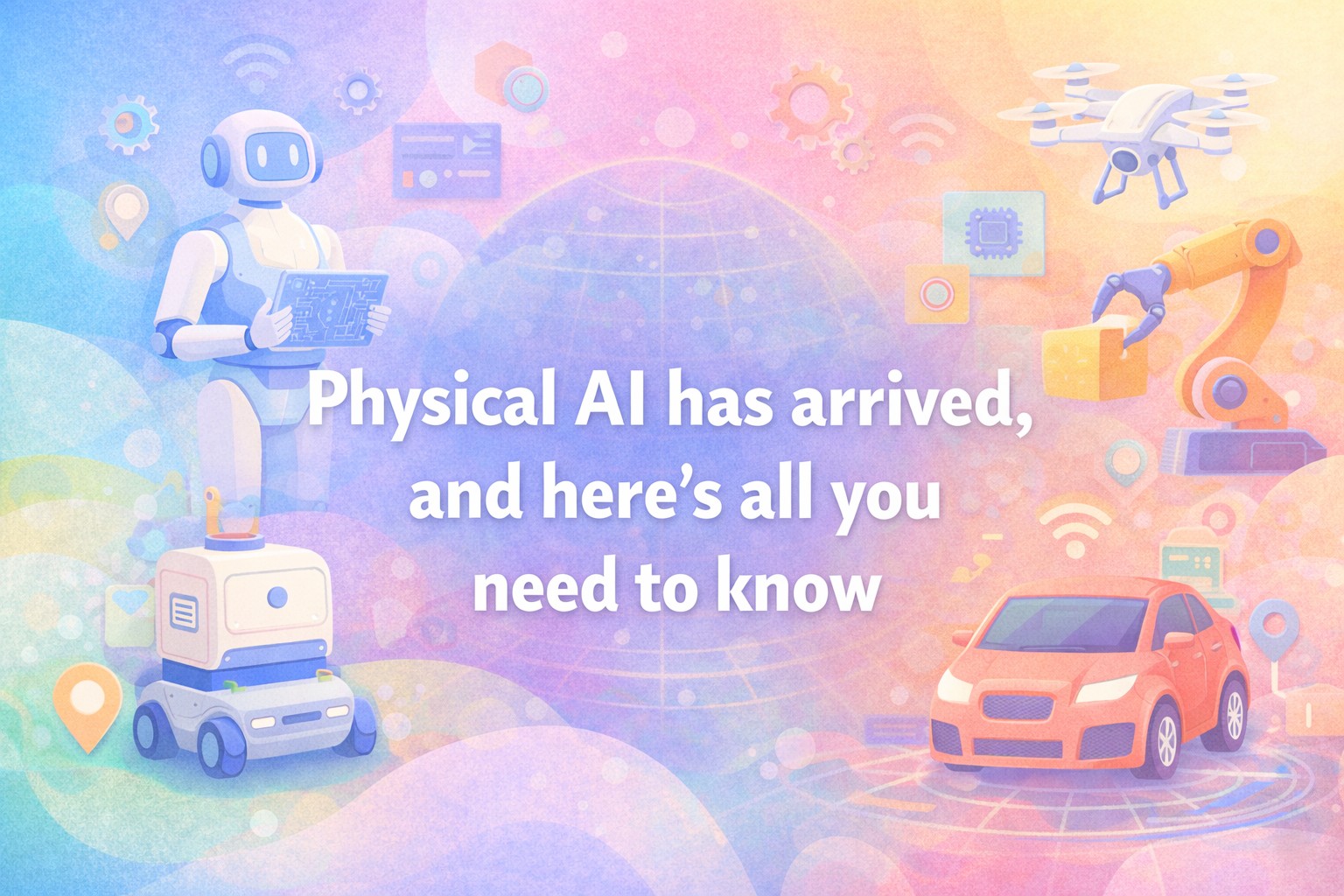
Physical AI has arrived, and here’s all you need to know
1. Introduction
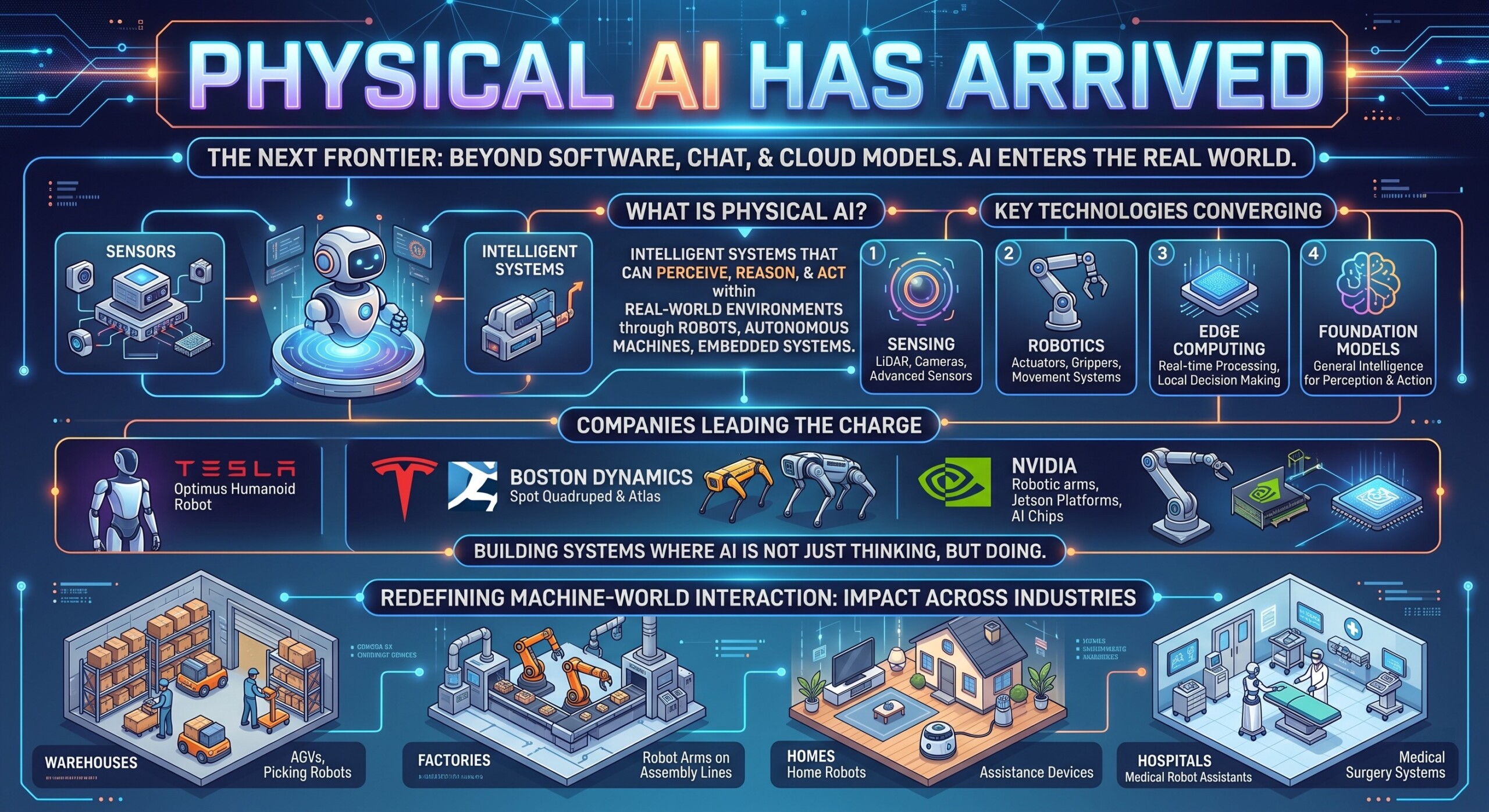
The next frontier of Artificial Intelligence is no longer confined to software, chat interfaces, or cloud-based models. It is now entering the physical world. Physical AI refers to intelligent systems that can perceive, reason, and act within real-world environments through robots, autonomous machines, and embedded systems.
Advances in sensing, robotics, edge computing, and foundation models are converging to make this possible. Companies like Tesla, Boston Dynamics, and NVIDIA are actively building systems where AI is not just thinking, but doing. From warehouses and factories to homes and hospitals, Physical AI is redefining how machines interact with the world.
Ready to dive into this new world of application-oriented AI? Read on!
2. Fifteen points on India’s SLM strategy
What is Physical AI
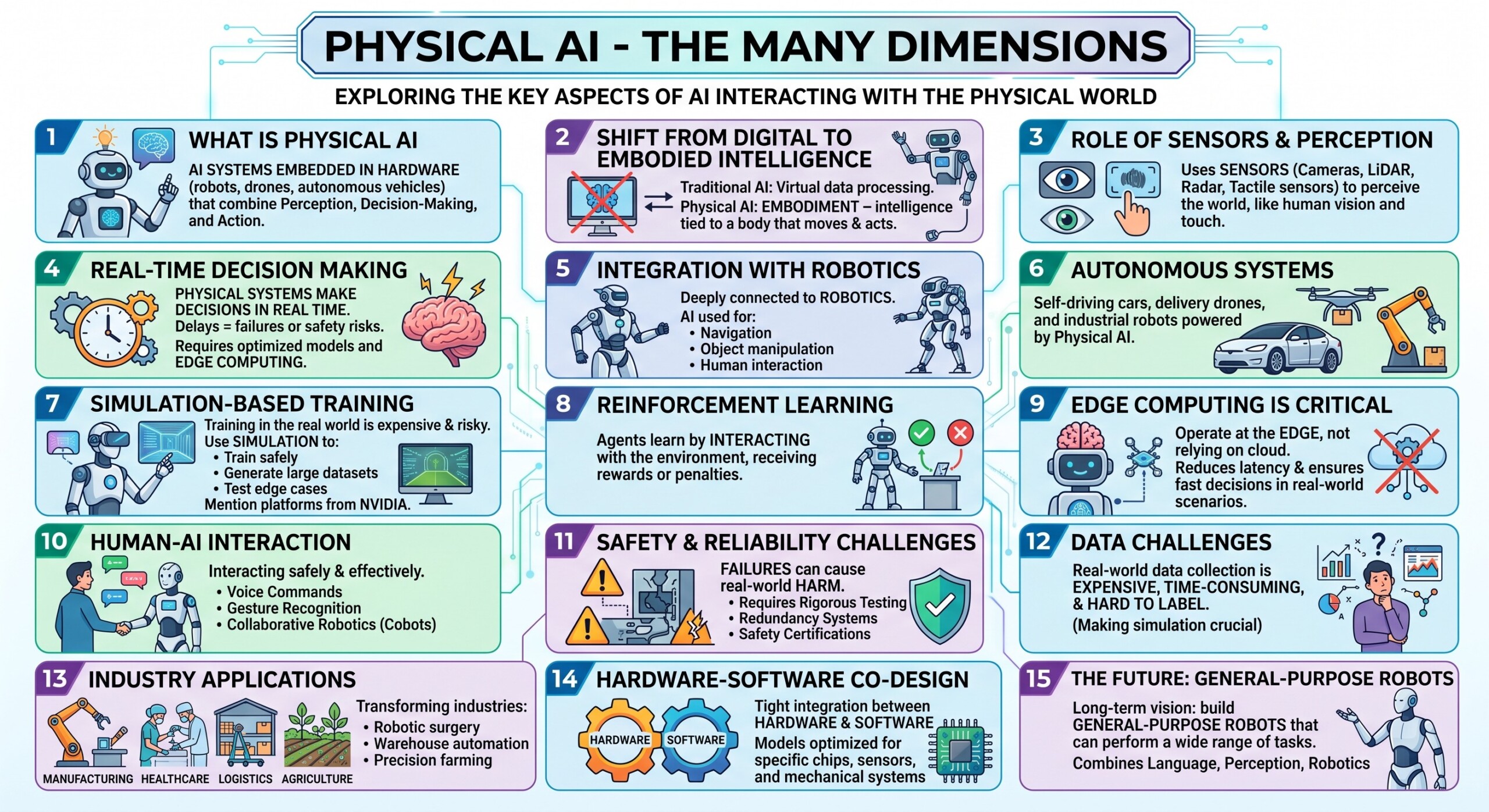
Physical AI refers to AI systems embedded in hardware that can interact with the physical environment. This includes robots, drones, autonomous vehicles, and smart machines that combine perception, decision-making, and action.
The Shift from Digital to Embodied Intelligence
Traditional AI processes data in virtual environments. Physical AI introduces embodiment, meaning intelligence is tied to a body that can move and act. This fundamentally changes how models are trained and evaluated.
Role of Sensors and Perception
Physical AI relies heavily on sensors such as:
- Cameras
- LiDAR
- Radar
- Tactile sensors
These enable machines to perceive the world, similar to human vision and touch.
Real-Time Decision Making
Unlike cloud-based AI, physical systems must make decisions in real time. Delays can lead to failure or safety risks. This requires highly optimized models and edge computing.
Integration with Robotics
Physical AI is deeply connected to robotics. Modern robots use AI for:
- Navigation
- Object manipulation
- Human interaction
Companies like Boston Dynamics showcase advanced mobility and control systems.
Autonomous Systems
Self-driving cars, delivery drones, and industrial robots are examples of autonomous systems powered by Physical AI. Tesla is a major player in autonomous driving technology.
Simulation-Based Training
Training physical systems in the real world is expensive and risky. Therefore, simulation environments are used to:
- Train models safely
- Generate large datasets
- Test edge cases
Platforms from NVIDIA are widely used for simulation.
Reinforcement Learning in Physical AI
Physical AI often uses Reinforcement Learning, where agents learn by interacting with the environment and receiving rewards or penalties.
Edge Computing is Critical
Physical AI systems often operate at the edge rather than relying on cloud processing. This reduces latency and ensures faster decision-making in real-world scenarios.
Human-AI Interaction
Physical AI systems must interact safely and effectively with humans. This includes:
- Voice commands
- Gesture recognition
- Collaborative robotics (cobots)
Safety and Reliability Challenges
Unlike software AI, failures in Physical AI can cause real-world harm. This requires:
- Rigorous testing
- Redundancy systems
- Safety certifications
Data Challenges
Collecting real-world data is:
- Expensive
- Time-consuming
- Hard to label
This makes data efficiency and simulation even more important.
Industry Applications
Physical AI is transforming industries such as:
- Manufacturing
- Healthcare
- Logistics
- Agriculture
Examples include robotic surgery, warehouse automation, and precision farming.
Hardware-Software Co-Design
Physical AI requires tight integration between hardware and software. Models must be optimized for specific chips, sensors, and mechanical systems.
The Future: General-Purpose Robots
The long-term vision is to build general-purpose robots that can perform a wide range of tasks. These systems will combine advances in language models, perception, and robotics.
3. Conclusion
Physical AI marks a major evolution in the journey of artificial intelligence. It bridges the gap between digital intelligence and real-world action, enabling machines to operate in complex, dynamic environments.
As sensing, computation, and learning continue to advance, Physical AI will reshape industries and daily life. The challenge ahead lies not just in building smarter systems, but in ensuring they are safe, reliable, and aligned with human needs. The era of AI that acts, not just thinks, has truly begun.