Core Categories of AI Careers – Technical, Hybrid, and Non-Technical roles
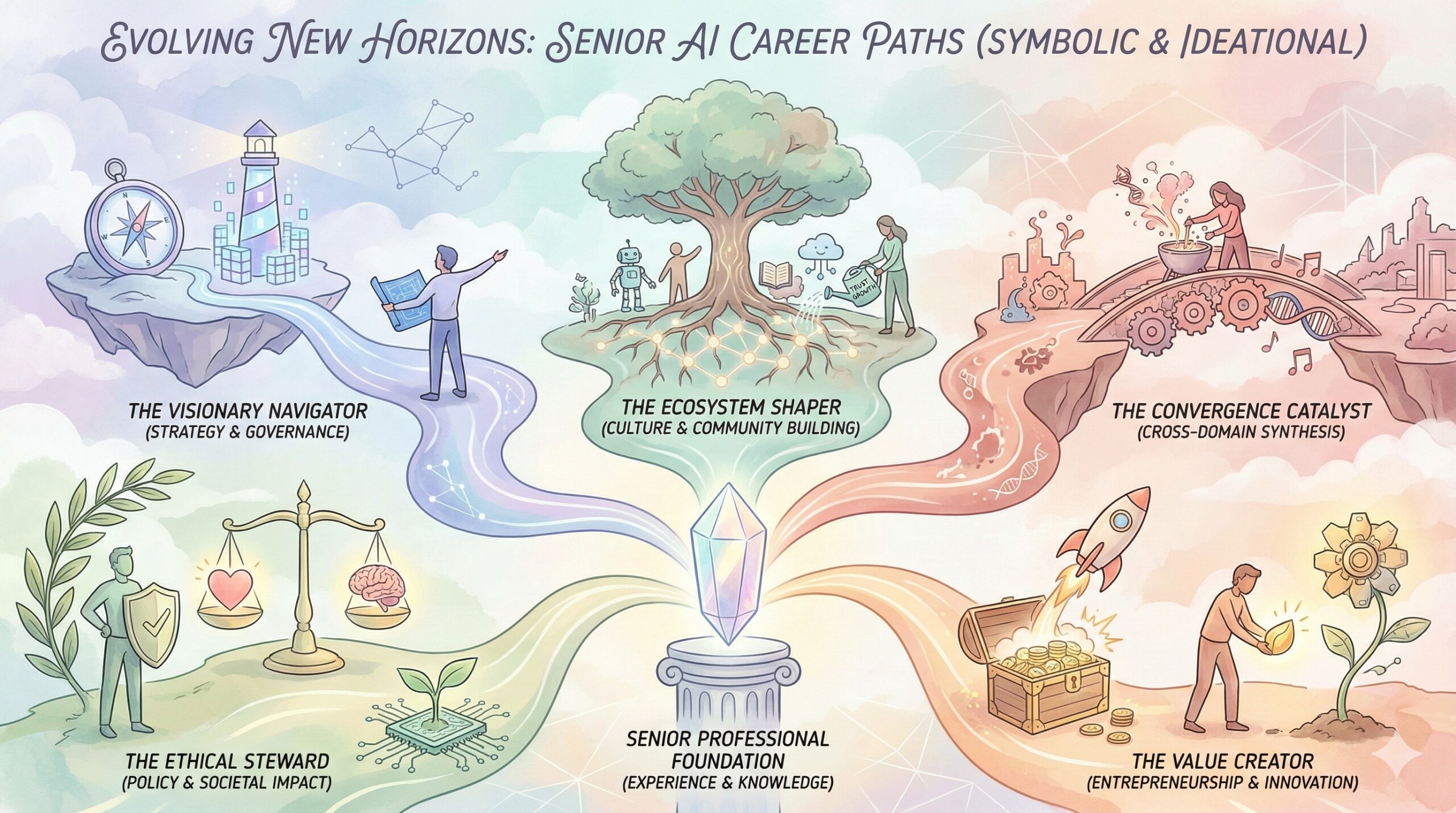
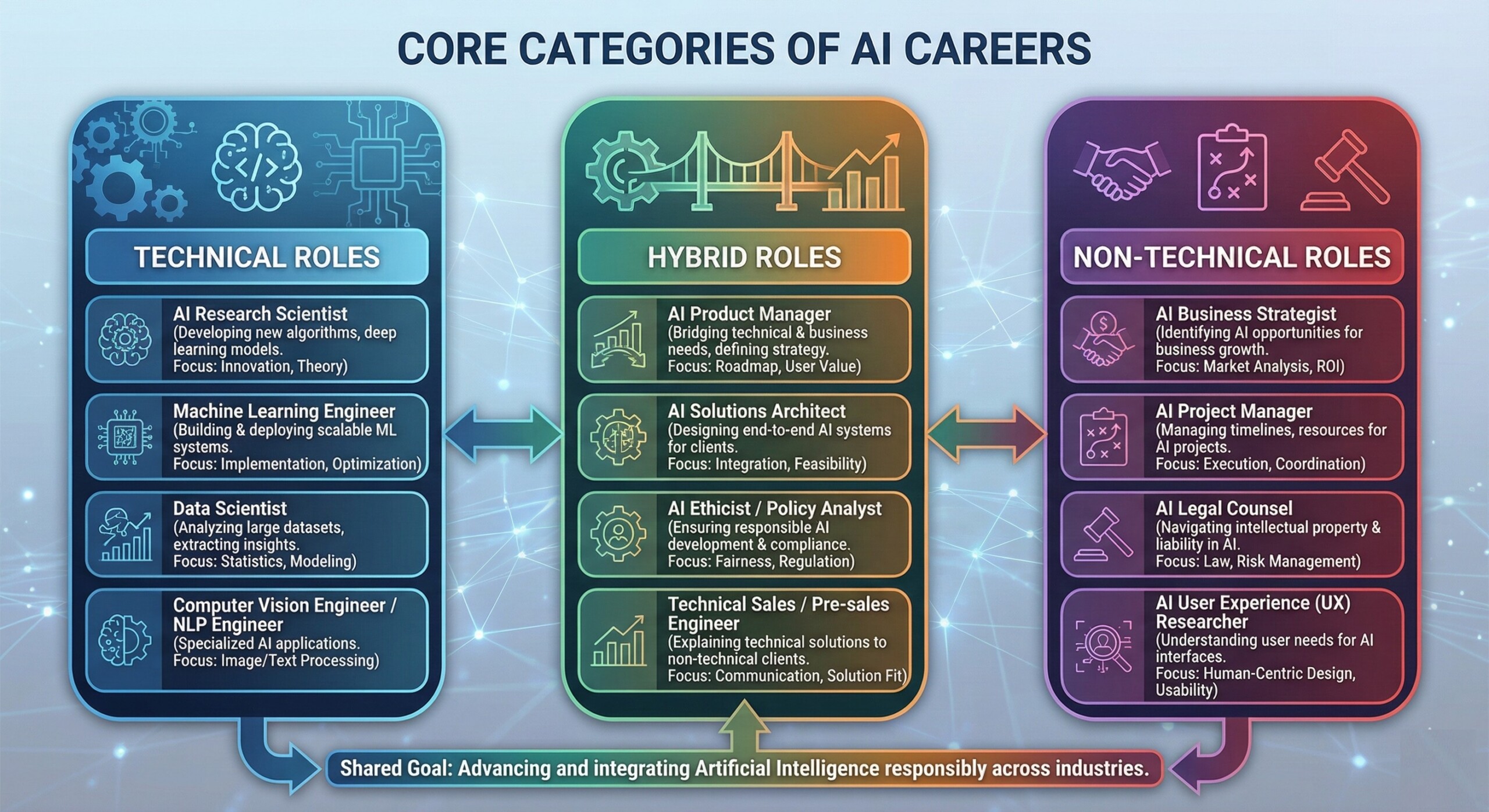
Artificial Intelligence careers in 2026 are no longer limited to programmers and data scientists. AI has become an enterprise-wide capability, shaping roles across technology, business, policy, design, education, and ethics. Organizations now look for diverse skill sets that combine human judgment with machine intelligence. This article outlines the core categories of AI careers that matter in 2026, grouped into technical, hybrid, and non-technical paths.
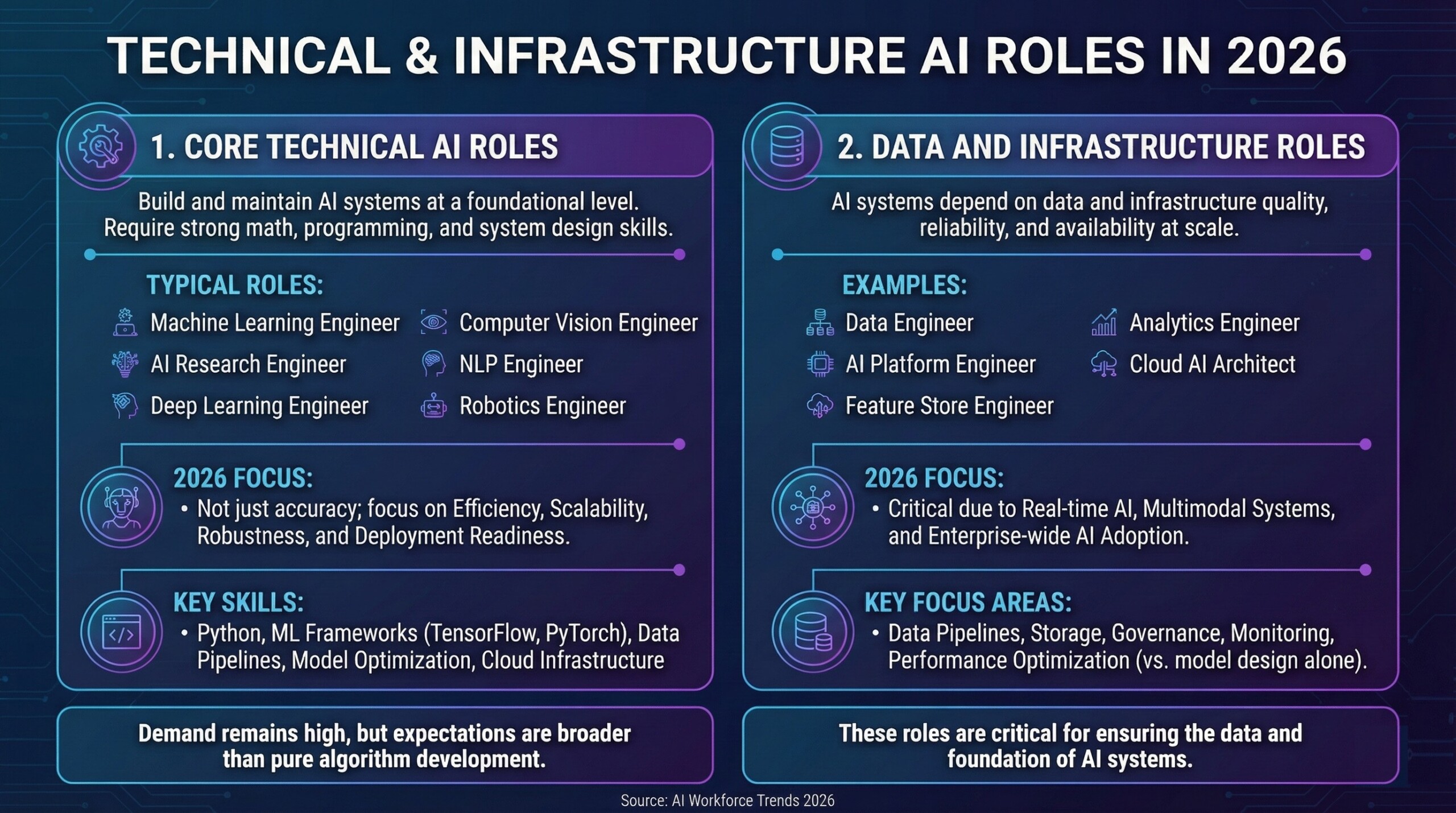
1. Core Technical AI roles
These roles build and maintain AI systems at a foundational level. They require strong mathematical, programming, and system design skills.
Typical roles include Machine Learning Engineer, AI Research Engineer, Deep Learning Engineer, Computer Vision Engineer, NLP Engineer, and Robotics Engineer. In 2026, these professionals focus not only on model accuracy but also on efficiency, scalability, robustness, and deployment readiness.
Key skills include Python, ML frameworks, data pipelines, model optimization, and cloud infrastructure. Demand remains high, but expectations are broader than pure algorithm development.
2. Data and Infrastructure roles
AI systems are only as strong as the data and infrastructure behind them. These roles ensure data quality, reliability, and availability at scale.
Examples include Data Engineer, Analytics Engineer, AI Platform Engineer, Feature Store Engineer, and Cloud AI Architect. In 2026, these roles are critical due to the rise of real-time AI, multimodal systems, and enterprise-wide AI adoption.
Professionals in this category work on data pipelines, storage, governance, monitoring, and performance optimization rather than model design alone. An excellent collection of learning videos awaits you on our Youtube channel
3. Applied AI and domain specialists
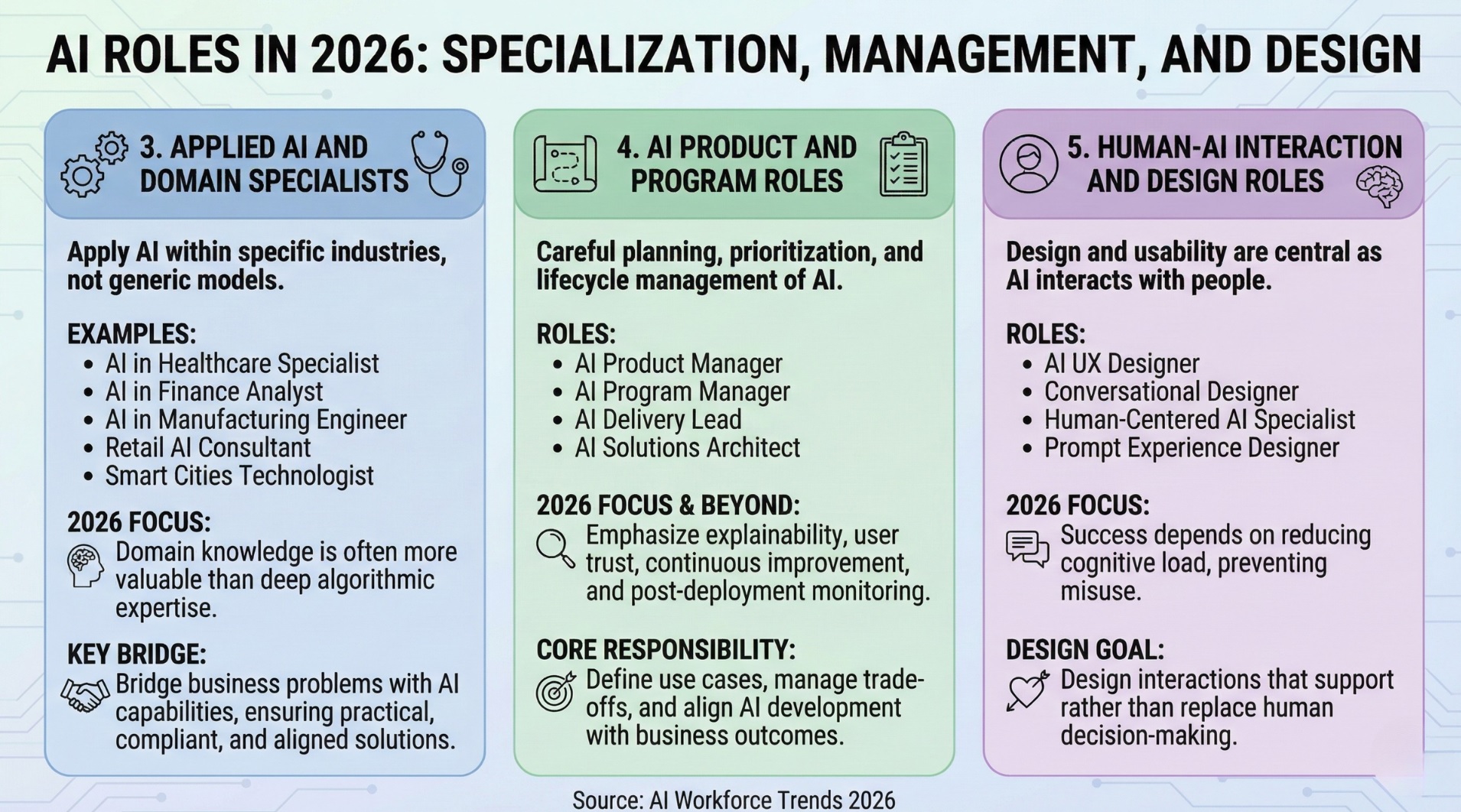
These professionals apply AI within specific industries rather than building generic models.
Roles include AI in Healthcare Specialist, AI in Finance Analyst, AI in Manufacturing Engineer, Retail AI Consultant, and Smart Cities Technologist. In 2026, domain knowledge is often more valuable than deep algorithmic expertise.
They bridge business problems with AI capabilities, ensuring solutions are practical, compliant, and aligned with industry realities.
4. AI Product and program roles
AI products require careful planning, prioritization, and lifecycle management.
Roles such as AI Product Manager, AI Program Manager, AI Delivery Lead, and AI Solutions Architect fall into this category. These professionals define use cases, manage trade-offs between performance and risk, and align AI development with business outcomes.
In 2026 and beyond, AI product roles emphasize explainability, user trust, continuous improvement, and post-deployment monitoring. A constantly updated Whatsapp channel awaits your participation.
5. Human-AI Interaction and Design Roles
As AI systems interact directly with people, design and usability have become central.
Roles include AI UX Designer, Conversational Designer, Human-Centered AI Specialist, and Prompt Experience Designer. These professionals ensure AI systems are understandable, usable, and aligned with human expectations.
In 2026, success depends on reducing cognitive load, preventing misuse, and designing interactions that support rather than replace human decision-making.
6. AI Operations and Lifecycle roles
AI systems do not stop at deployment. They require ongoing care.
MLOps Engineer, Model Monitoring Specialist, AI Reliability Engineer, and AI Operations Manager focus on performance drift, data changes, security, and system stability.
By 2026, organizations expect AI systems to behave like critical infrastructure, making operational excellence a major career path. Excellent individualised mentoring programmes available.
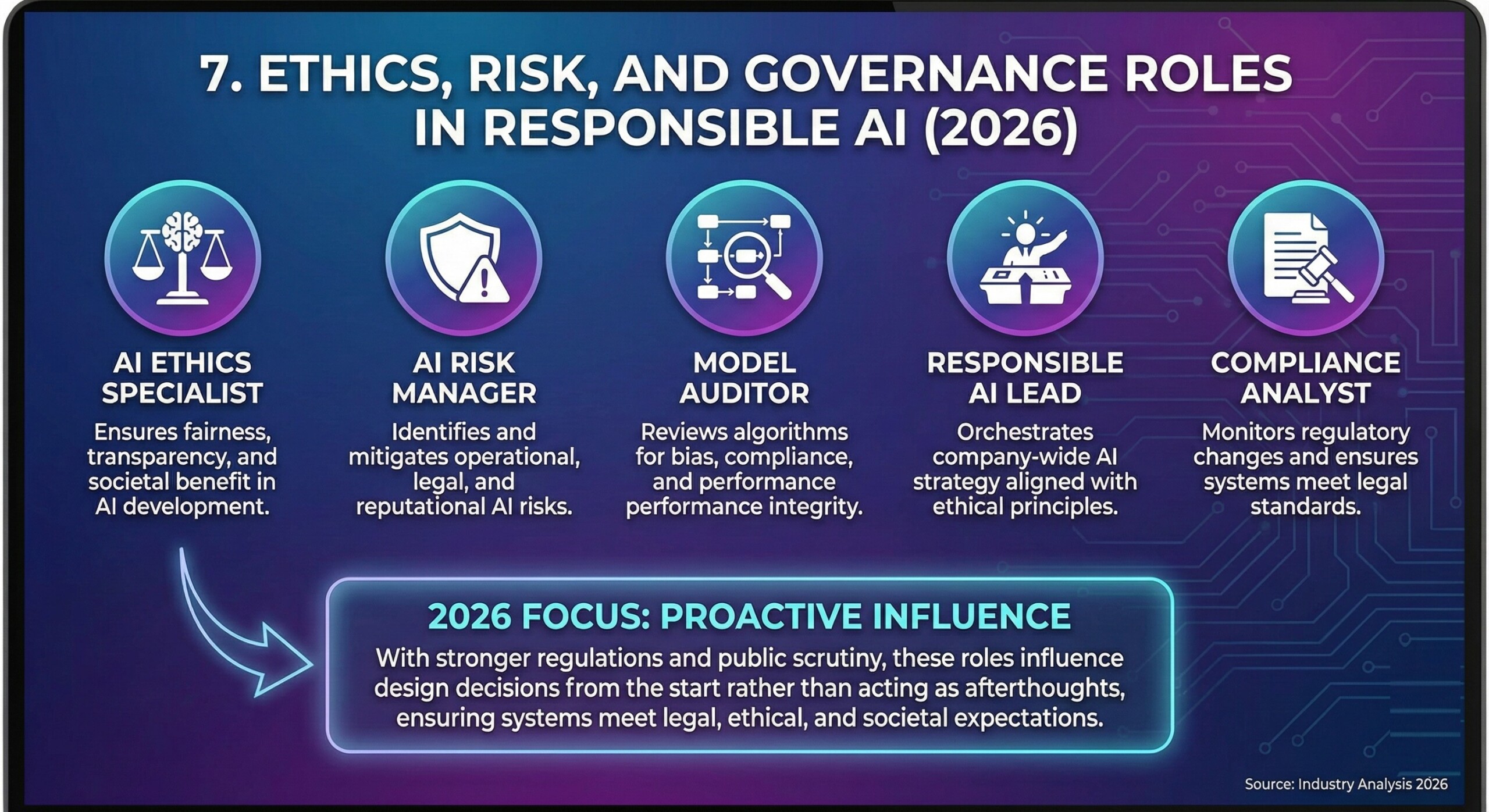
7. Ethics, Risk, and Governance roles
Responsible AI is no longer optional.
Roles such as AI Ethics Specialist, AI Risk Manager, Model Auditor, Responsible AI Lead, and Compliance Analyst ensure systems meet legal, ethical, and societal expectations.
In 2026, with stronger regulations and public scrutiny, these roles influence design decisions from the start rather than acting as afterthoughts.
8. Non-Technical Business and strategy roles
Many AI careers do not require coding at all.
Examples include AI Strategy Consultant, AI Business Analyst, AI Transformation Lead, AI Policy Advisor, and AI Investment Analyst. These professionals shape adoption strategies, evaluate ROI, and guide leadership decisions.
In 2026, organizations value people who can translate AI capabilities into business and societal impact. Subscribe to our free AI newsletter now.
9. Education, Enablement, and Communication roles
As AI spreads across society, education becomes critical.
Roles include AI Trainer, Corporate AI Educator, Curriculum Designer, AI Content Creator, and Internal AI Enablement Lead. These professionals help employees, students, and leaders understand and use AI responsibly.
By 2026, AI literacy is a core organizational requirement, creating sustained demand in this category.
10. Emerging Hybrid and future roles
The fastest-growing careers combine multiple disciplines.
Examples include Context Prompt Engineer, AI Systems Thinker, AI Safety Engineer, Human-in-the-Loop Designer, and AI Governance Technologist. These roles blend technical understanding with psychology, law, design, or systems thinking.
In 2026, adaptability matters more than rigid job titles. Careers evolve as AI capabilities and constraints change.
Closing thought from Billion Hopes
AI careers in 2026 are not about choosing between technical and non-technical paths. They are about positioning yourself where human judgment, domain insight, and AI capability intersect. Whether you build systems, guide strategy, manage risk, design experiences, or educate others, AI offers meaningful and long-term career opportunities across all backgrounds.
The future belongs to professionals who understand what AI can do, what it should do, and where humans must remain in control. Upgrade your AI-readiness with our masterclass.
Share this with the world
Related Articles