Creative & Media Careers Powered by AI
As generative AI reshapes writing, design, video, and storytelling workflows, creative and media industries are undergoing one of the fastest professional reorganizations in decades. From AI-assisted scriptwriting and concept art to automated video editing, localization, voice synthesis, and content personalization, intelligent tools are now embedded across the creative production pipeline. Creative work is no longer just about producing assets; it increasingly involves orchestrating human taste, narrative judgment, and machine generation.
Yet creativity is not a domain where AI can operate as a neutral productivity multiplier. Media shapes culture, public discourse, political narratives, and identity. This reality is creating a distinct and growing class of AI-powered creative careers focused not just on producing content faster, but on protecting originality, preserving creative intent, managing rights and attribution, and governing responsible use of generative systems. These roles sit at the intersection of art, storytelling, audience psychology, platform economics, copyright law, and AI governance.
1. Why creative & media AI careers are fundamentally different
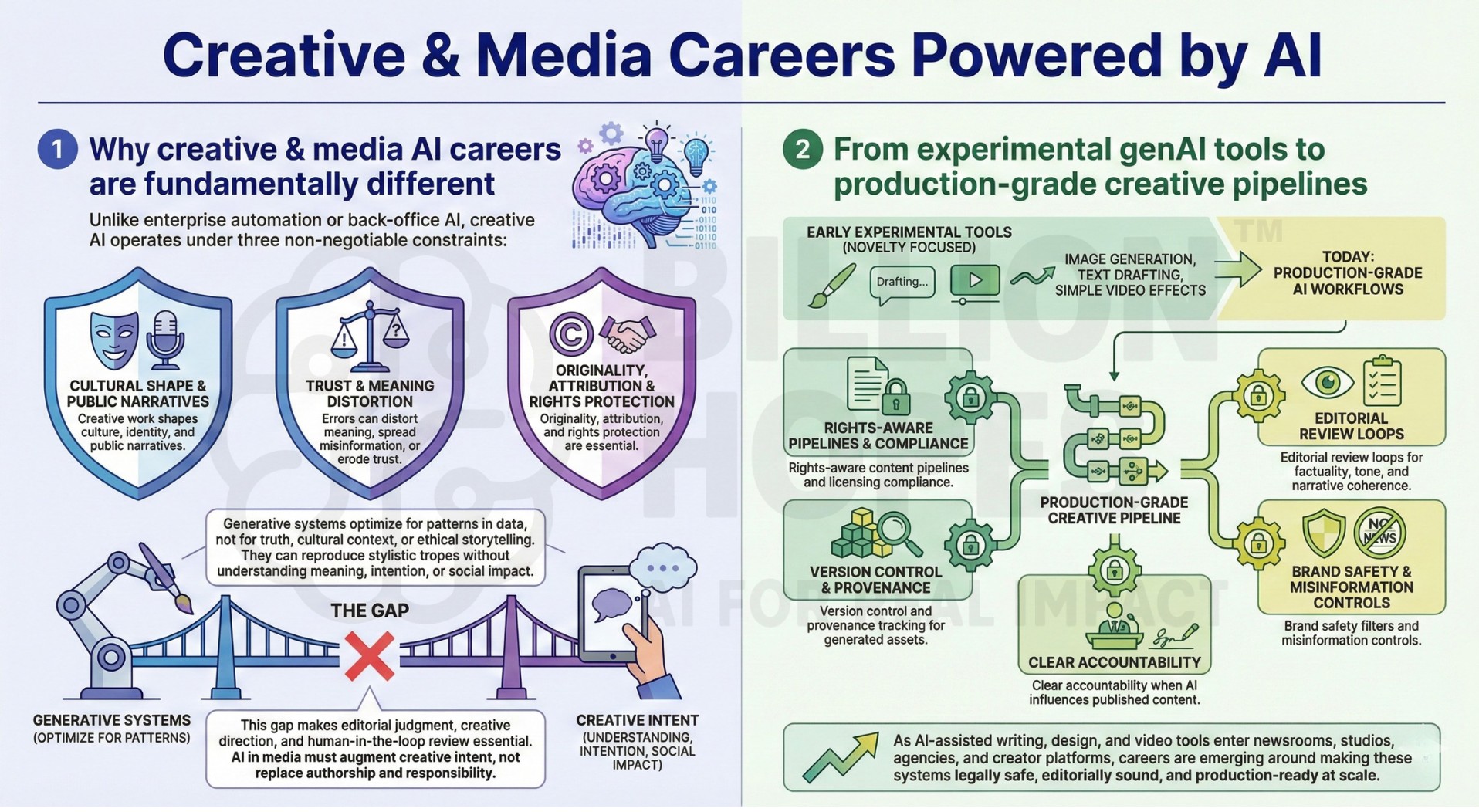
Unlike enterprise automation or back-office AI, creative AI operates under three non-negotiable constraints:
• Creative work shapes culture, identity, and public narratives
• Errors can distort meaning, spread misinformation, or erode trust
• Originality, attribution, and rights protection are essential
Generative systems optimize for patterns in data, not for truth, cultural context, or ethical storytelling. They can reproduce stylistic tropes without understanding meaning, intention, or social impact. This gap makes editorial judgment, creative direction, and human-in-the-loop review essential. AI in media must augment creative intent, not replace authorship and responsibility.
2. From experimental genAI tools to production-grade creative pipelines
Early creative AI tools focused on novelty: image generation, text drafting, and simple video effects.
Today, media organizations are moving toward production-grade AI workflows, which require:
• Rights-aware content pipelines and licensing compliance
• Editorial review loops for factuality, tone, and narrative coherence
• Version control and provenance tracking for generated assets
• Brand safety filters and misinformation controls
• Clear accountability when AI influences published content
As AI-assisted writing, design, and video tools enter newsrooms, studios, agencies, and creator platforms, careers are emerging around making these systems legally safe, editorially sound, and production-ready at scale. An excellent collection of learning videos awaits you on our Youtube channel.
3. Core AI career paths in creative & media work
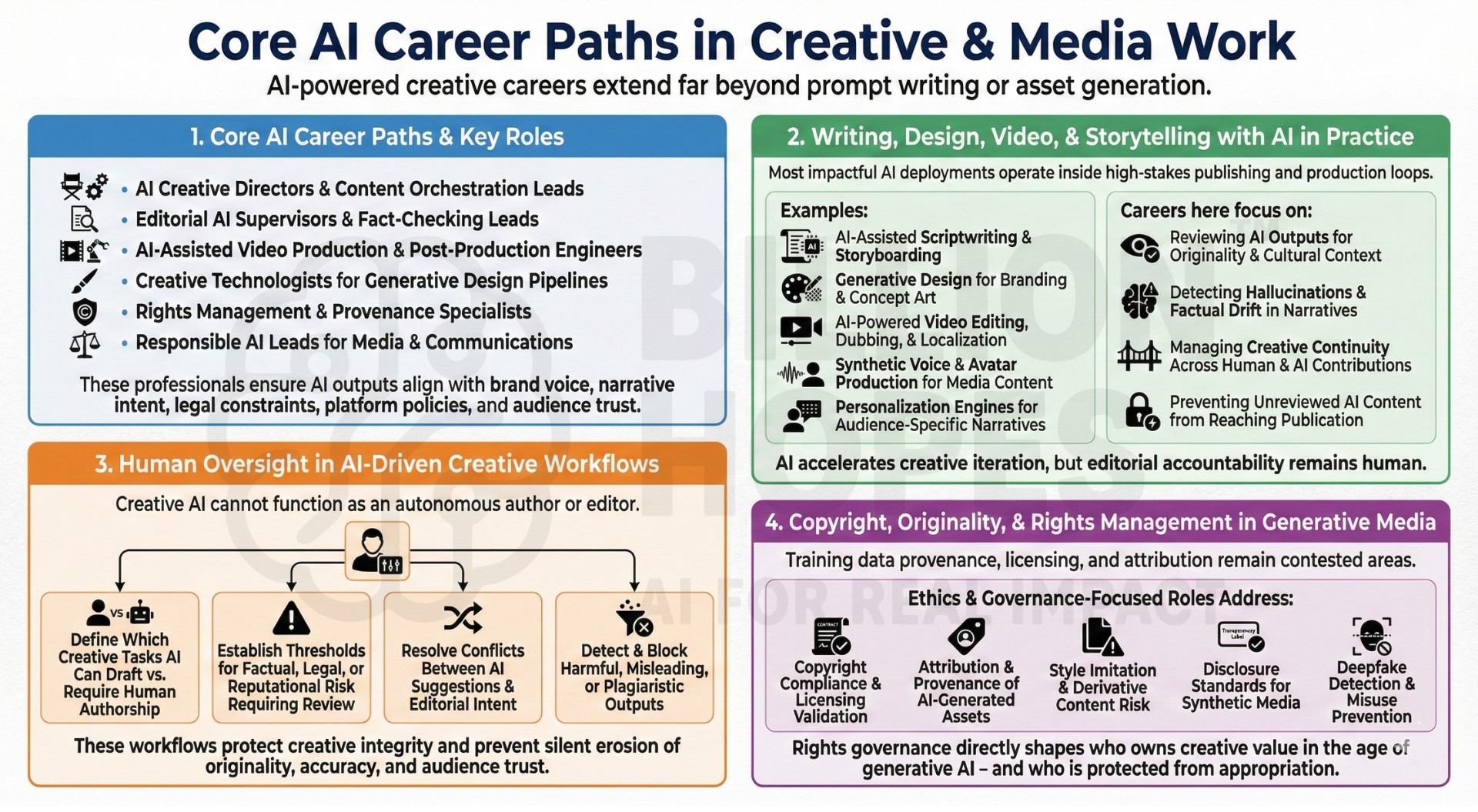
AI-powered creative careers extend far beyond prompt writing or asset generation.
Key roles include:
• AI creative directors and content orchestration leads
• Editorial AI supervisors and fact-checking leads
• AI-assisted video production and post-production engineers
• Creative technologists for generative design pipelines
• Rights management and provenance specialists
• Responsible AI leads for media and communications
These professionals ensure AI outputs align with brand voice, narrative intent, legal constraints, platform policies, and audience trust.
4. Writing, design, video, and storytelling with AI in practice
The most impactful AI deployments in creative workflows operate inside high-stakes publishing and production loops.
Examples include:
• AI-assisted scriptwriting and storyboarding
• Generative design for branding and concept art
• AI-powered video editing, dubbing, and localization
• Synthetic voice and avatar production for media content
• Personalization engines for audience-specific narratives
Careers here focus on:
• Reviewing AI outputs for originality and cultural context
• Detecting hallucinations and factual drift in narratives
• Managing creative continuity across human and AI contributions
• Preventing unreviewed AI content from reaching publication
AI accelerates creative iteration, but editorial accountability remains human. A constantly updated Whatsapp channel awaits your participation.
5. Human oversight in AI-driven creative workflows
Creative AI cannot function as an autonomous author or editor. Oversight professionals design workflows that define:
• Which creative tasks AI can draft versus which require human authorship
• Thresholds for factual, legal, or reputational risk requiring review
• How conflicts between AI suggestions and editorial intent are resolved
• How harmful, misleading, or plagiaristic outputs are detected and blocked
These workflows protect creative integrity and prevent silent erosion of originality, accuracy, and audience trust.
6. Copyright, originality, and rights management in generative media
Training data provenance, licensing, and attribution remain contested areas in generative media. Media organizations face legal and reputational risk if AI outputs infringe on protected works or obscure authorship.
Ethics and governance-focused roles address:
• Copyright compliance and licensing validation
• Attribution and provenance of AI-generated assets
• Style imitation and derivative content risk
• Disclosure standards for synthetic media
• Deepfake detection and misuse prevention
Rights governance directly shapes who owns creative value in the age of generative AI – and who is protected from appropriation.
Excellent individualised mentoring programmes available.
7. Skills that define creative & media AI professionals
AI careers in creative industries demand hybrid expertise:
• Narrative design, visual language, and storytelling craft
• Understanding model bias, hallucination risk, and stylistic drift
• Evaluating audience response, engagement metrics, and trust signals
• Navigating platform policies, brand safety rules, and copyright norms
• Communicating clearly between creatives, editors, legal teams, and engineers
Technical fluency matters – but so do taste, cultural judgment, and ethical responsibility.
8. Backgrounds and career transitions
Professionals entering creative AI roles often come from:
• Writing, journalism, film, design, and media production
• Creative direction and content strategy
• Digital marketing and audience growth teams
• Media law, IP management, and platform policy
• Creative technology and interactive media
Many transition after realizing that AI’s impact on culture depends more on editorial governance, rights management, and narrative integrity than on raw generative capability. Subscribe to our free AI newsletter now.
9. Tensions and limitations in AI-powered creative work
Creative AI careers face persistent trade-offs:
• Speed of production versus narrative depth
• Personalization versus shared cultural coherence
• Automation versus creative authorship
• Scale of content versus originality
• Engagement optimization versus truthfulness
Automation enables volume and experimentation, but excessive reliance risks flooding media ecosystems with low-signal content and eroding creative labour value. Personalization improves relevance, yet fragments shared narratives and complicates editorial accountability. Faster production cycles increase output velocity, but can weaken fact-checking, narrative coherence, and cultural sensitivity.
These roles require constant negotiation between efficiency, originality, public trust, and creative responsibility. Professionals in AI-powered media operate less like asset generators and more like stewards of cultural quality.
10. The future: Accountable AI in creative and media systems
The future of AI in creative industries is not autonomous content factories – it is accountable, supervised creativity embedded in editorial institutions and creator ecosystems. Media organizations are formalizing AI governance through disclosure policies, rights validation pipelines, watermarking and provenance standards, and human review gates for high-impact content.
As generative tools scale across writing, design, and video production, professionals who can bridge creative craft, technology, and governance will determine whether AI expands creative possibility – or quietly degrades originality, trust, and cultural quality.
Upgrade your AI-readiness with our masterclass.
Billion Hopes summary
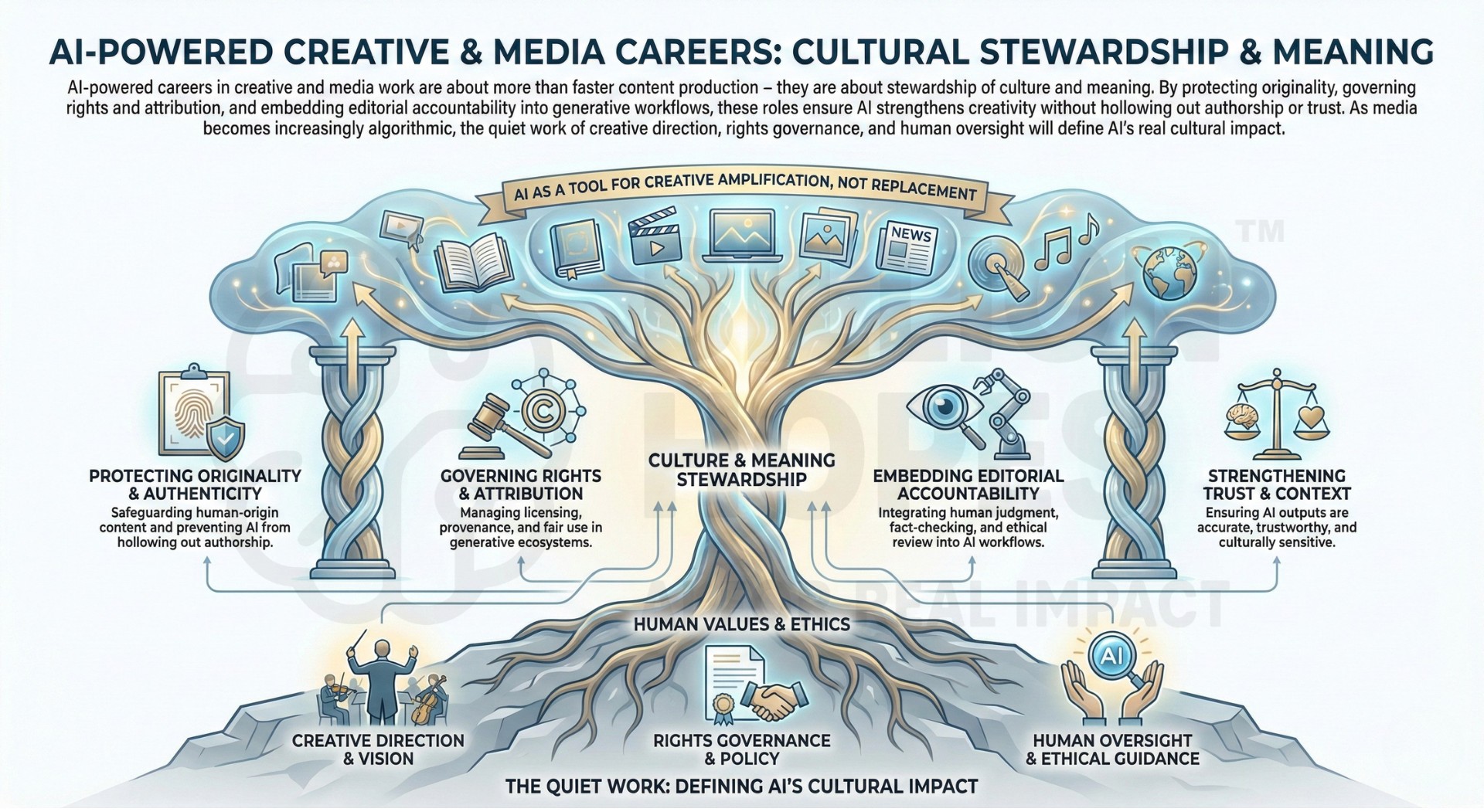
AI-powered careers in creative and media work are about more than faster content production – they are about stewardship of culture and meaning. By protecting originality, governing rights and attribution, and embedding editorial accountability into generative workflows, these roles ensure AI strengthens creativity without hollowing out authorship or trust. As media becomes increasingly algorithmic, the quiet work of creative direction, rights governance, and human oversight will define AI’s real cultural impact.
Share this with the world
Related Articles