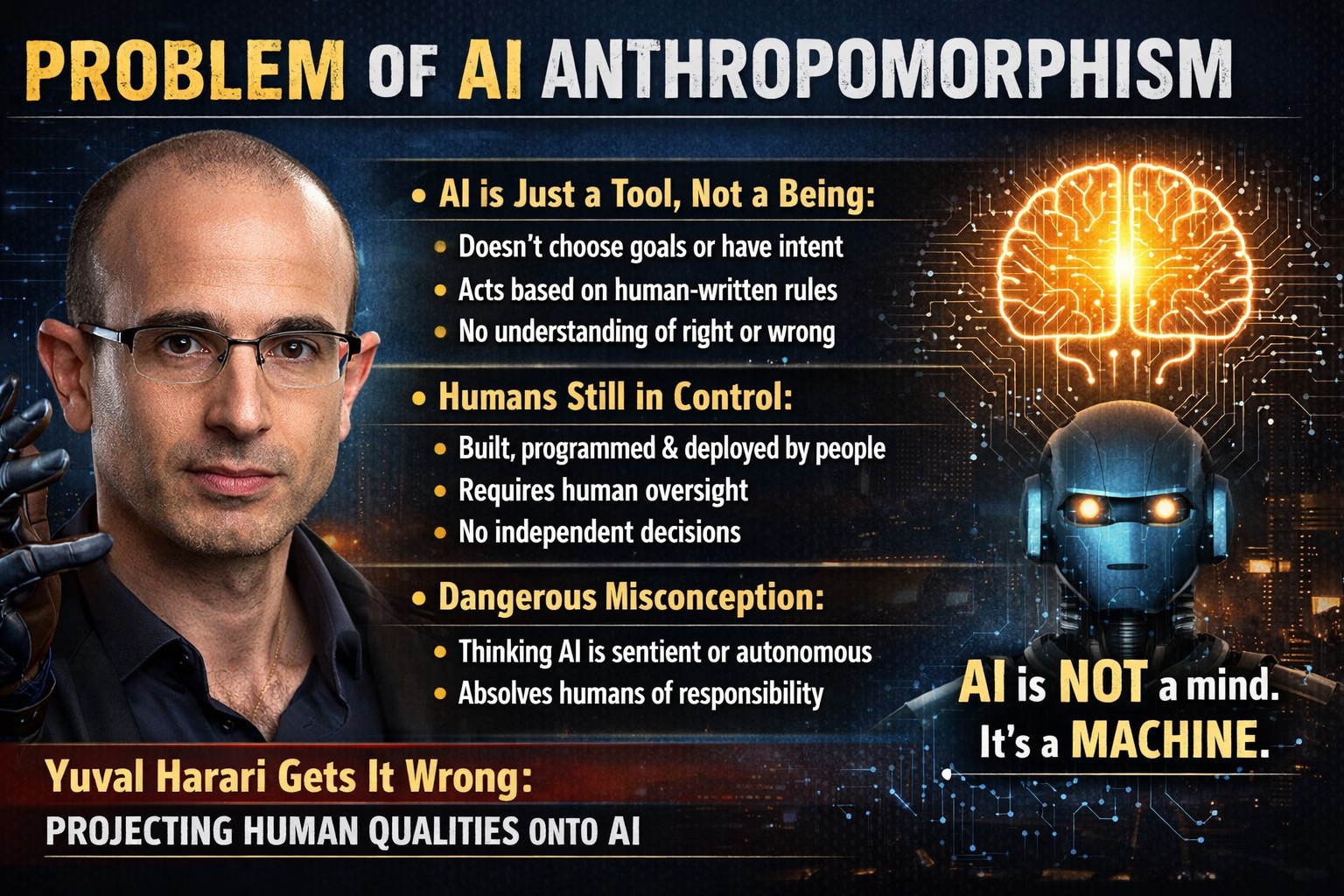
Rethinking the nature of Intelligence
Rethinking the nature of Intelligence
Limits, Tools, and Collective Capability
Introduction
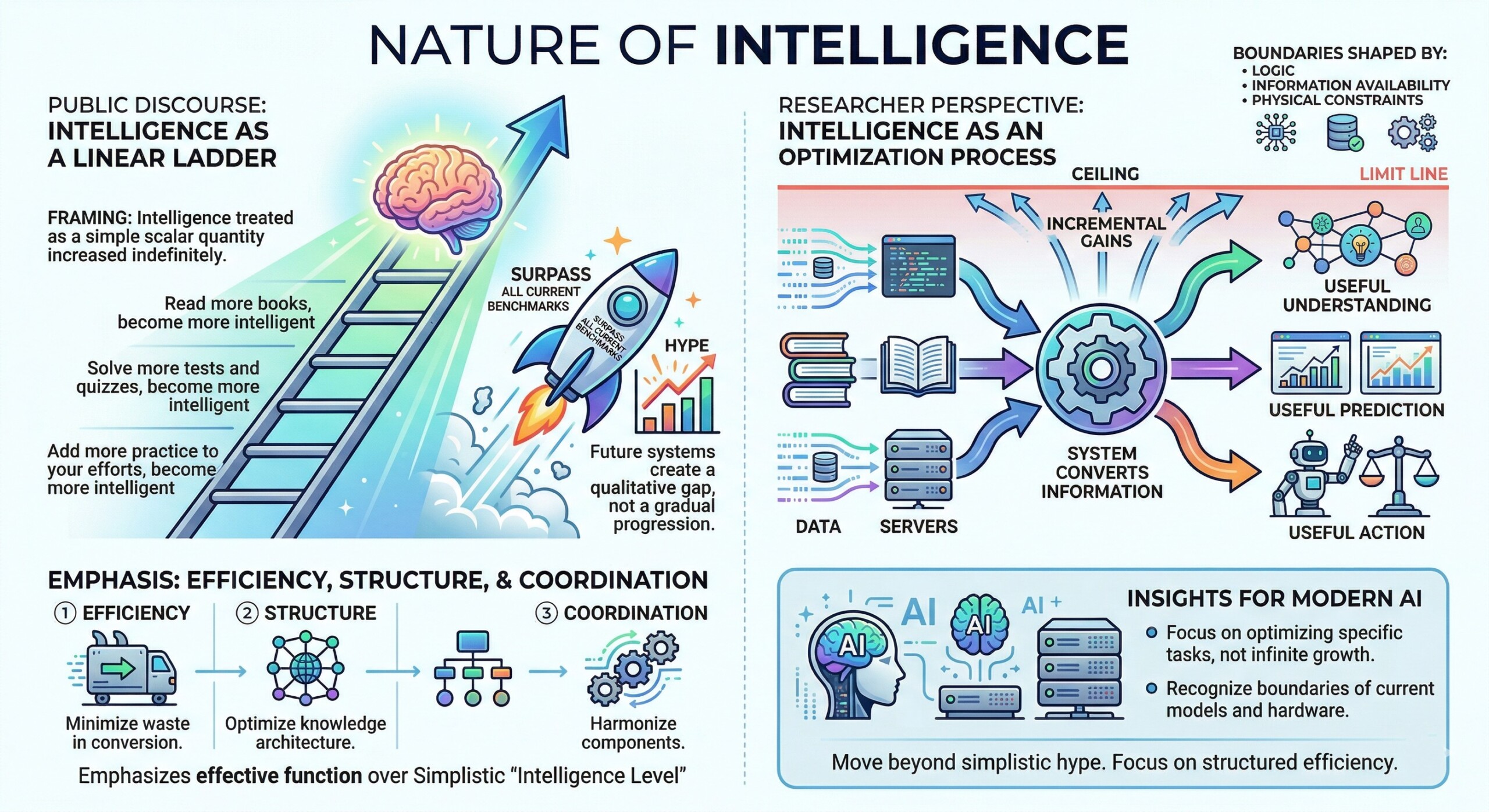
Read more books, become more intelligent.
Solve more tests and quizzes, become more intelligent.
Add more practice to your efforts, become more intelligent.
Public discourse often treats intelligence as if it were a simple scalar quantity that can be increased indefinitely. This framing encourages the idea that future systems will surpass all current benchmarks by vast margins, creating a qualitative gap rather than a gradual progression. Yet a more rigorous perspective by intelligence researchers suggests otherwise.
They say intelligence is not merely about accumulation or scale. It is about how effectively a system converts information into useful understanding, prediction, and action.
When viewed this way, intelligence begins to resemble an optimization process rather than a linear ladder. Systems can improve, but only up to certain boundaries shaped by logic, information availability, and physical constraints. As performance approaches these limits, gains become incremental rather than transformative. This perspective allows for a more nuanced understanding of both human cognition and artificial systems, emphasizing efficiency, structure, and coordination over simplistic notions of raw “intelligence level.”
Applied to modern AI, there are strong insights.
Let’s dive deep!
1. Intelligence as efficiency, not nagnitude
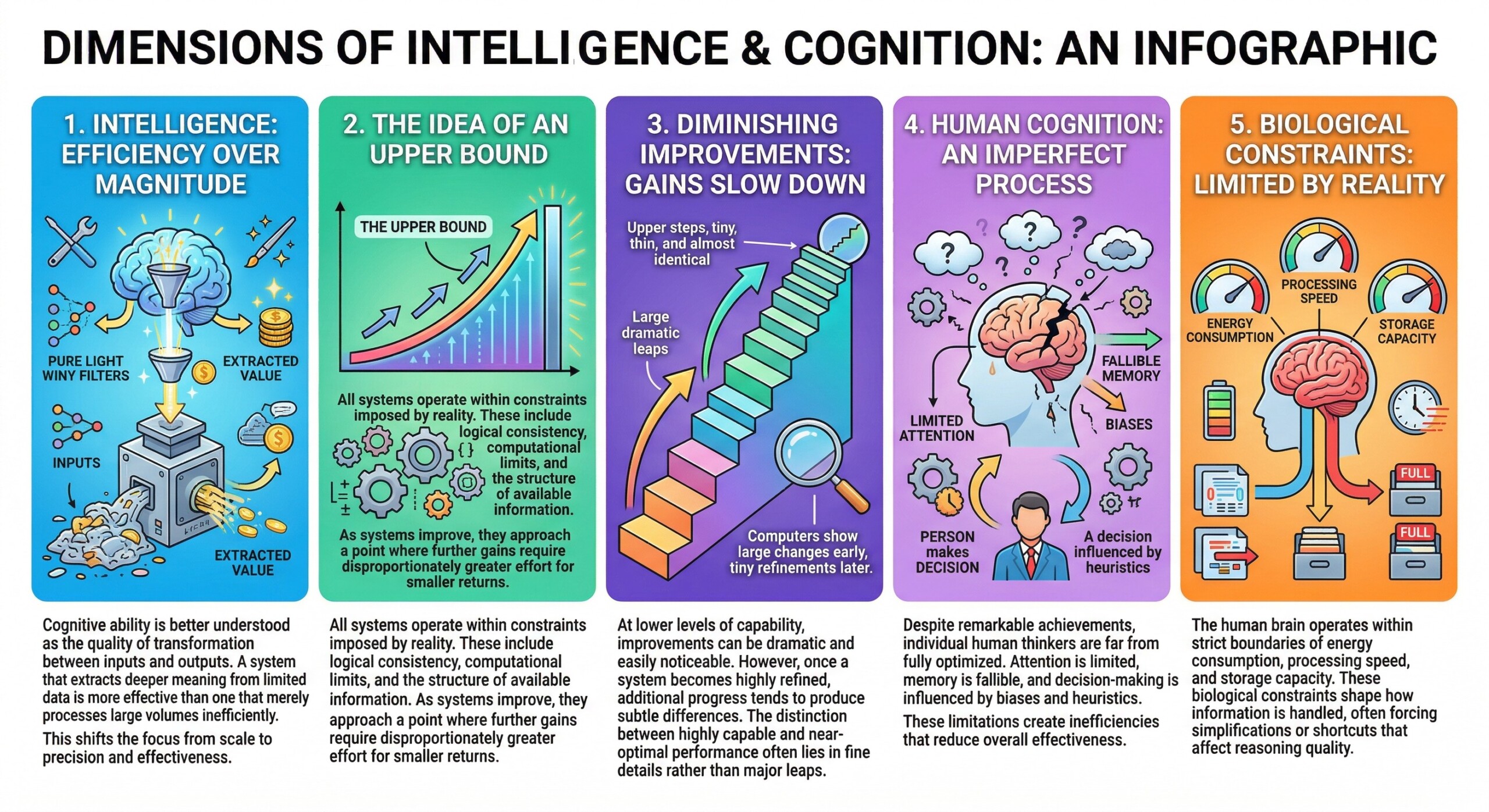
Cognitive ability is better understood as the quality of transformation between inputs and outputs. A system that extracts deeper meaning from limited data is more effective than one that merely processes large volumes inefficiently. This shifts the focus from scale to precision and effectiveness.
2. The idea of an Upper Bound
All systems operate within constraints imposed by reality. These include logical consistency, computational limits, and the structure of available information. As systems improve, they approach a point where further gains require disproportionately greater effort for smaller returns.
3. The nature of diminishing improvements
At lower levels of capability, improvements can be dramatic and easily noticeable. However, once a system becomes highly refined, additional progress tends to produce subtle differences. The distinction between highly capable and near-optimal performance often lies in fine details rather than major leaps.
4. Human Cognition remains imperfect
Despite remarkable achievements, individual human thinkers are far from fully optimized. Attention is limited, memory is fallible, and decision-making is influenced by biases and heuristics. These limitations create inefficiencies that reduce overall effectiveness. An excellent collection of learning videos awaits you on our Youtube channel.
5. Biological constraints on thought
The human brain operates within strict boundaries of energy consumption, processing speed, and storage capacity. These biological constraints shape how information is handled, often forcing simplifications or shortcuts that affect reasoning quality.
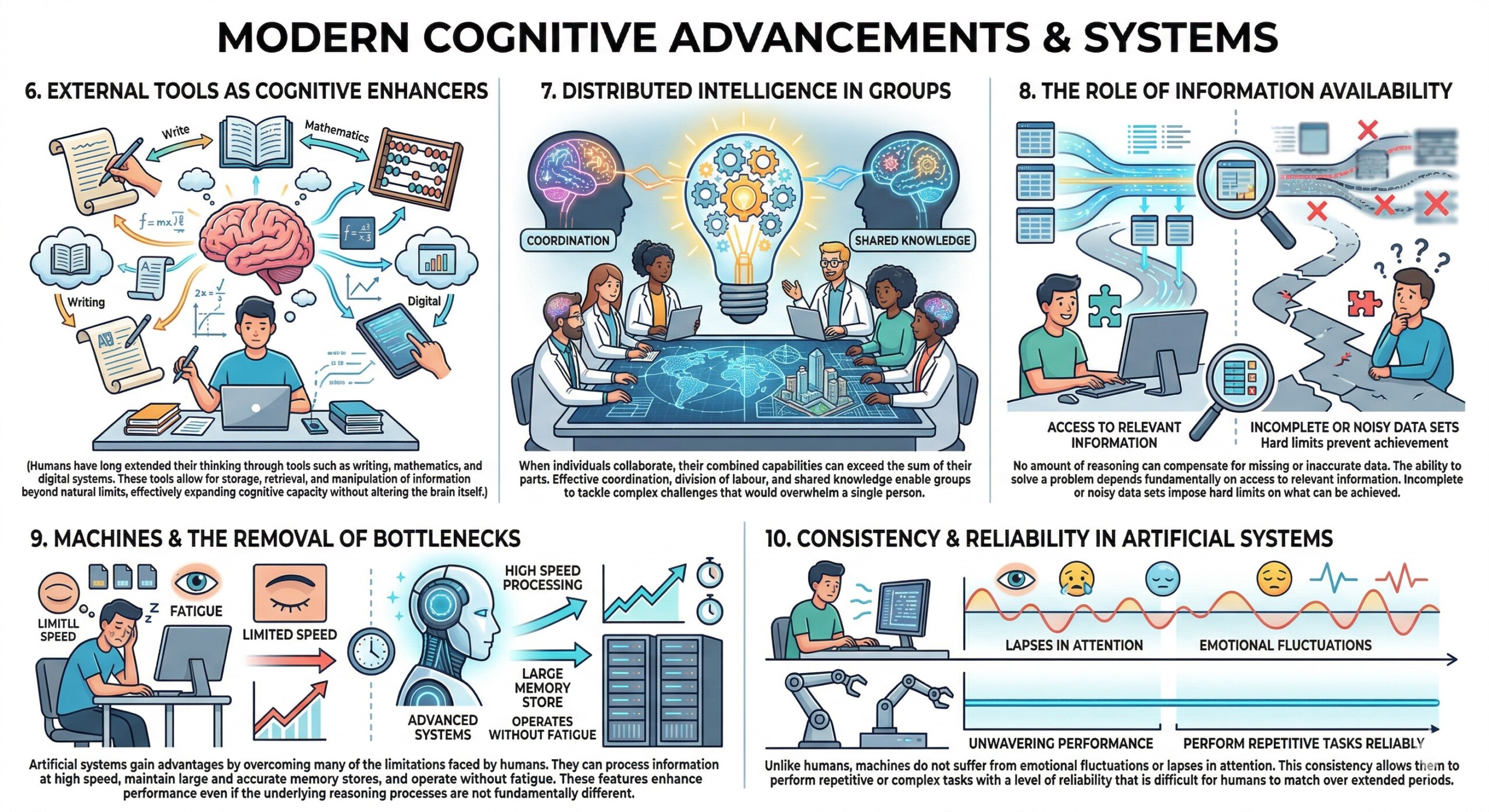
6. External tools as cognitive enhancers
Humans have long extended their thinking through tools such as writing, mathematics, and digital systems. These tools allow for storage, retrieval, and manipulation of information beyond natural limits, effectively expanding cognitive capacity without altering the brain itself.
7. Distributed intelligence in groups
When individuals collaborate, their combined capabilities can exceed the sum of their parts. Effective coordination, division of labour, and shared knowledge enable groups to tackle complex challenges that would overwhelm a single person.
8. The role of information availability
No amount of reasoning can compensate for missing or inaccurate data. The ability to solve a problem depends fundamentally on access to relevant information. Incomplete or noisy data sets impose hard limits on what can be achieved. A constantly updated Whatsapp channel awaits your participation.
9. Machines and the removal of bottlenecks
Artificial systems gain advantages by overcoming many of the limitations faced by humans. They can process information at high speed, maintain large and accurate memory stores, and operate without fatigue. These features enhance performance even if the underlying reasoning processes are not fundamentally different.
10. Consistency and reliability in artificial systems
Unlike humans, machines do not suffer from emotional fluctuations or lapses in attention. This consistency allows them to perform repetitive or complex tasks with a level of reliability that is difficult for humans to match over extended periods.
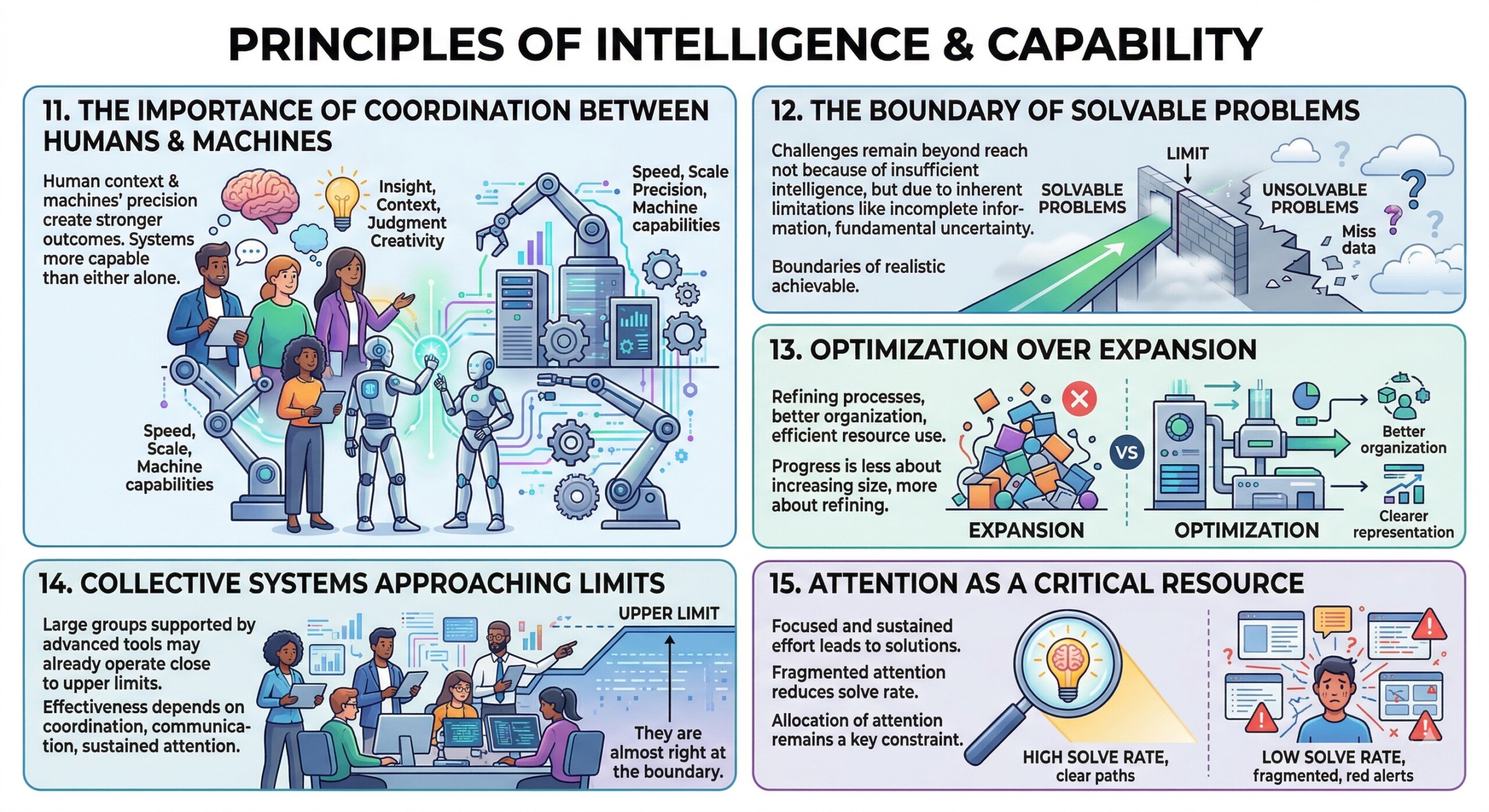
11. The importance of coordination between humans and machines
The most powerful outcomes often emerge when human insight is combined with machine capabilities. Humans provide context, judgment, and creativity, while machines offer speed, scale, and precision. Together, they form systems that are more capable than either alone.
12. The boundary of solvable problems
Certain challenges remain beyond reach, not because of insufficient intelligence, but due to inherent limitations such as incomplete information or fundamental uncertainty. These boundaries define what is realistically achievable. Excellent individualised mentoring programmes available.
13. Optimization over Expansion
Progress in intelligence is less about increasing size or quantity and more about refining processes. Improvements often come from better organization, clearer representation of problems, and more efficient use of available resources.
14. Collective systems approaching limits
Large groups of highly capable individuals, supported by advanced tools, may already operate close to the upper limits of what is achievable in many domains. Their effectiveness depends on coordination, communication, and sustained attention.
15. Attention as a critical resource
Even with access to tools and information, the allocation of attention remains a key constraint. Problems that receive focused and sustained effort are far more likely to be solved than those that are neglected or fragmented.
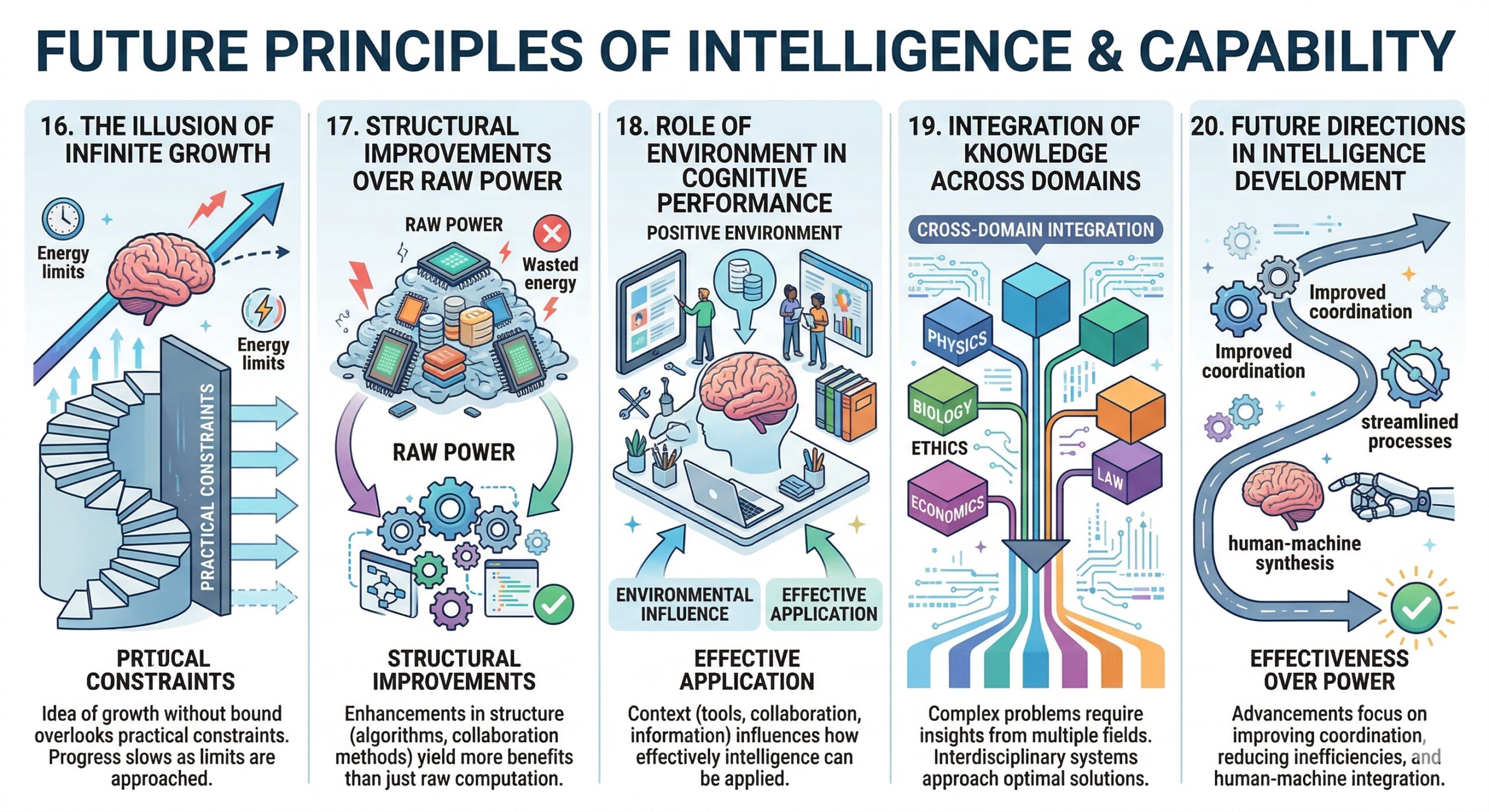
16. The illusion of Infinite Growth
The idea that intelligence can grow without bound often overlooks practical constraints. Real systems must operate within limits, and progress tends to slow as those limits are approached. Subscribe to our free AI newsletter now.
17. Structural improvements over raw power
Enhancements in structure, such as better algorithms or more effective collaboration methods, can yield greater benefits than simply increasing computational power or data volume.
18. The role of environment in cognitive performance
The context in which thinking occurs plays a significant role in outcomes. Access to tools, quality of collaboration, and availability of information all influence how effectively intelligence can be applied.
19. Integration of knowledge across domains
Complex problems often require insights from multiple fields. Systems that can integrate diverse forms of knowledge are better positioned to approach optimal solutions.
20. Future directions in intelligence development
Advancements are likely to focus on improving coordination, reducing inefficiencies, and enhancing the integration of human and machine capabilities. The emphasis will be on making systems more effective rather than simply more powerful. Upgrade your AI-readiness with our masterclass.
Conclusion
Intelligence is not an endless ladder that keeps rising without limits. It is a system shaped by constraints, efficiency, and the ability to use available resources wisely. Whether in humans or machines, true progress comes not from simply increasing scale, but from improving structure, coordination, and the quality of interaction between information, tools, and decision-making. The future of intelligence will therefore depend less on creating ever more powerful systems in isolation, and more on building well-coordinated human and AI ecosystems that can operate close to their practical limits with clarity, consistency, and purpose.
Share this with the world
Related Articles