AI in Agriculture – a rewarding crop?
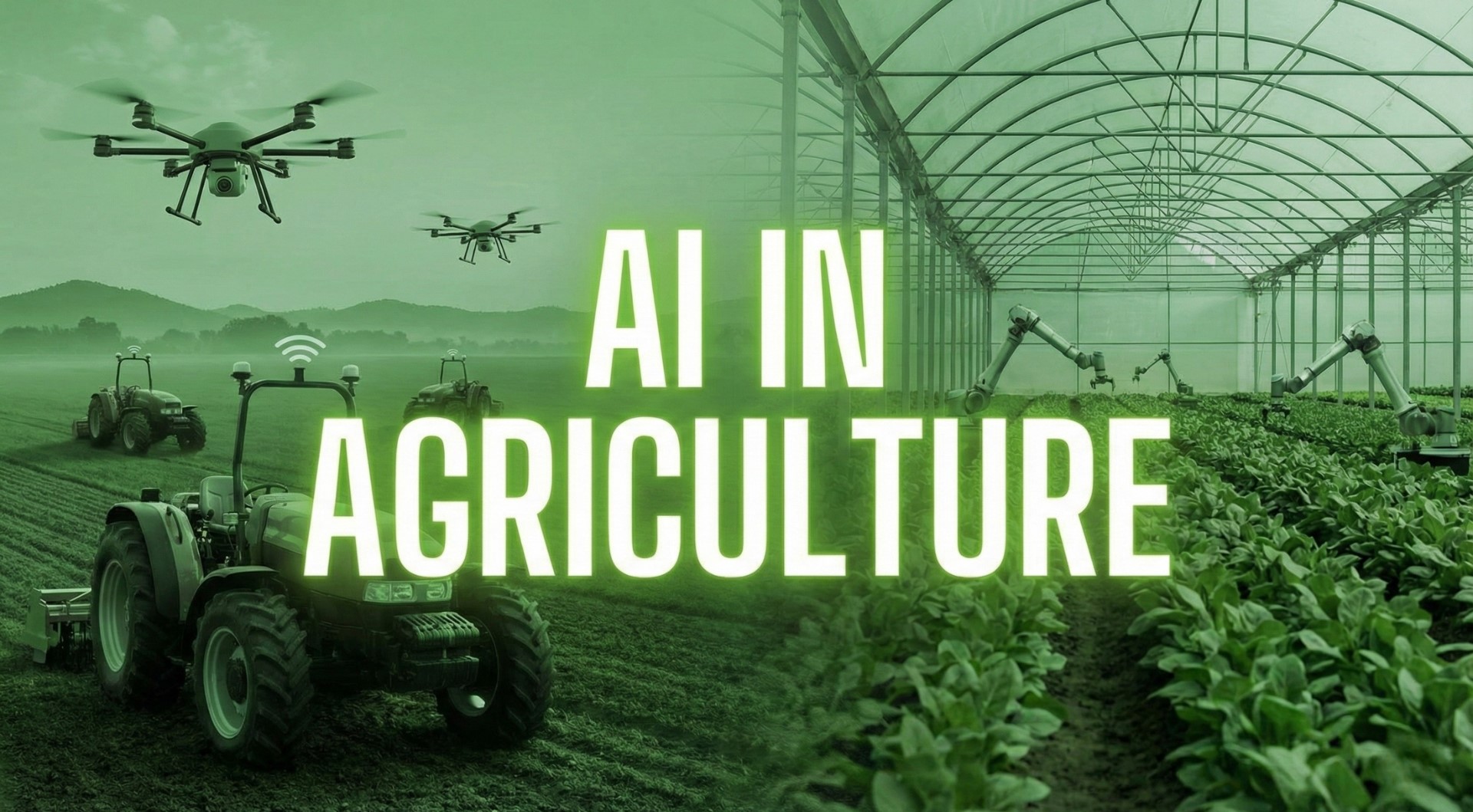
Artificial Intelligence is transforming agriculture from a traditional, labour-intensive sector into a data-driven, precision-oriented ecosystem. Across the world, farmers, agribusinesses, start-ups, and governments are deploying AI to optimize yields, reduce waste, enhance sustainability, and manage risk. These developments span sensing and robotics on the farm, predictive analytics for climate and crop planning, intelligent automation of tasks, digital advisory systems for farmers, and supply-chain intelligence.
Below are 25 key developments shaping AI in agriculture today:
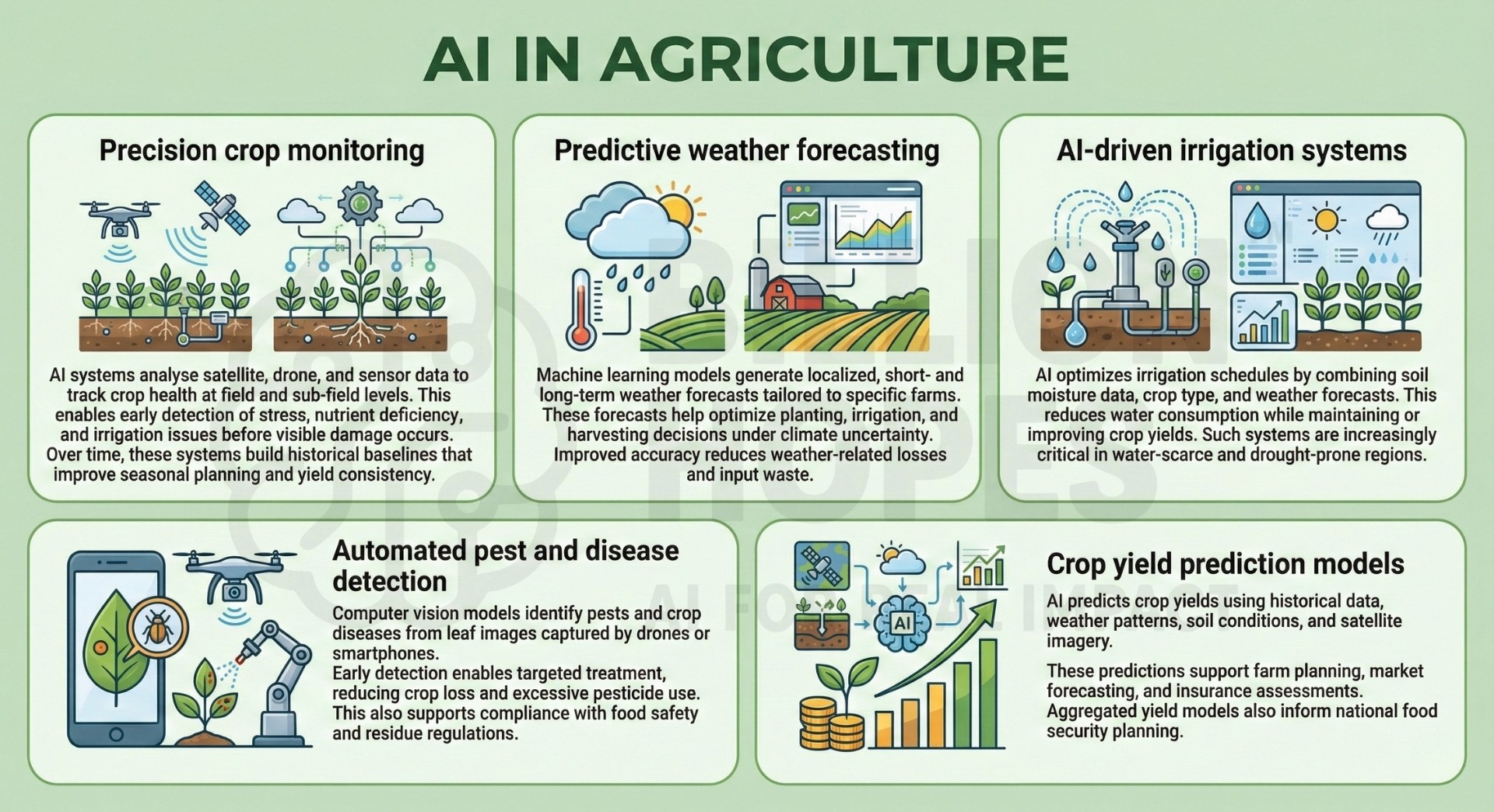
1. Precision crop monitoring
AI systems analyse satellite, drone, and sensor data to track crop health at field and sub-field levels. This enables early detection of stress, nutrient deficiency, and irrigation issues before visible damage occurs. Over time, these systems build historical baselines that improve seasonal planning and yield consistency.
2. Predictive weather forecasting
Machine learning models generate localized, short- and long-term weather forecasts tailored to specific farms. These forecasts help optimize planting, irrigation, and harvesting decisions under climate uncertainty. Improved accuracy reduces weather-related losses and input waste.
3. AI-driven irrigation systems
AI optimizes irrigation schedules by combining soil moisture data, crop type, and weather forecasts. This reduces water consumption while maintaining or improving crop yields. Such systems are increasingly critical in water-scarce and drought-prone regions.
4. Automated pest and disease detection
Computer vision models identify pests and crop diseases from leaf images captured by drones or smartphones. Early detection enables targeted treatment, reducing crop loss and excessive pesticide use. This also supports compliance with food safety and residue regulations.
5. Crop yield prediction models
AI predicts crop yields using historical data, weather patterns, soil conditions, and satellite imagery. These predictions support farm planning, market forecasting, and insurance assessments. Aggregated yield models also inform national food security planning.
6. Autonomous robotic harvesting
AI-powered robots identify ripe produce and harvest crops with minimal human intervention. This helps address labour shortages and improves consistency in harvesting quality. Adoption is highest in high-value crops where labour costs are significant.
7. AI soil analysis and nutrient profiling
Machine learning models analyse soil samples and imagery to assess nutrient levels and composition. The results inform precise fertilizer recommendations and crop selection strategies. This reduces over-fertilization and long-term soil degradation.
8. Livestock monitoring and health analytics
AI systems monitor animal behaviour, movement, and feeding patterns using sensors and cameras. Deviations from normal patterns enable early detection of illness or stress. This improves animal welfare and reduces veterinary intervention costs.
9. Autonomous weeding and spraying robots
AI vision systems distinguish crops from weeds in real time. Robots then apply herbicides only where needed, significantly reducing chemical usage. This lowers environmental impact and slows the development of herbicide resistance.
10. Supply-chain optimization systems
AI predicts demand and coordinates storage, transportation, and distribution of agricultural produce. This reduces post-harvest losses and improves market efficiency. Better coordination also stabilizes prices for farmers and consumers.
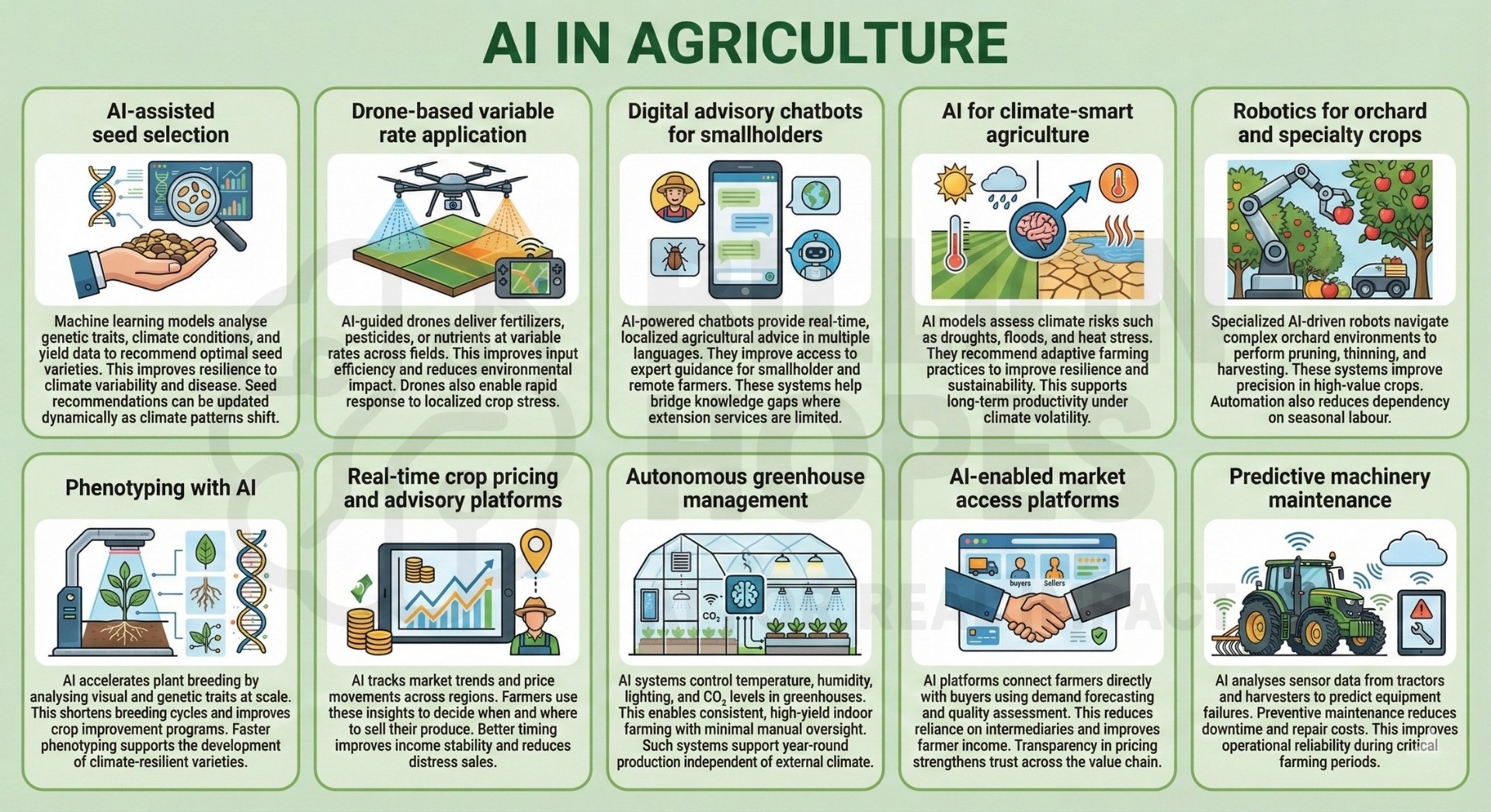
11. AI-assisted seed selection
Machine learning models analyse genetic traits, climate conditions, and yield data to recommend optimal seed varieties. This improves resilience to climate variability and disease. Seed recommendations can be updated dynamically as climate patterns shift.
12. Drone-based variable rate application
AI-guided drones deliver fertilizers, pesticides, or nutrients at variable rates across fields. This improves input efficiency and reduces environmental impact. Drones also enable rapid response to localized crop stress.
13. Digital advisory chatbots for smallholders
AI-powered chatbots provide real-time, localized agricultural advice in multiple languages. They improve access to expert guidance for smallholder and remote farmers. These systems help bridge knowledge gaps where extension services are limited.
14. AI for climate-smart agriculture
AI models assess climate risks such as droughts, floods, and heat stress. They recommend adaptive farming practices to improve resilience and sustainability. This supports long-term productivity under climate volatility.
15. Robotics for orchard and specialty crops
Specialized AI-driven robots navigate complex orchard environments to perform pruning, thinning, and harvesting. These systems improve precision in high-value crops. Automation also reduces dependency on seasonal labour.
16. Phenotyping with AI
AI accelerates plant breeding by analysing visual and genetic traits at scale. This shortens breeding cycles and improves crop improvement programs. Faster phenotyping supports the development of climate-resilient varieties.
17. Real-time crop pricing and advisory platforms
AI tracks market trends and price movements across regions. Farmers use these insights to decide when and where to sell their produce. Better timing improves income stability and reduces distress sales.
18. Autonomous greenhouse management
AI systems control temperature, humidity, lighting, and CO₂ levels in greenhouses. This enables consistent, high-yield indoor farming with minimal manual oversight. Such systems support year-round production independent of external climate.
19. AI-enabled market access platforms
AI platforms connect farmers directly with buyers using demand forecasting and quality assessment. This reduces reliance on intermediaries and improves farmer income. Transparency in pricing strengthens trust across the value chain.
20. Predictive machinery maintenance
AI analyses sensor data from tractors and harvesters to predict equipment failures. Preventive maintenance reduces downtime and repair costs. This improves operational reliability during critical farming periods.
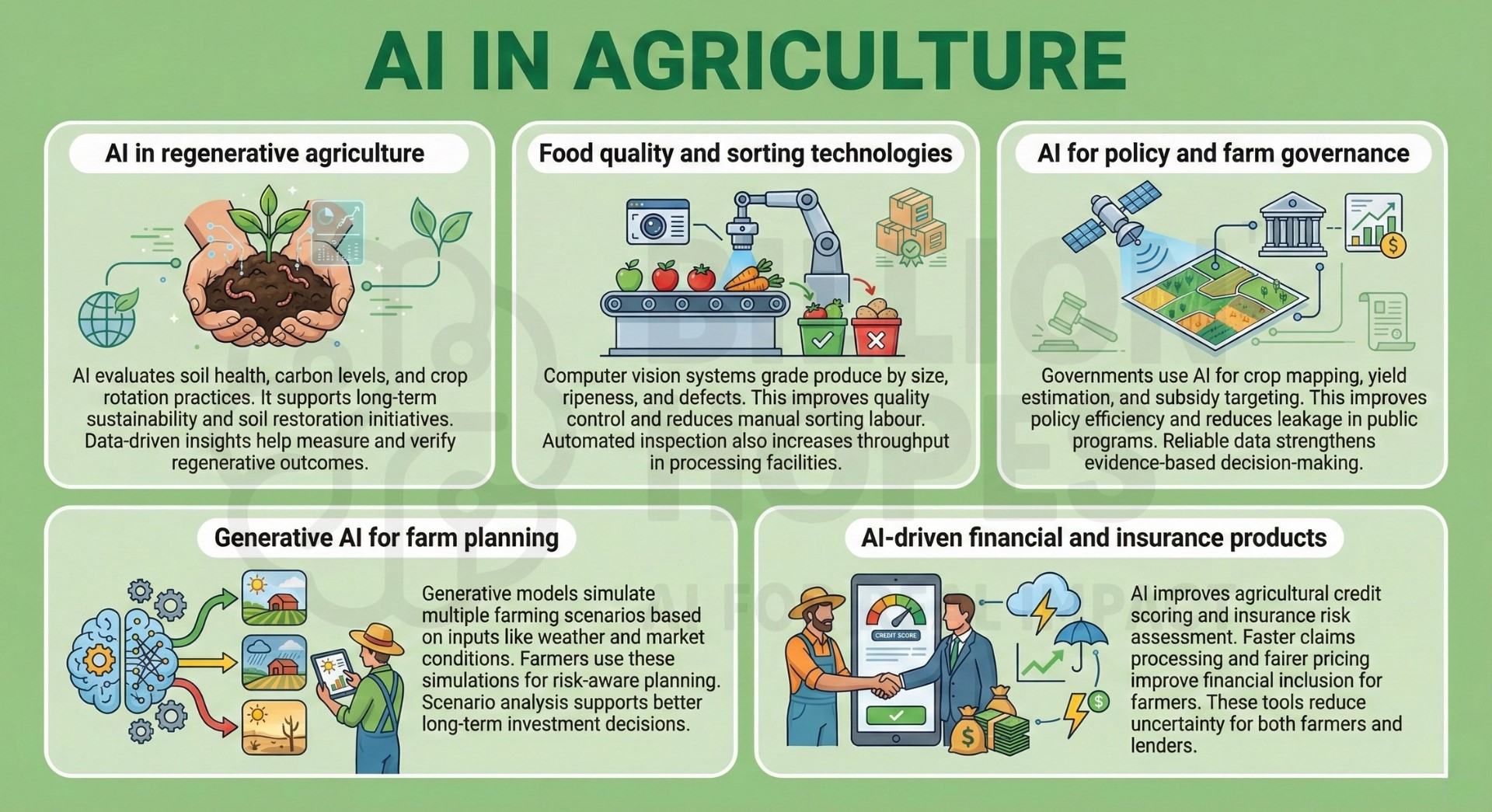
21. AI in regenerative agriculture
AI evaluates soil health, carbon levels, and crop rotation practices. It supports long-term sustainability and soil restoration initiatives. Data-driven insights help measure and verify regenerative outcomes.
22. Food quality and sorting technologies
Computer vision systems grade produce by size, ripeness, and defects. This improves quality control and reduces manual sorting labour. Automated inspection also increases throughput in processing facilities.
23. AI for policy and farm governance
Governments use AI for crop mapping, yield estimation, and subsidy targeting. This improves policy efficiency and reduces leakage in public programs. Reliable data strengthens evidence-based decision-making.
24. Generative AI for farm planning
Generative models simulate multiple farming scenarios based on inputs like weather and market conditions. Farmers use these simulations for risk-aware planning. Scenario analysis supports better long-term investment decisions.
25. AI-driven financial and insurance products
AI improves agricultural credit scoring and insurance risk assessment. Faster claims processing and fairer pricing improve financial inclusion for farmers. These tools reduce uncertainty for both farmers and lenders.
Final perspective
Together, these developments show how AI is reshaping agriculture into a predictive, resilient, and resource-efficient system. As climate pressure, labour shortages, and food demand intensify, AI is becoming essential infrastructure rather than optional technology.
Share this with the world
Related Articles