AI in Smart Cities, Urban Planning & Public Infrastructure Careers
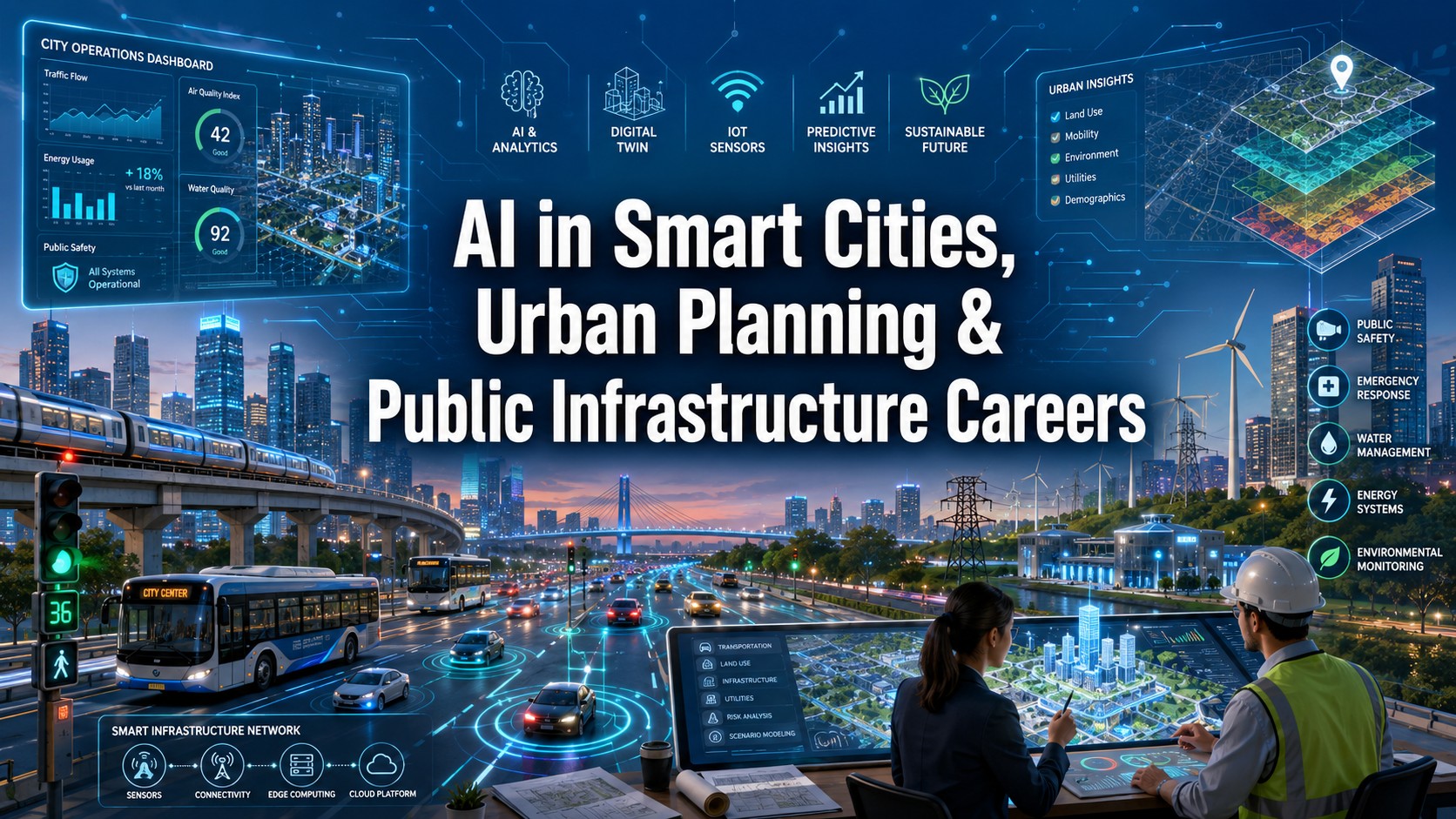
AI in Smart Cities, Urban Planning & Public Infrastructure Careers
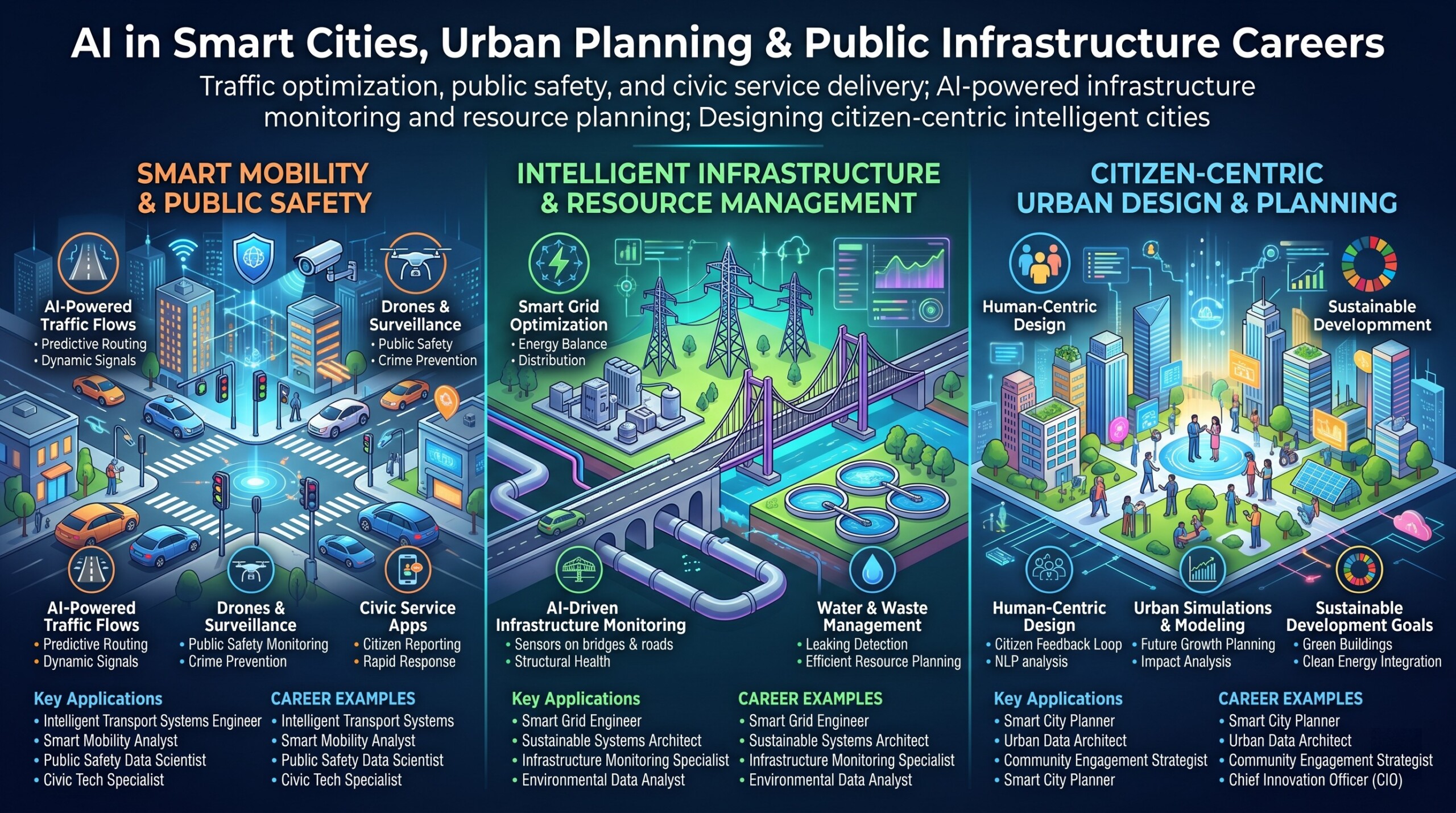
Traffic optimization, public safety, and civic service delivery; AI-powered infrastructure monitoring
and resource planning; Designing citizen-centric intelligent cities
Introduction
By June 2026, AI has moved from being a technology experiment in cities to becoming part of serious urban management. Cities are using AI to understand traffic, monitor infrastructure, improve emergency response, manage utilities, plan resources, and deliver civic services faster. The smart city is no longer only about sensors, cameras, dashboards, and apps. It is about turning urban data into timely decisions.
This shift is creating a new career landscape. Urban planners, civil engineers, transport specialists, public administrators, GIS professionals, data scientists, cybersecurity experts, and policy designers are now working together to build intelligent city systems. The best opportunities will go to people who understand both technology and public purpose. Smart cities need AI, but they also need fairness, transparency, privacy, inclusion, and citizen trust. An excellent collection of learning videos awaits you on our Youtube channel.
Let’s dive deep into this.
1. AI for traffic optimization and intelligent mobility
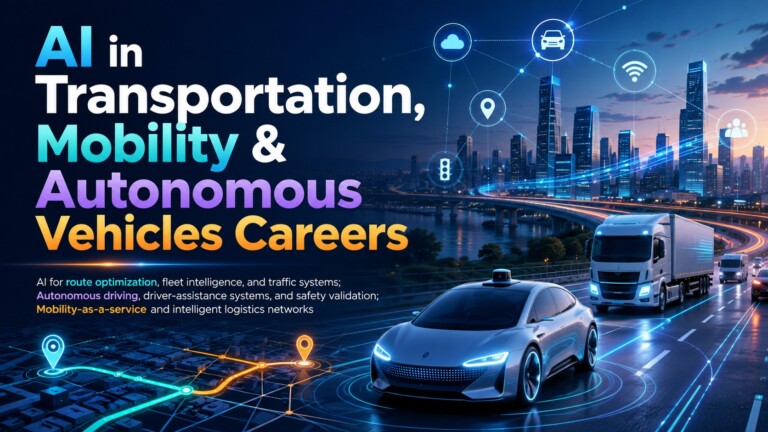
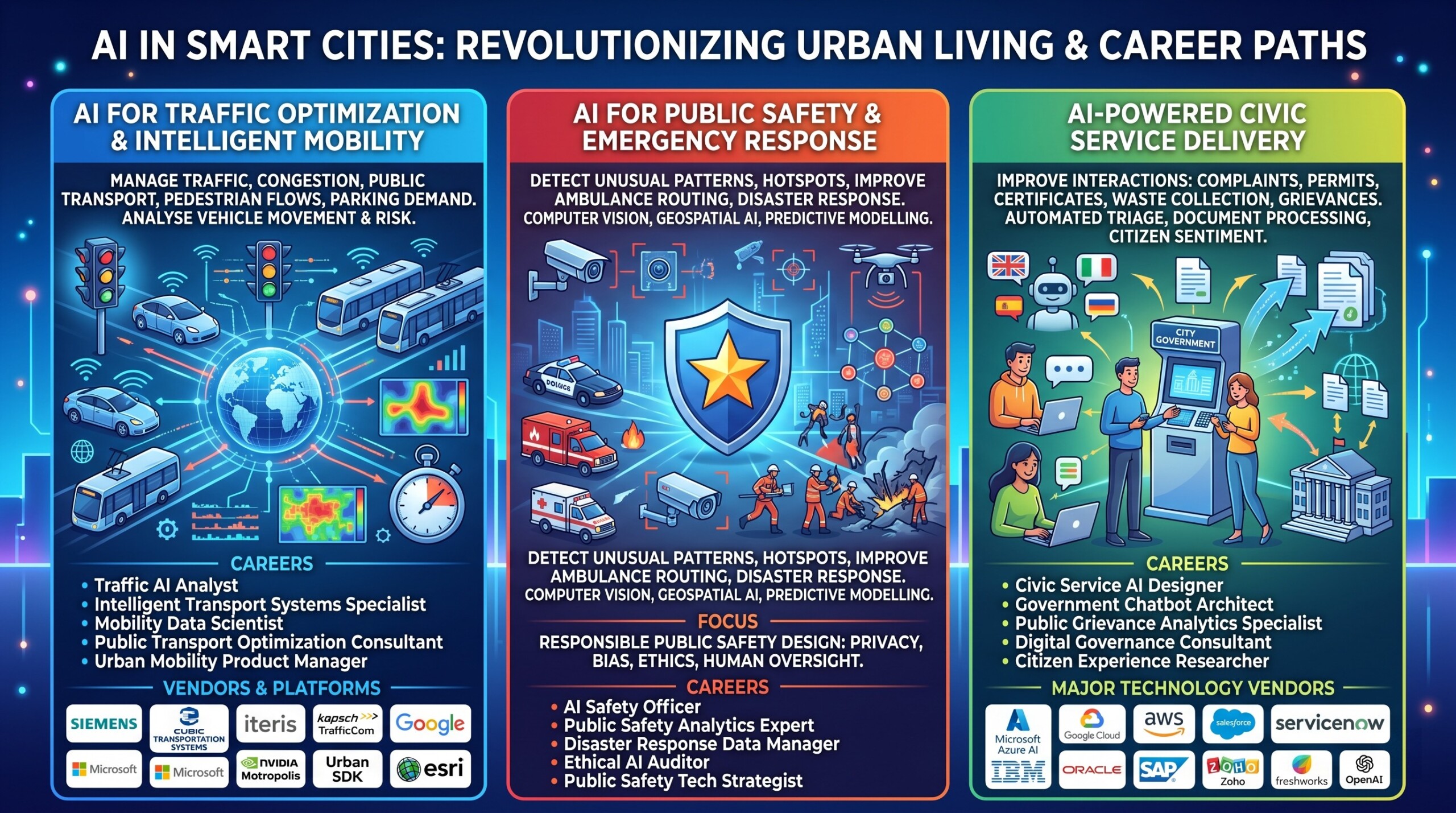
Traffic is one of the most visible problems in modern cities, and AI is becoming a powerful tool for managing it. AI systems can analyse vehicle movement, congestion patterns, public transport delays, pedestrian flows, accident risks, and parking demand.
Career opportunities include:
- Traffic AI analyst
- Intelligent transport systems specialist
- Mobility data scientist
- Public transport optimization consultant
- Urban mobility product manager
Vendors and platforms in this area include Siemens Mobility, Cubic Transportation Systems, Iteris, Kapsch TrafficCom, Google, Microsoft, NVIDIA Metropolis, Urban SDK, and various GIS platforms such as Esri ArcGIS.
2. AI for public safety and emergency response
AI can support public safety by detecting unusual patterns, identifying emergency hotspots, improving ambulance routing, helping disaster response teams, and analysing public-space risks. Computer vision, geospatial AI, sensor analytics, and predictive modelling can help city agencies respond faster.
The career opportunity here is not simply in surveillance technology. It is in responsible public safety design. Professionals will need to understand privacy rules, bias risks, camera governance, emergency protocols, and human oversight. Cities will need AI safety officers, public safety analytics experts, disaster response data managers, and ethical AI auditors. A constantly updated Whatsapp channel awaits your participation.

3. AI-powered civic service delivery
Citizens often experience government through simple services: complaints, permits, certificates, payments, grievances, waste collection, water supply, transport updates, and emergency helplines. AI can improve these interactions through multilingual chatbots, automated triage, document processing, citizen sentiment analysis, and service-demand forecasting.
Career opportunities include:
- Civic service AI designer
- Government chatbot architect
- Public grievance analytics specialist
- Digital governance consultant
- Citizen experience researcher
Major technology vendors in this space include Microsoft Azure AI, Google Cloud, AWS, Salesforce, ServiceNow, IBM, Oracle, SAP, Zoho, Freshworks, and OpenAI-based enterprise solutions used through approved government deployments.
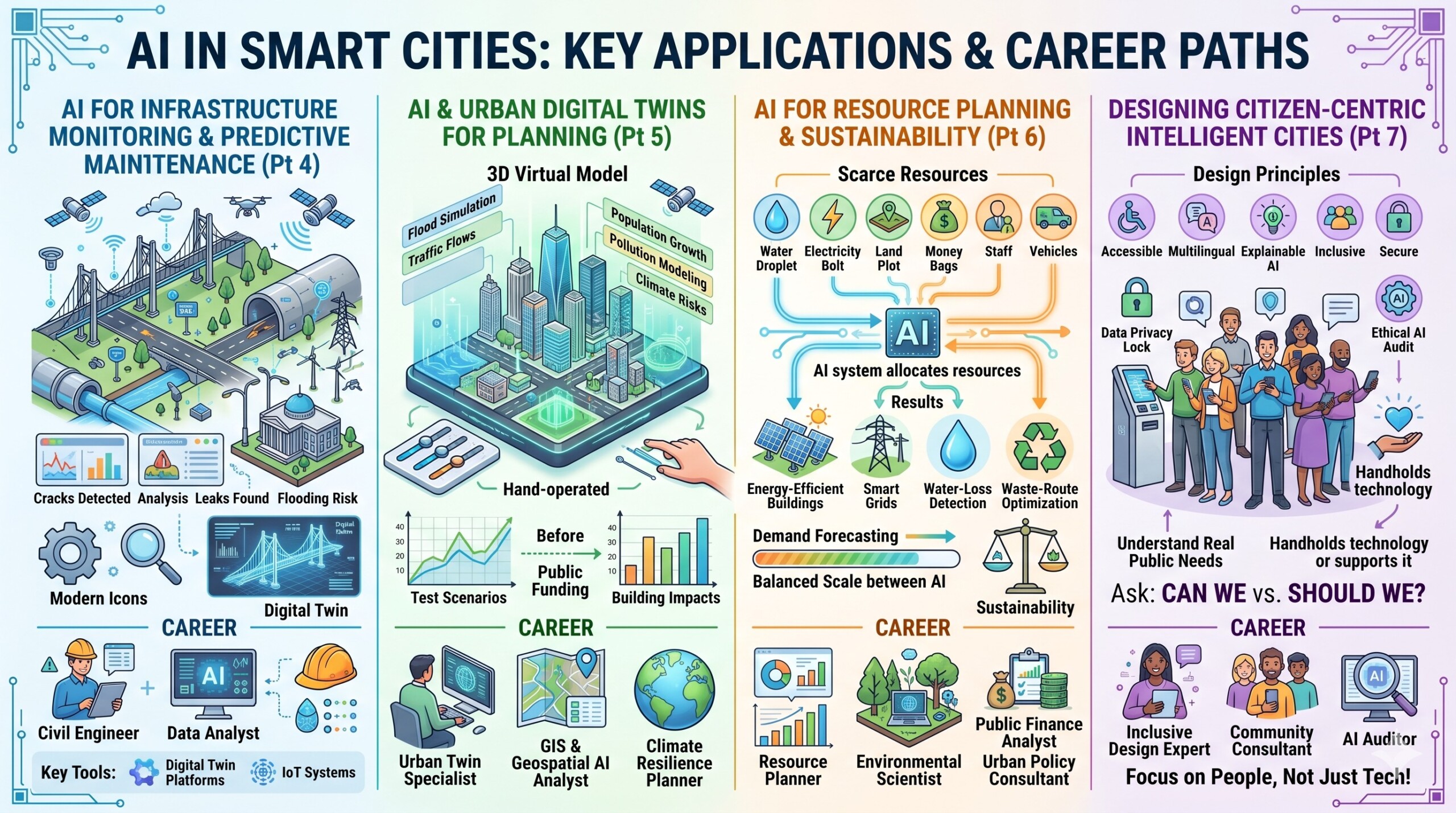
4. AI for infrastructure monitoring and predictive maintenance
Roads, bridges, tunnels, drains, water pipelines, streetlights, power networks, railway systems, and public buildings need constant monitoring. AI can detect cracks, corrosion, leaks, abnormal vibration, flooding risks, equipment failure, and maintenance priorities.
This is creating strong careers for civil engineers who learn AI and for data professionals who understand infrastructure. Digital twin platforms from vendors such as Bentley Systems, Autodesk, Siemens, Dassault Systèmes, Hexagon, Esri, and NVIDIA Omniverse are increasingly relevant for modelling, monitoring, and simulating infrastructure. The future infrastructure professional will not only inspect assets manually, but also work with sensors, drones, satellite data, IoT systems, and predictive dashboards. Excellent individualised mentoring programmes available.
5. AI and urban digital twins for planning
A digital twin is a virtual model of a city, neighbourhood, transport network, building, utility system, or infrastructure asset. With AI, digital twins can simulate floods, traffic flows, population growth, pollution, energy demand, construction impact, and climate risks.
Career opportunities include:
- Urban digital twin specialist
- GIS and geospatial AI analyst
- Simulation modeller
- Climate resilience planner
- Infrastructure data architect
These roles are especially important because cities must plan under uncertainty. AI-powered digital twins allow planners to test scenarios before spending public money on roads, housing, drainage, power systems, or transport corridors.
6. AI for resource planning and sustainability
Smart cities must manage scarce resources: water, electricity, land, public funds, emergency staff, buses, waste fleets, and maintenance crews. AI can help forecast demand, detect wastage, allocate resources, and identify where investments will produce the greatest public benefit.
This is also a sustainability career path. AI can support energy-efficient buildings, smart grids, water-loss detection, waste-route optimization, air-quality forecasting, and climate-risk planning. Professionals who combine AI with environmental science, public finance, engineering, and urban policy will be valuable to city governments, consulting firms, infrastructure companies, and development agencies. Subscribe to our free AI newsletter now.
7. Designing citizen-centric intelligent cities
The biggest mistake in smart city design is to focus only on technology. A truly intelligent city must be citizen-centric. That means AI systems should be accessible, multilingual, explainable, inclusive, secure, and designed for real public needs.
Careers in this area will require a mix of technology and social understanding. Cities will need people who can run public consultations, design inclusive digital services, audit AI decisions, protect citizen data, and ensure that vulnerable groups are not excluded. The most successful smart city professionals will ask not only “Can AI do this?” but also “Should AI do this, and who benefits?”
Conclusion
AI is reshaping smart cities, urban planning, and public infrastructure careers. The field now connects traffic systems, civic services, emergency response, infrastructure monitoring, climate resilience, digital twins, and citizen experience. This is not a narrow technology career. It is a broad public transformation career.
By June 2026, the opportunity is clear. Cities need professionals who can work across AI, data, engineering, governance, ethics, and urban design. The future smart city will not be built by software alone. It will be built by people who understand cities, citizens, infrastructure, and intelligent systems together. Upgrade your AI-readiness with our masterclass.