AI Memory, Personalization & Context Systems Careers
AI Memory, Personalization & Context Systems Careers
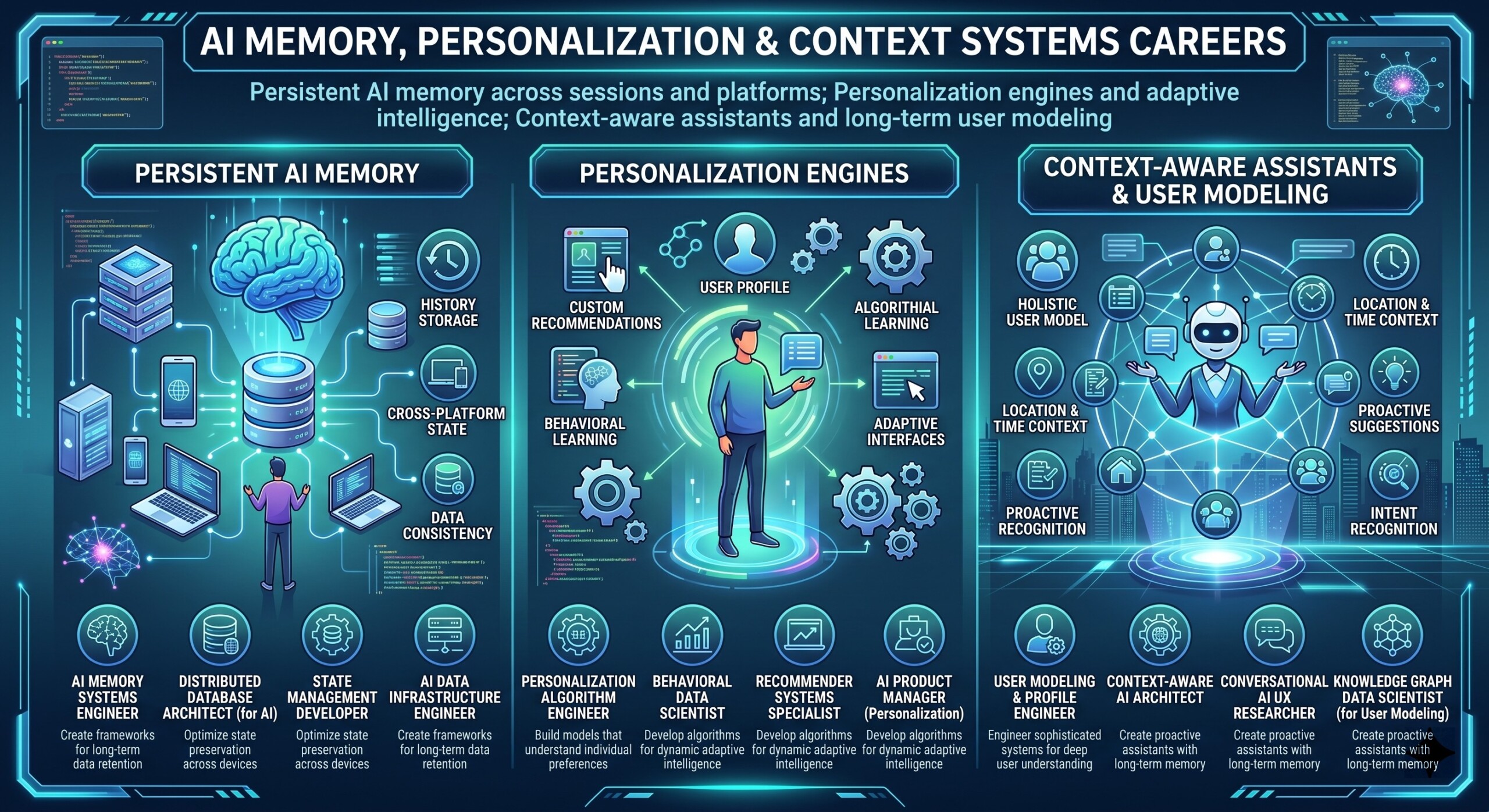
Persistent AI memory across sessions and platforms; Personalization engines and adaptive intelligence; Context-aware assistants and long-term user modeling
Introduction
Artificial Intelligence is moving beyond one-off interactions toward systems that remember, adapt, and evolve with users over time. The next frontier is not just smarter models but more context-aware and personalized intelligence. This shift is powered by three foundational capabilities: persistent memory across sessions, advanced personalization engines, and deep context modeling.
Together, these systems enable AI to act less like a tool and more like a long-term collaborator, understanding user preferences, history, goals, and behaviour. As this transformation accelerates, a new category of careers is emerging at the intersection of machine learning, data systems, human-computer interaction, and privacy engineering. An excellent collection of learning videos awaits you on our Youtube channel.
Let’s dive deep into the topic.
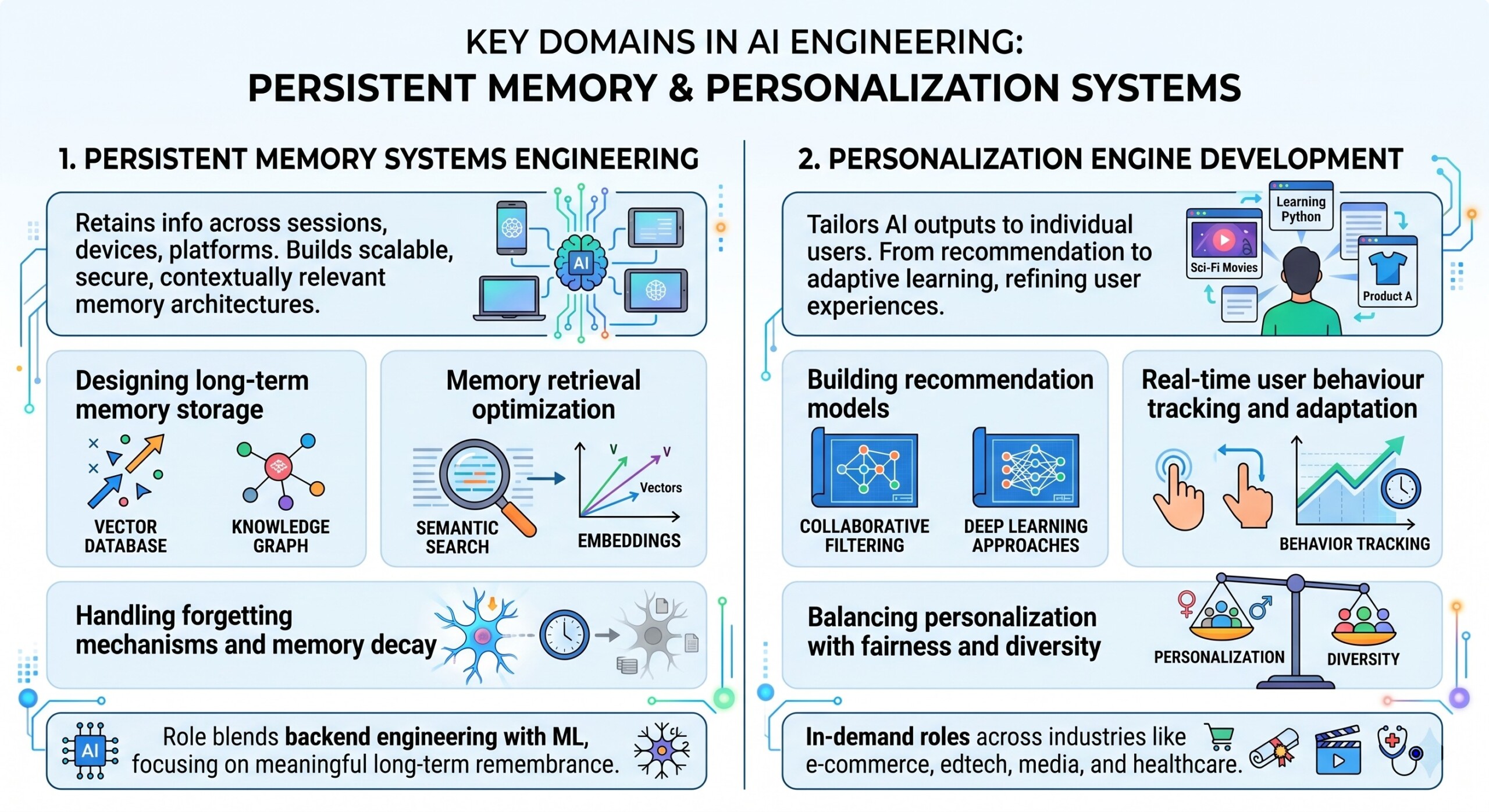
1. Persistent Memory Systems engineering
AI systems are increasingly designed to retain information across sessions, devices, and platforms. This requires building memory architectures that are scalable, secure, and contextually relevant.
Careers in this space involve:
- Designing long-term memory storage such as vector databases and knowledge graphs
- Memory retrieval optimization using semantic search and embeddings
- Handling forgetting mechanisms and memory decay
This role blends backend engineering with machine learning, focusing on how AI remembers users meaningfully over time.
2. Personalization Engine Development
Personalization is the engine that tailors AI outputs to individual users. From recommendation systems to adaptive learning platforms, personalization engineers design systems that continuously refine user experiences.
Key responsibilities include:
- Building recommendation models such as collaborative filtering and deep learning approaches
- Real-time user behaviour tracking and adaptation
- Balancing personalization with fairness and diversity
This is one of the most in-demand roles across industries like e-commerce, edtech, media, and healthcare. A constantly updated Whatsapp channel awaits your participation.
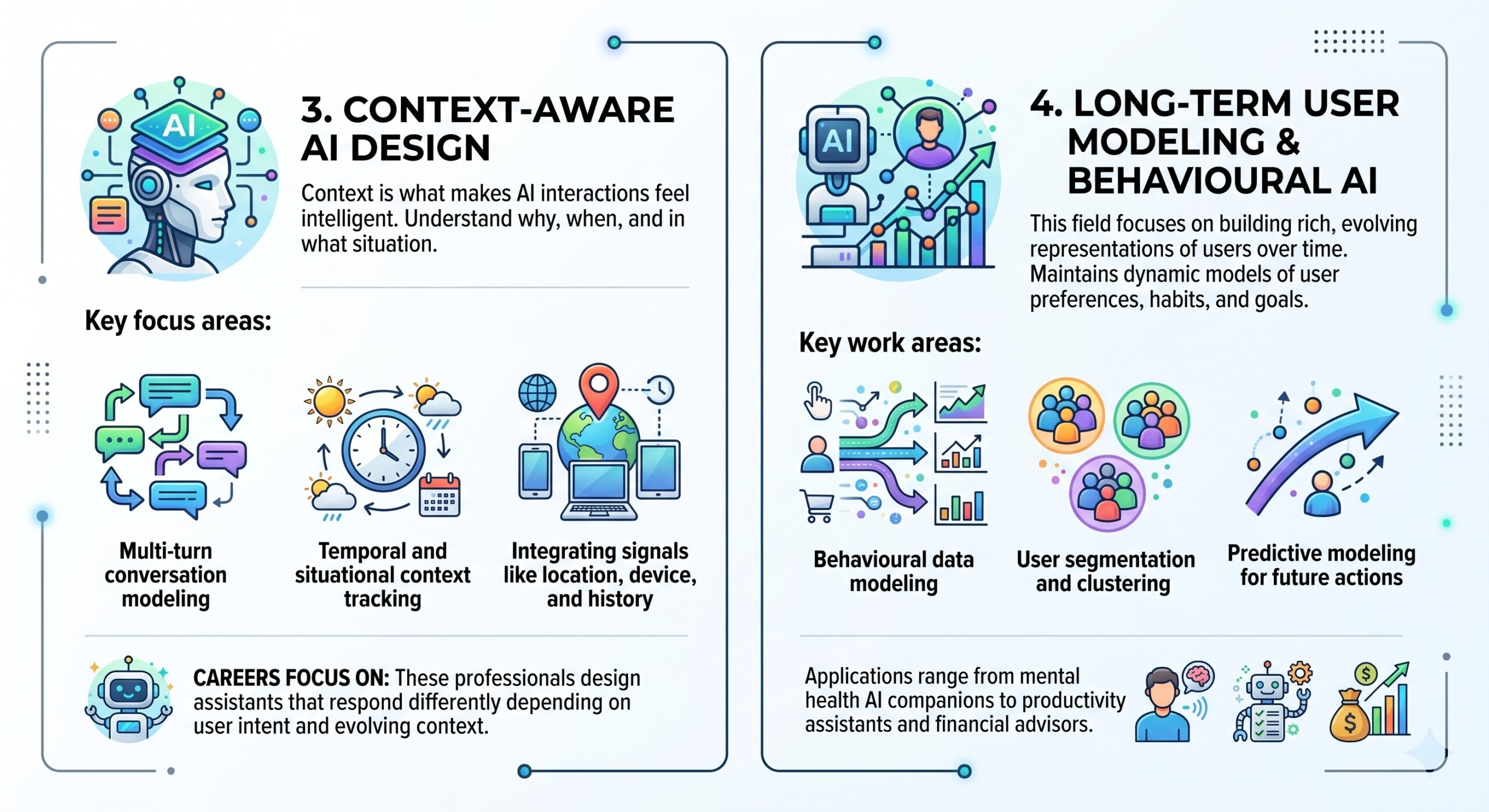
3. Context-Aware AI Design
Context is what makes AI interactions feel intelligent. Context-aware systems understand not just what a user asks, but why, when, and in what situation.
Careers here focus on:
- Multi-turn conversation modeling
- Temporal and situational context tracking
- Integrating signals like location, device, and history
These professionals design assistants that respond differently depending on user intent and evolving context.
4. Long-Term User Modeling and Behavioural AI
This field focuses on building rich, evolving representations of users over time. Instead of static profiles, AI systems maintain dynamic models of user preferences, habits, and goals.
Work involves:
- Behavioural data modeling
- User segmentation and clustering
- Predictive modeling for future actions
Applications range from mental health AI companions to productivity assistants and financial advisors. Excellent individualised mentoring programmes available.
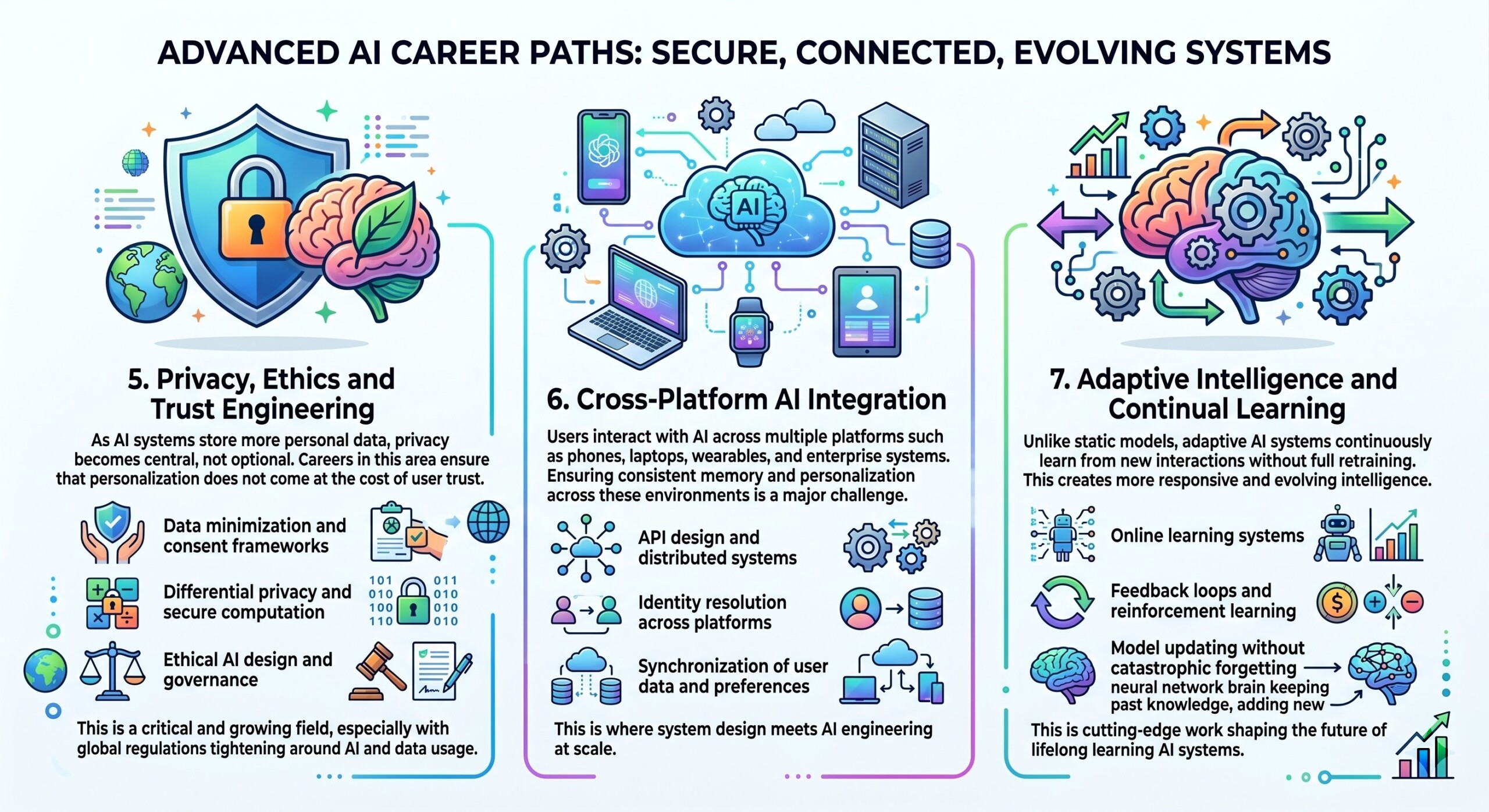
5. Privacy, Ethics and Trust Engineering
As AI systems store more personal data, privacy becomes central, not optional. Careers in this area ensure that personalization does not come at the cost of user trust.
Key areas include:
- Data minimization and consent frameworks
- Differential privacy and secure computation
- Ethical AI design and governance
This is a critical and growing field, especially with global regulations tightening around AI and data usage.
6. Cross-Platform AI Integration
Users interact with AI across multiple platforms such as phones, laptops, wearables, and enterprise systems. Ensuring consistent memory and personalization across these environments is a major challenge.
Roles involve:
- API design and distributed systems
- Identity resolution across platforms
- Synchronization of user data and preferences
This is where system design meets AI engineering at scale. Subscribe to our free AI newsletter now.
7. Adaptive Intelligence and Continual Learning
Unlike static models, adaptive AI systems continuously learn from new interactions without full retraining. This creates more responsive and evolving intelligence.
Careers in this domain include:
- Online learning systems
- Feedback loops and reinforcement learning
- Model updating without catastrophic forgetting
This is cutting-edge work shaping the future of lifelong learning AI systems.
Conclusion
AI is transitioning from stateless tools to stateful, personalized, and context-rich systems. This evolution is creating a powerful new career landscape centered on memory, personalization, and adaptive intelligence. The professionals who build these systems will define how humans interact with AI in everyday life.
However, with this power comes responsibility. Designing AI that remembers and adapts must be balanced with transparency, privacy, and ethical safeguards. The future belongs to those who can not only build intelligent systems but ensure they respect, understand, and truly serve human needs over time. Upgrade your AI-readiness with our masterclass.