AI Careers for Non-Technical Professionals – Business, policy, operations, and strategy roles
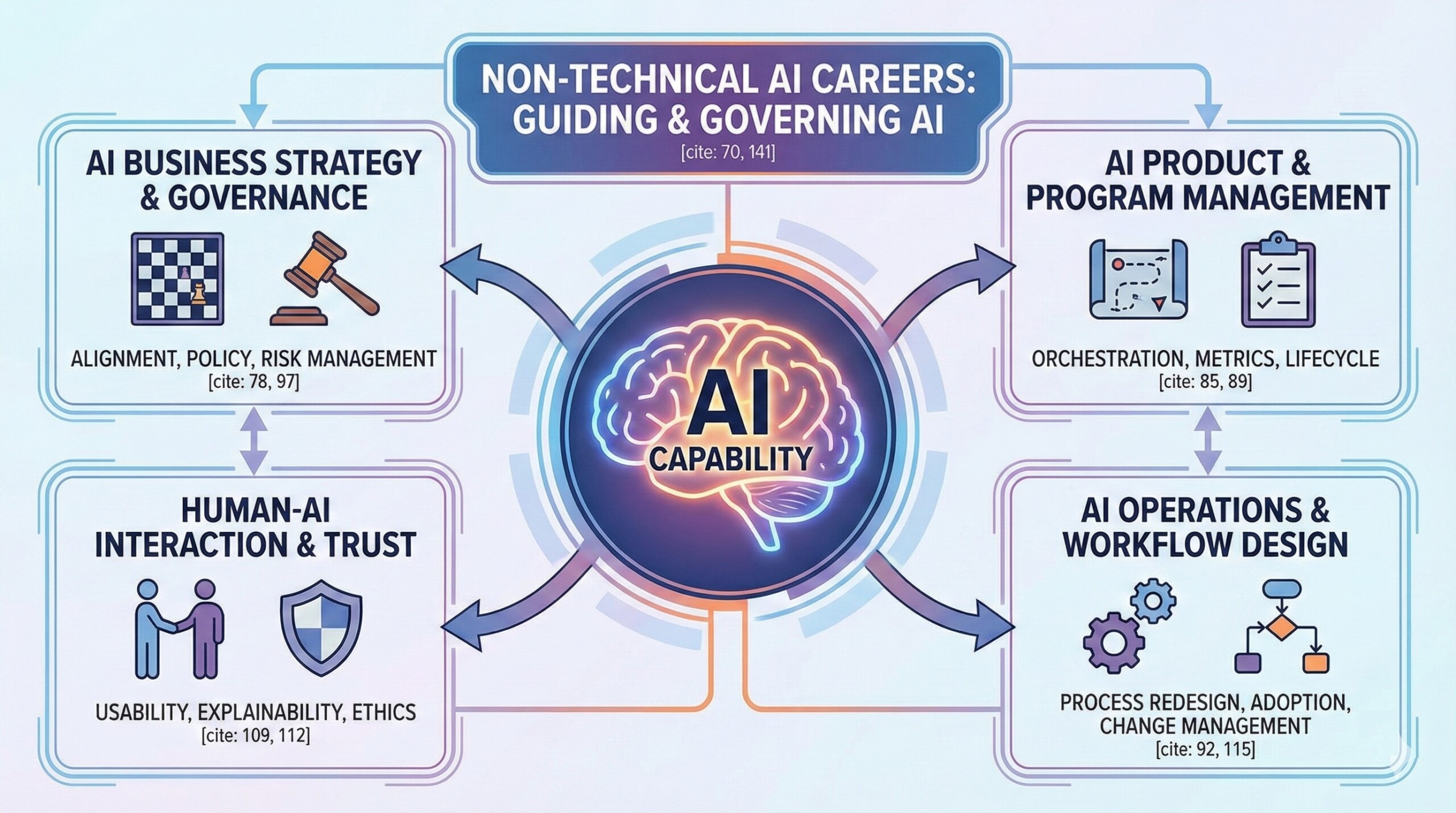
Artificial Intelligence careers in 2026 and beyond are no longer defined by coding ability. While engineers continue to build AI systems, the real expansion of AI careers is happening outside engineering teams: in business leadership, policy, operations, risk, governance, and enterprise transformation. AI has become an organizational capability, not a technical niche. And that opens up immense possibilities for many executives.
This article outlines the core non-technical AI career paths shaping enterprises today. These roles do not require programming, but they do demand judgment, systems thinking, domain knowledge, and strategic clarity. As AI moves from experimentation to execution, non-technical professionals are becoming central to success.
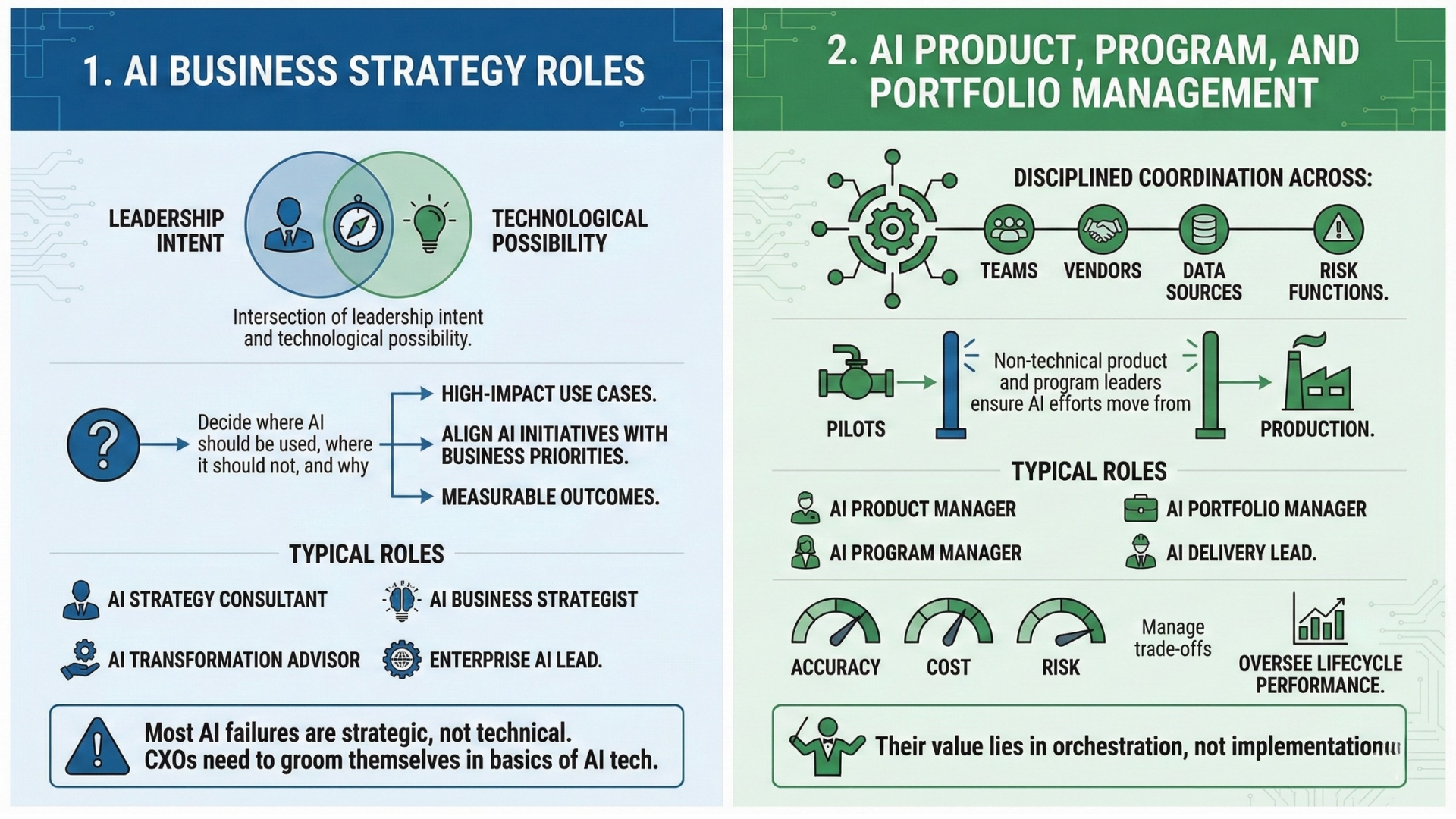
1. AI Business Strategy roles
AI strategy roles sit at the intersection of leadership intent and technological possibility. These professionals help organizations decide where AI should be used, where it should not, and why.
Typical roles include AI Strategy Consultant, AI Business Strategist, AI Transformation Advisor, and Enterprise AI Lead. Their work involves identifying high-impact use cases, aligning AI initiatives with business priorities, and ensuring investments translate into measurable outcomes.
In coming years, these roles are critical because most AI failures are strategic, not technical. However, CXOs need to groom themselves well in the basics of AI tech, before plunging in.
2. AI Product, Program, and Portfolio Management
AI initiatives require disciplined coordination across teams, vendors, data sources, and risk functions. Non-technical product and program leaders ensure AI efforts move from pilots into production.
Roles include AI Product Manager, AI Program Manager, AI Portfolio Manager, and AI Delivery Lead. These professionals define success metrics, manage trade-offs between accuracy, cost, and risk, and oversee lifecycle performance.
Their value lies in orchestration, not implementation. An excellent collection of learning videos awaits you on our Youtube channel.
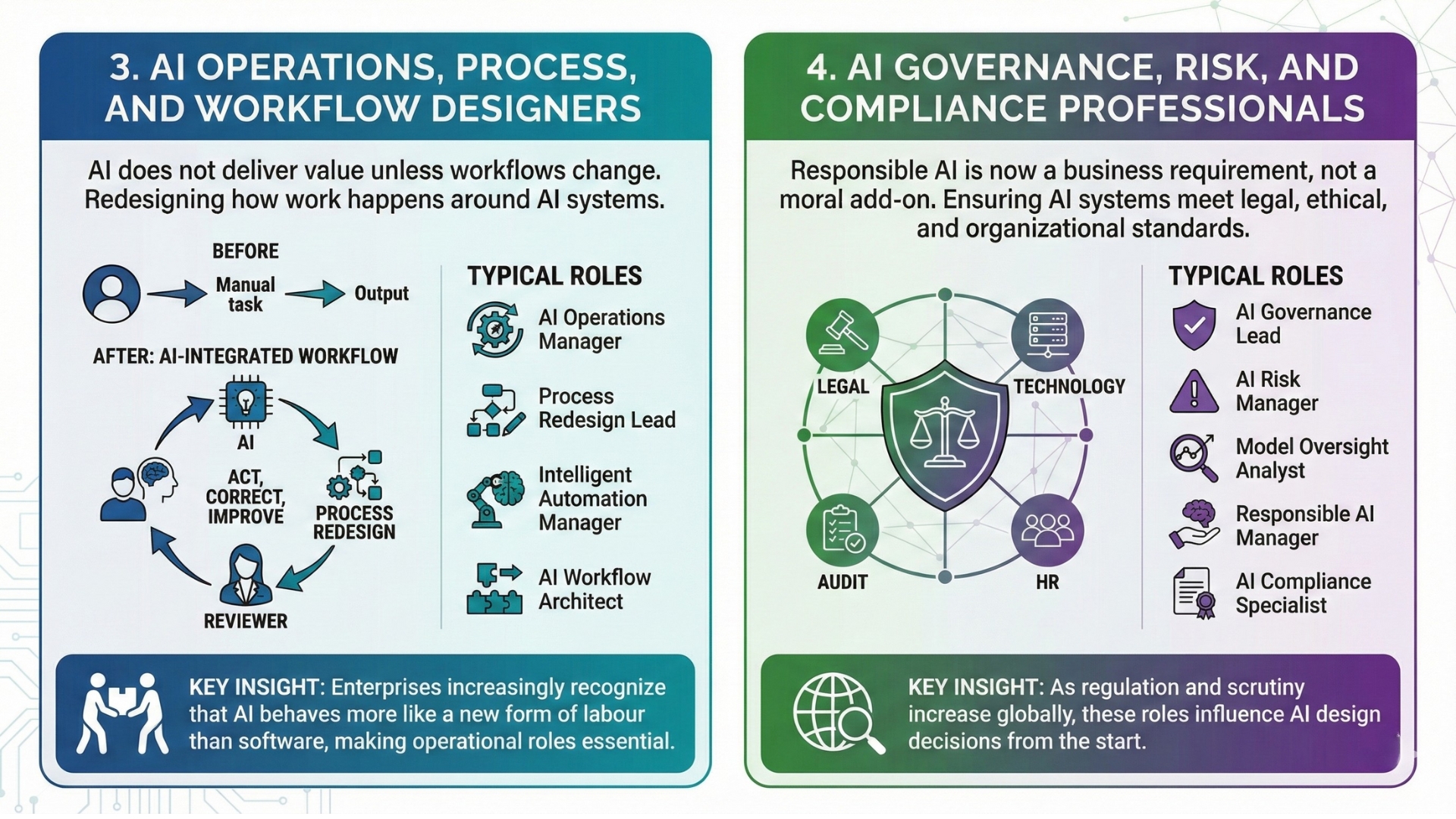
3. AI Operations, Process, and Workflow Designer
AI does not deliver value unless workflows change. These roles focus on redesigning how work happens around AI systems.
Examples include AI Operations Manager, Process Redesign Lead, Intelligent Automation Manager, and AI Workflow Architect. They ensure AI outputs are reviewed, acted upon, corrected, and improved over time.
In coming days, enterprises increasingly recognize that AI behaves more like a new form of labour than software, making operational roles essential.
4. AI Governance, Risk, and Compliance Professionals
Responsible AI is now a business requirement, not a moral add-on. Governance roles ensure AI systems meet legal, ethical, and organizational standards.
Roles include AI Governance Lead, AI Risk Manager, Model Oversight Analyst, Responsible AI Manager, and AI Compliance Specialist. These professionals work across legal, technology, HR, and audit teams.
As regulation and scrutiny increase globally, these roles influence AI design decisions from the start. A constantly updated Whatsapp channel awaits your participation.
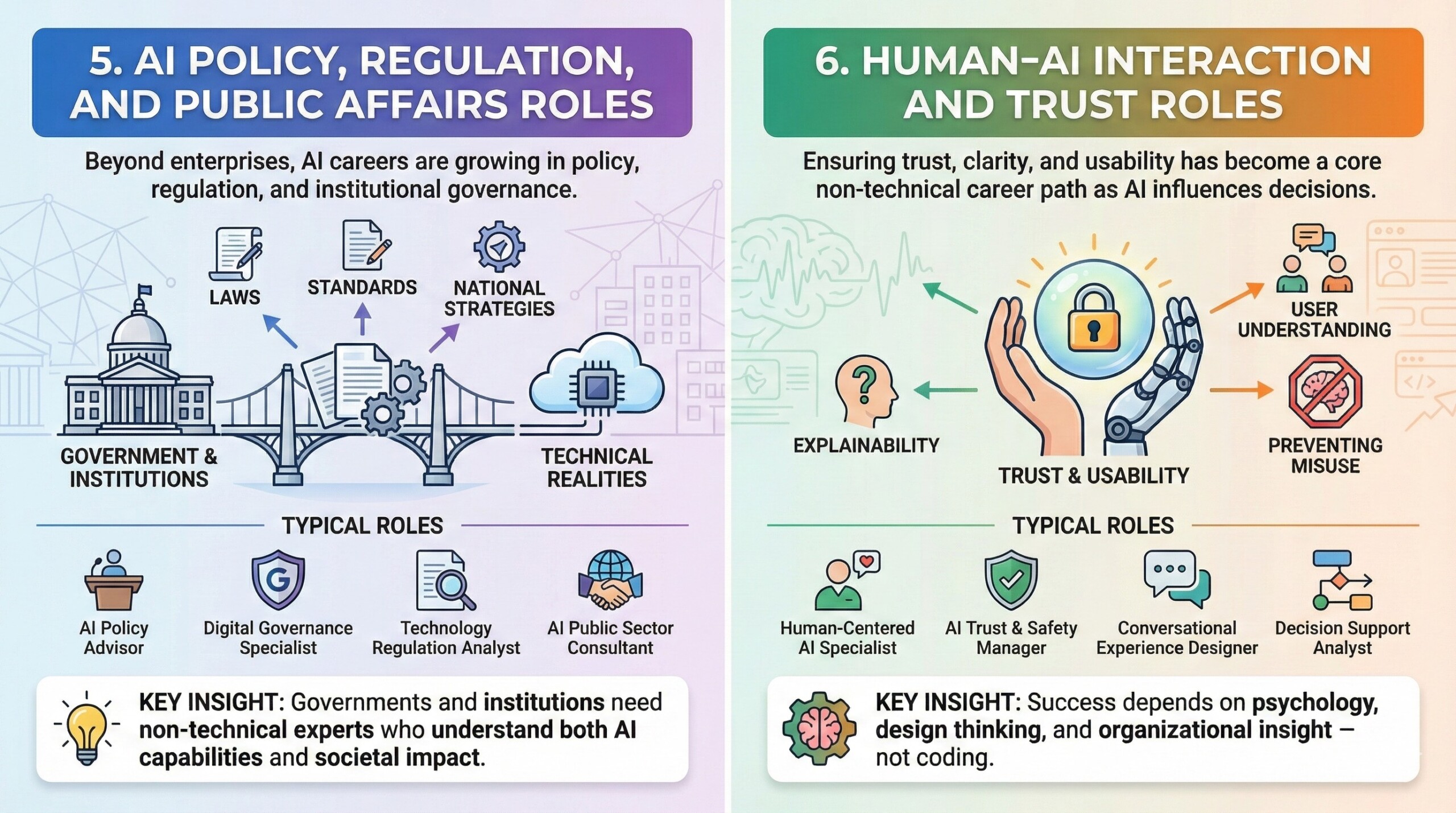
5. AI Policy, Regulation, and Public Affairs roles
Beyond enterprises, AI careers are growing in policy, regulation, and institutional governance.
Roles include AI Policy Advisor, Digital Governance Specialist, Technology Regulation Analyst, and AI Public Sector Consultant. These professionals translate technical realities into laws, standards, and national strategies.
In the coming years, governments and institutions need non-technical experts who understand both AI capabilities and societal impact.
6. Human-AI Interaction and Trust roles
AI increasingly influences human decisions. Ensuring trust, clarity, and usability has become a core non-technical career path.
Roles include Human-Centered AI Specialist, AI Trust & Safety Manager, Conversational Experience Designer, and Decision Support Analyst. These professionals focus on explainability, user understanding, and preventing misuse or overreliance.
Success depends on psychology, design thinking, and organizational insight – not coding. Excellent individualised mentoring programmes available.
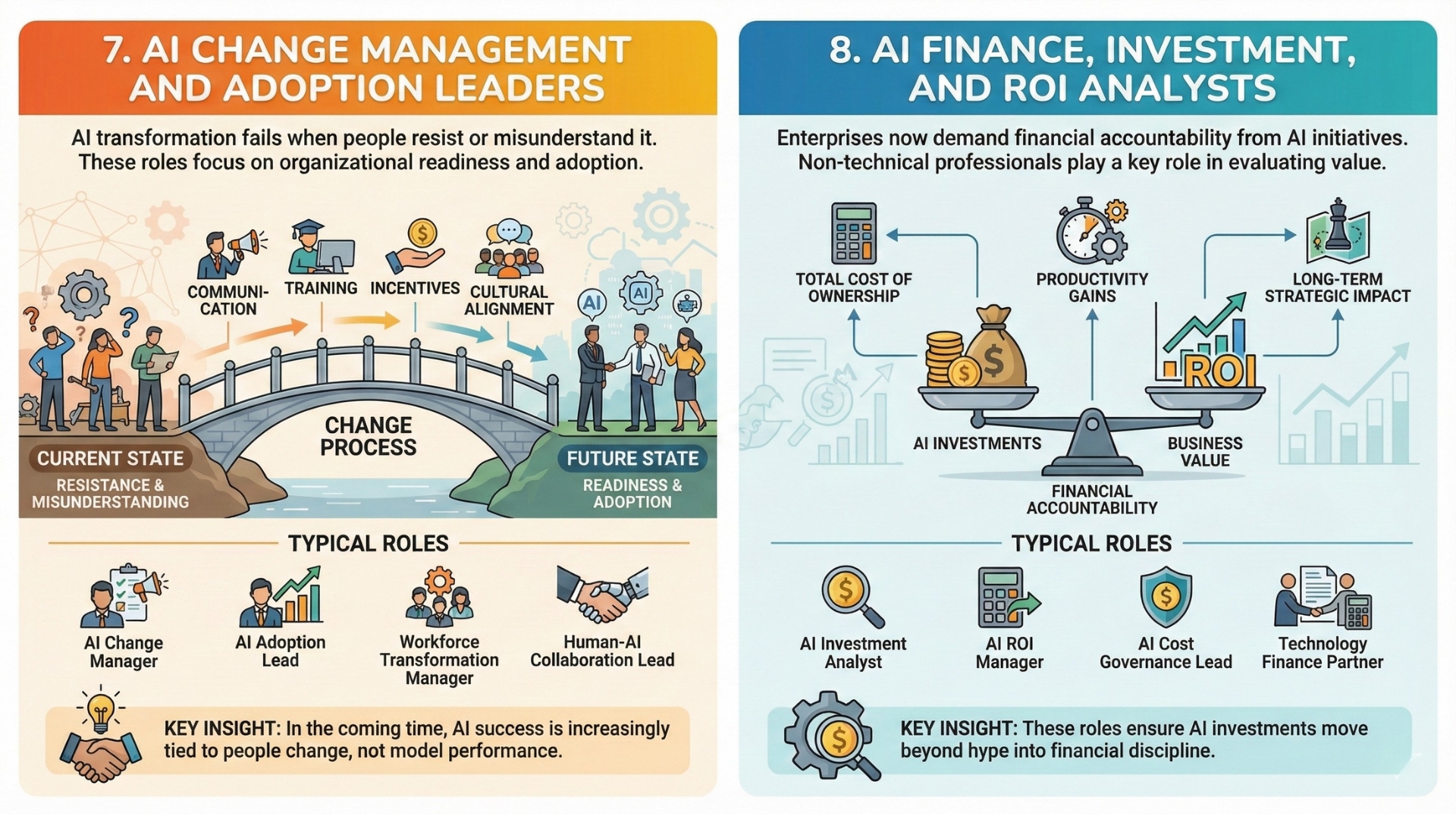
7. AI Change Management and Adoption Leaders
AI transformation fails when people resist or misunderstand it. These roles focus on organizational readiness and adoption.
Examples include AI Change Manager, AI Adoption Lead, Workforce Transformation Manager, and Human-AI Collaboration Lead. They manage communication, training, incentives, and cultural alignment.
In the coming time, AI success is increasingly tied to people change, not model performance.
8. AI Finance, Investment, and ROI Analysts
Enterprises now demand financial accountability from AI initiatives. Non-technical professionals play a key role in evaluating value.
Roles include AI Investment Analyst, AI ROI Manager, AI Cost Governance Lead, and Technology Finance Partner. They assess total cost of ownership, productivity gains, and long-term strategic impact.
These roles ensure AI investments move beyond hype into financial discipline. Subscribe to our free AI newsletter now.
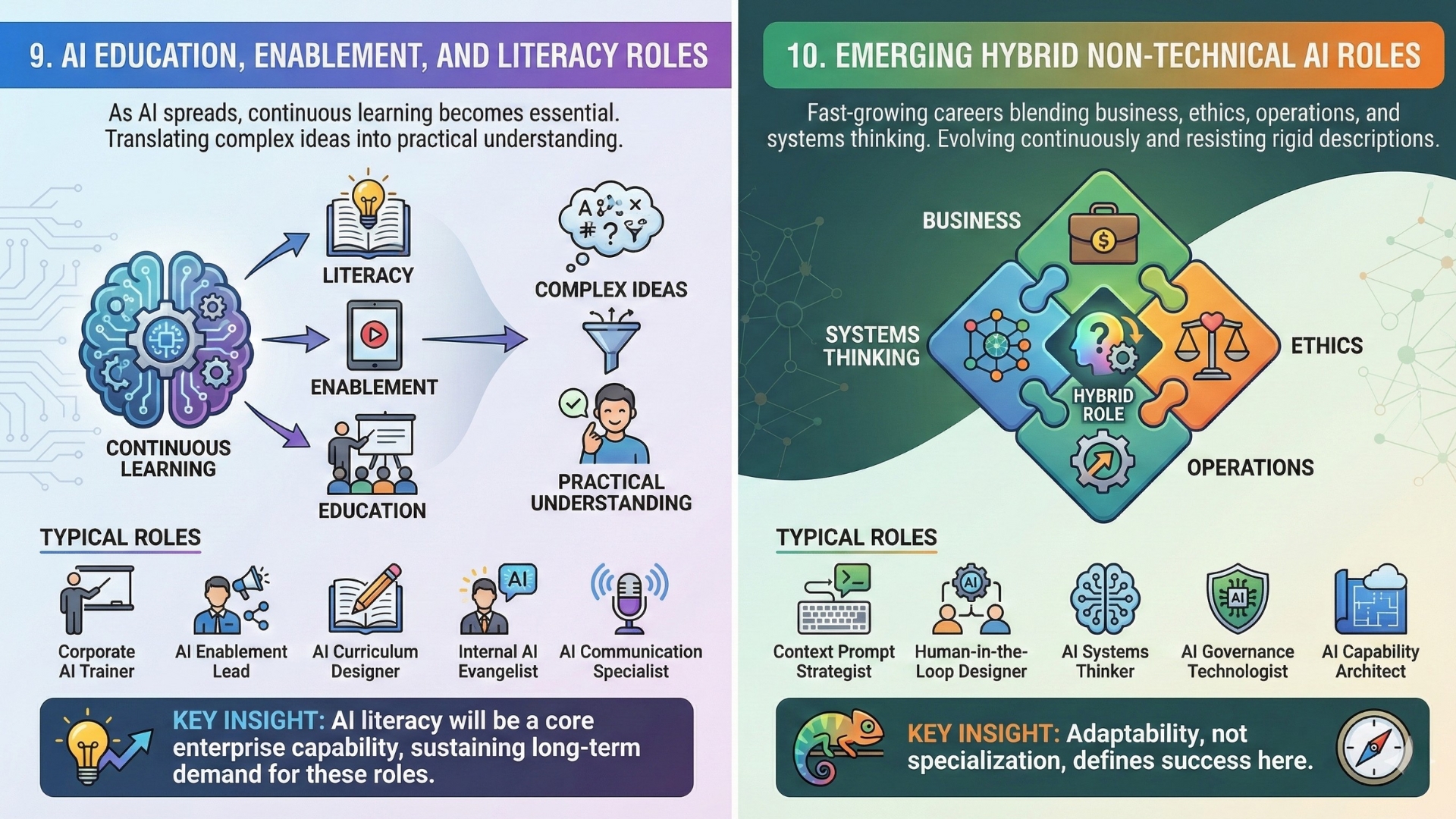
9. AI Education, Enablement, and Literacy roles
As AI spreads across organizations, continuous learning becomes essential.
Roles include Corporate AI Trainer, AI Enablement Lead, AI Curriculum Designer, Internal AI Evangelist, and AI Communication Specialist. These professionals translate complex ideas into practical understanding.
In coming years, AI literacy will be a core enterprise capability, sustaining long-term demand for these roles.
10. Emerging Hybrid Non-Technical AI roles
Some of the fastest-growing careers blend business, ethics, operations, and systems thinking.
Examples include Context Prompt Strategist, Human-in-the-Loop Designer, AI Systems Thinker, AI Governance Technologist, and AI Capability Architect. These roles evolve continuously and resist rigid job descriptions.
Adaptability, not specialization, defines success here. Upgrade your AI-readiness with our masterclass.
Closing thought from Billion Hopes
AI careers are no longer divided into “technical” and “non-technical.” The most resilient roles sit where human judgment, organizational context, and AI capability intersect. Professionals who understand how AI reshapes decisions, workflows, risk, and power structures will remain indispensable – regardless of whether they ever write a line of code.
The future of AI belongs not just to those who build it, but to those who govern it, guide it, and make it work.
Share this with the world
Related Articles