Knowledge Representation and Symbolic Reasoning basics
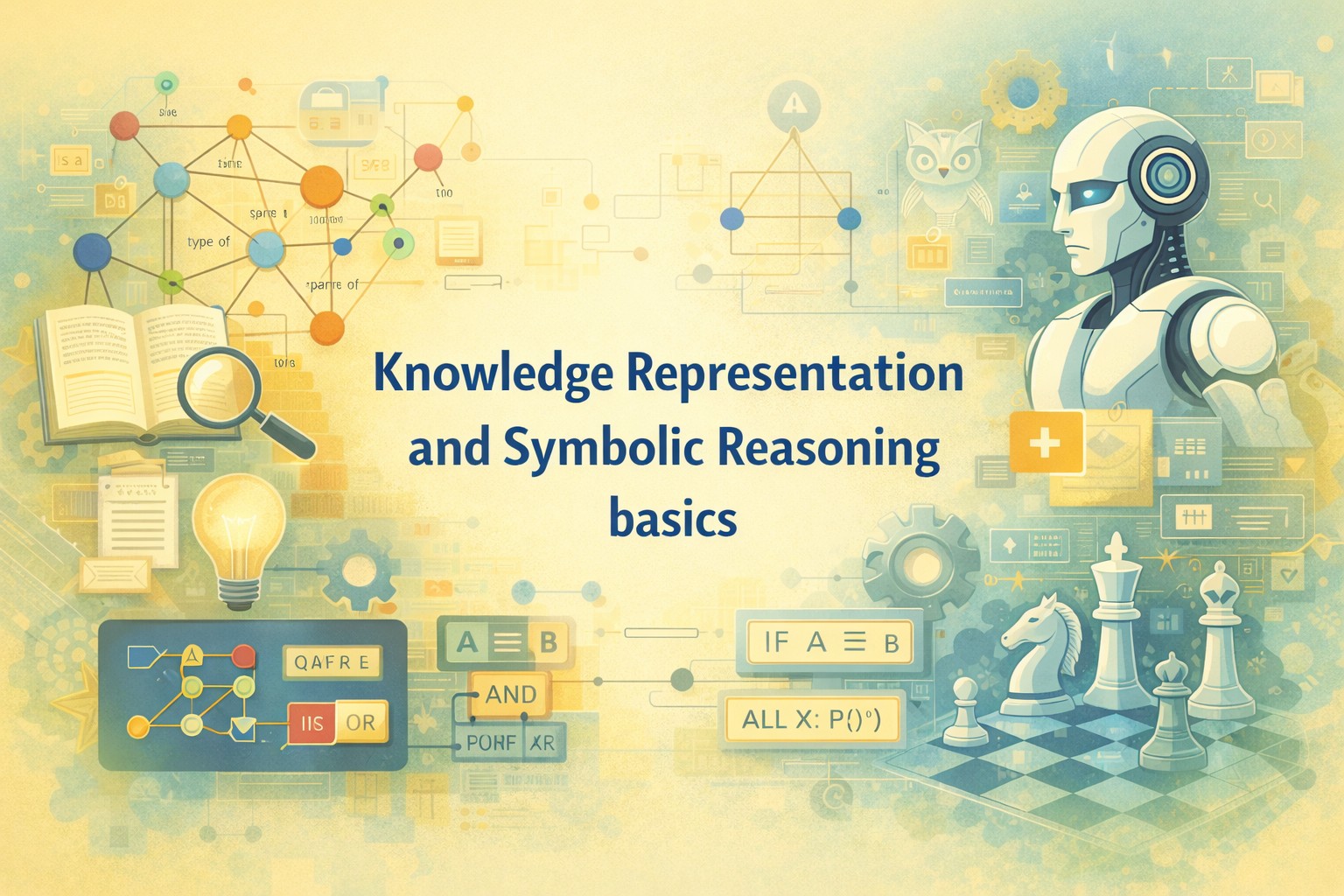
Knowledge representation and symbolic reasoning sit at the roots of artificial intelligence. Long before large datasets and deep neural networks dominated the field, AI research focused on a central question: how can machines represent knowledge about the world and reason with it in ways that resemble human thinking? Even today, as data-driven models surge ahead, symbolic approaches remain essential for explainability, control, and logical decision-making.
Unlike purely statistical systems, symbolic AI is built around explicit structures – rules, symbols, relations, and logic. These systems aim not just to detect patterns, but to encode meaning, relationships, and constraints in a form that can be inspected, queried, and reasoned over. In domains where transparency, reasoning, and correctness matter, symbolic methods continue to play a vital role.
Thus, Knowledge representation and symbolic reasoning can be called the ‘Foundations of Structured Intelligence’.
1. Why knowledge representation matters in AI
Every intelligent system relies on some internal model of the world. Knowledge representation defines how that model is structured: what concepts exist, how they relate, and what rules govern their interaction.
Without structured representations, AI systems struggle to:
- Explain why a decision was made
- Apply rules consistently across cases
- Transfer knowledge across domains
- Handle complex reasoning tasks
Knowledge representation provides the scaffolding that turns raw information into usable understanding. It allows AI systems to move beyond correlation toward reasoning.
For beginners, remember:
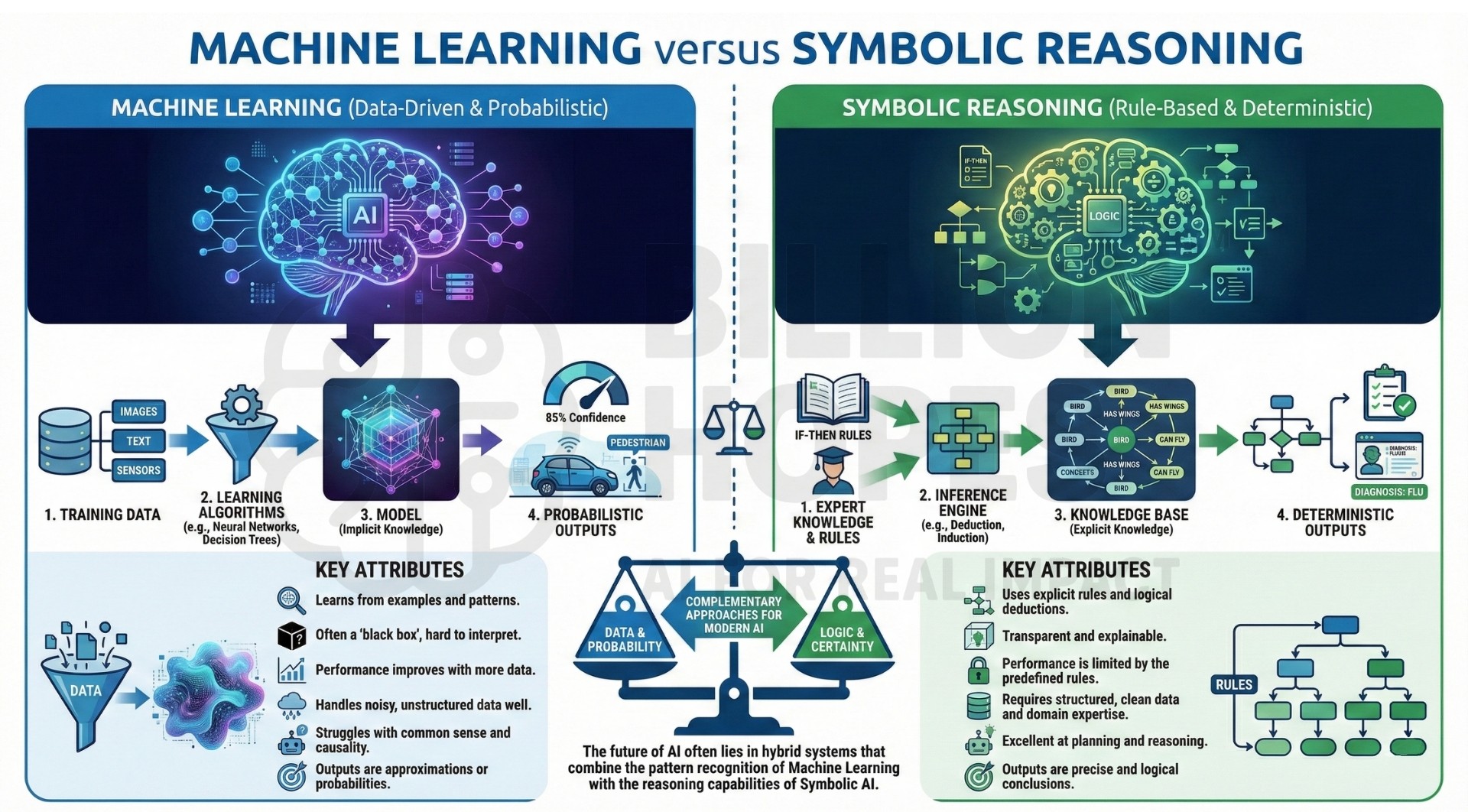
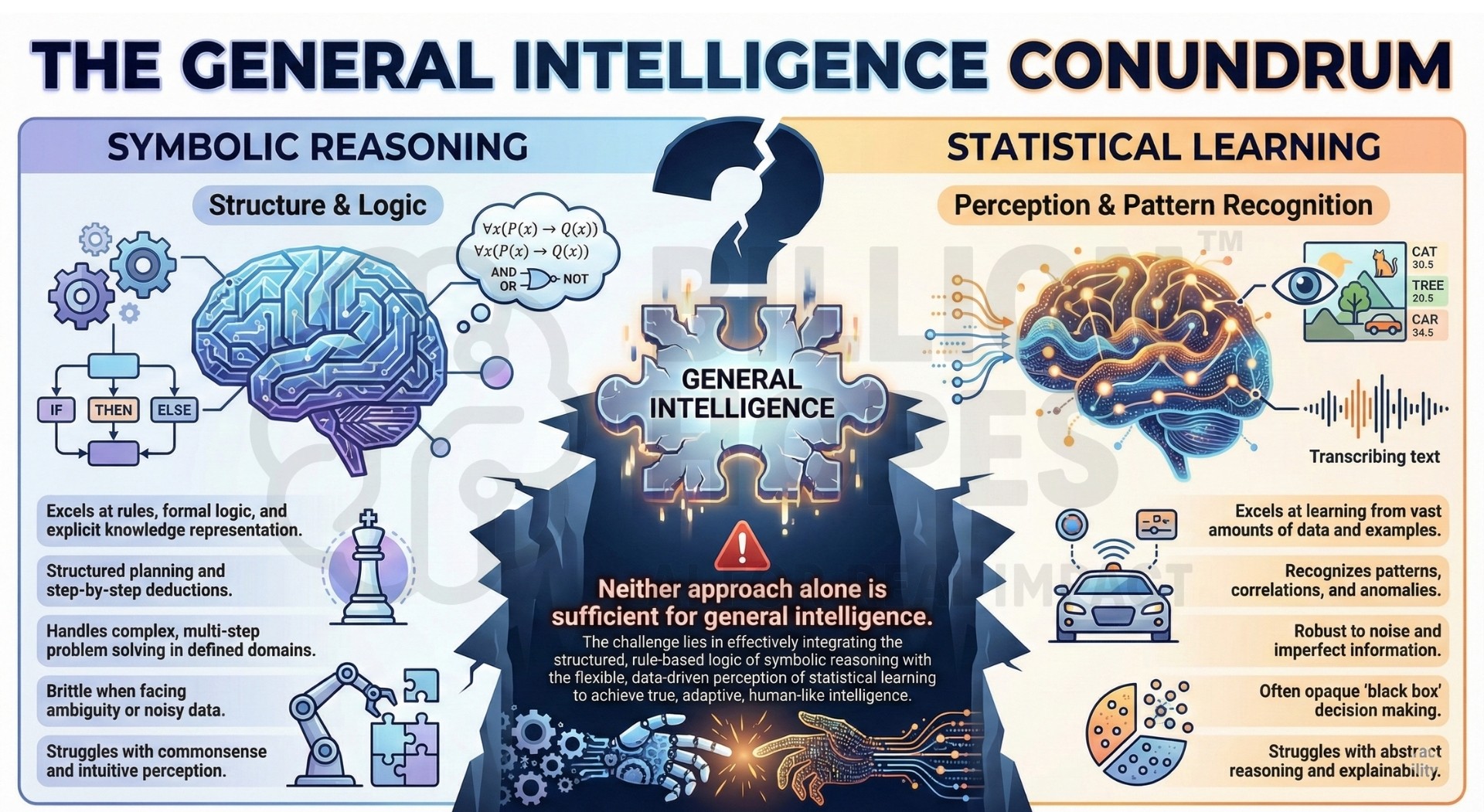
Symbolic reasoning = structure and logic, and
Statistical learning = perception and pattern recognition.
2. What symbolic reasoning means
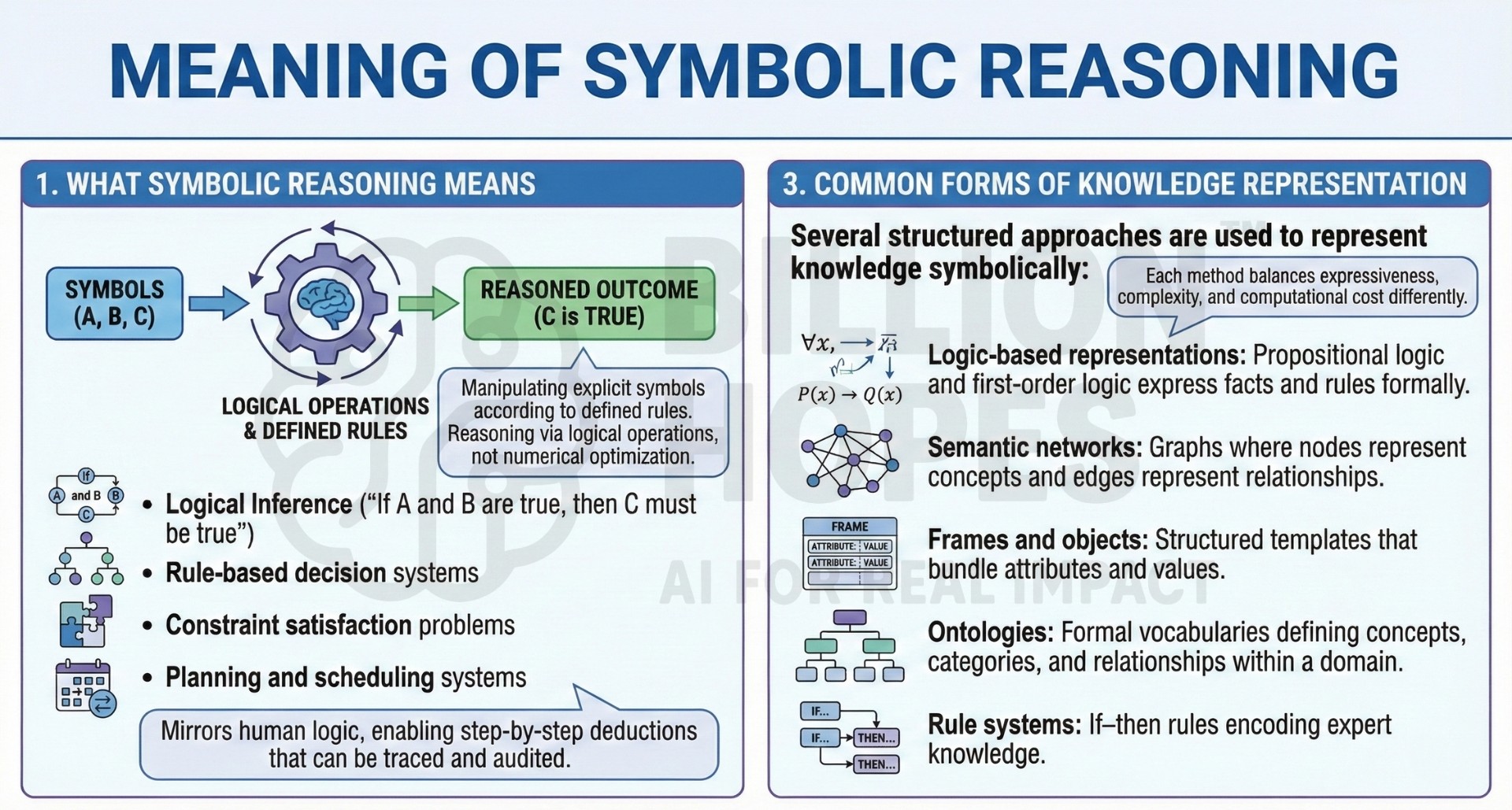
Symbolic reasoning refers to manipulating explicit symbols according to defined rules. Symbols may represent objects, concepts, actions, or abstract ideas. Reasoning occurs through logical operations rather than numerical optimization.
Examples include:
- Logical inference (“If A and B are true, then C must be true”)
- Rule-based decision systems
- Constraint satisfaction problems
- Planning and scheduling systems
Symbolic reasoning mirrors aspects of human logic, enabling step-by-step deductions that can be traced and audited. An excellent collection of learning videos awaits you on our Youtube channel.
3. Common forms of knowledge representation
Several structured approaches are used to represent knowledge symbolically:
- Logic-based representations: Propositional logic and first-order logic express facts and rules formally.
- Semantic networks: Graphs where nodes represent concepts and edges represent relationships.
- Frames and objects: Structured templates that bundle attributes and values.
- Ontologies: Formal vocabularies defining concepts, categories, and relationships within a domain.
- Rule systems: If–then rules encoding expert knowledge.
Each method balances expressiveness, complexity, and computational cost differently.
4. Reasoning mechanisms in symbolic AI
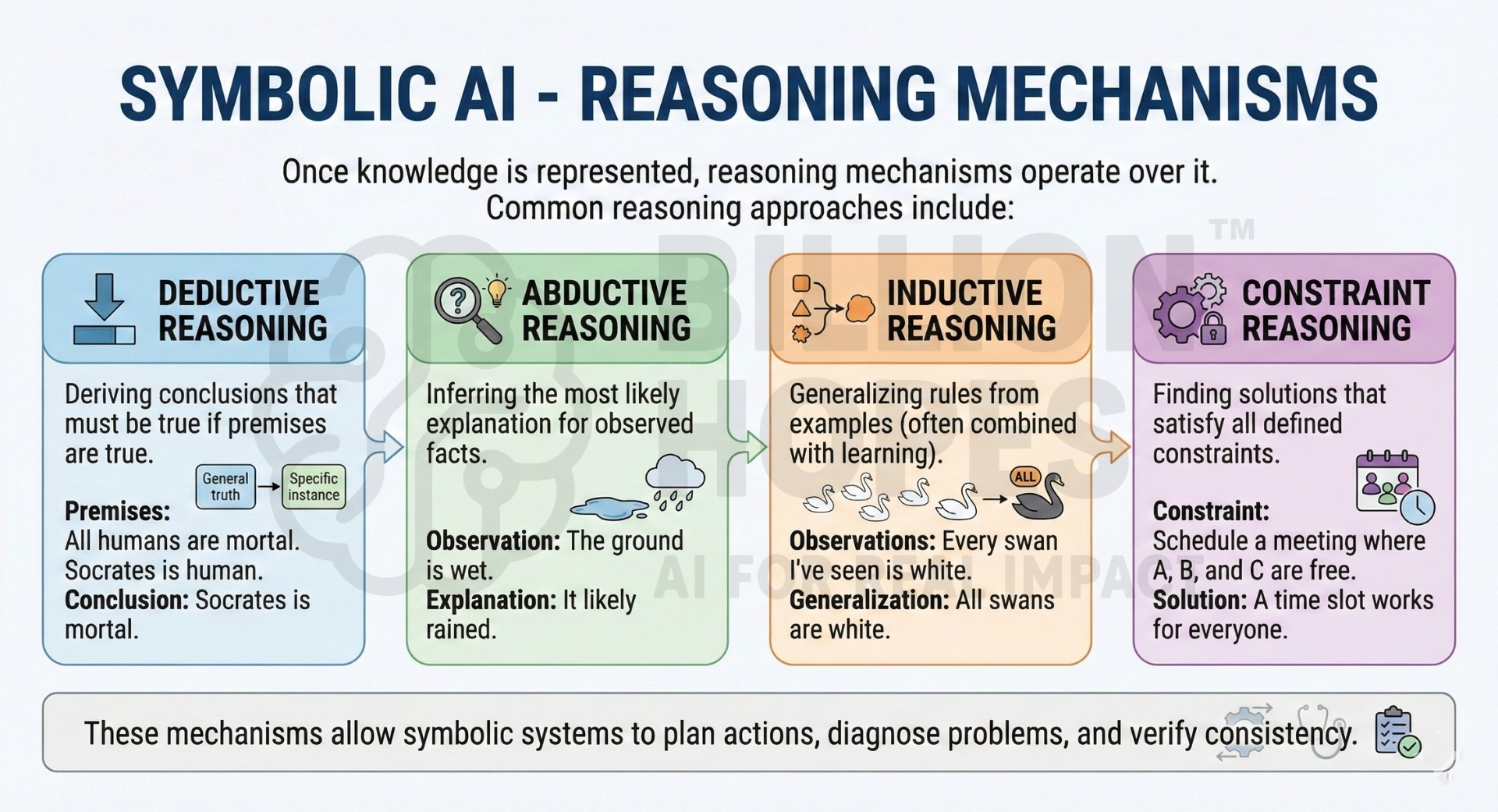
Once knowledge is represented, reasoning mechanisms operate over it. Common reasoning approaches include:
- Deductive reasoning: Deriving conclusions that must be true if premises are true.
- Abductive reasoning: Inferring the most likely explanation for observed facts.
- Inductive reasoning: Generalizing rules from examples (often combined with learning).
- Constraint reasoning: Finding solutions that satisfy all defined constraints.
These mechanisms allow symbolic systems to plan actions, diagnose problems, and verify consistency. A constantly updated Whatsapp channel awaits your participation.
5. Strengths of symbolic approaches
Symbolic AI offers several advantages that data-driven models often lack:
- Interpretability: Rules and logic are human-readable.
- Explicit control: Behavior can be shaped precisely through constraints.
- Consistency: Decisions follow defined rules rather than statistical fluctuation.
- Data efficiency: Systems can operate with limited data if knowledge is encoded.
These properties make symbolic reasoning especially valuable in regulated, safety-critical, or knowledge-rich domains.
6. Limitations and challenges
Despite their strengths, symbolic systems face well-known limitations:
- Knowledge engineering is labor-intensive.
- Systems struggle with ambiguity and noisy data.
- They scale poorly in open-ended, high-dimensional environments.
- Hand-crafted rules can become brittle as conditions change.
Pure symbolic systems often fail when the real world deviates from their assumptions. Excellent individualised mentoring programmes available.
7. Symbolic reasoning vs Statistical learning
Since 2010s, modern AI has shifted toward statistical learning because of its ability to absorb vast amounts of data and adapt automatically. This is why we see the enormous hype in media and reports of widespread interest in corporates to adopting neural network based AI systems. However, these systems often lack explicit reasoning and struggle to explain their outputs. This is why corporates struggle with enterprise-AI-adoption.
Symbolic reasoning excels at structure and logic, while statistical learning excels at perception and pattern recognition. Neither approach alone is sufficient for general intelligence.
8. Neuro-symbolic and hybrid approaches
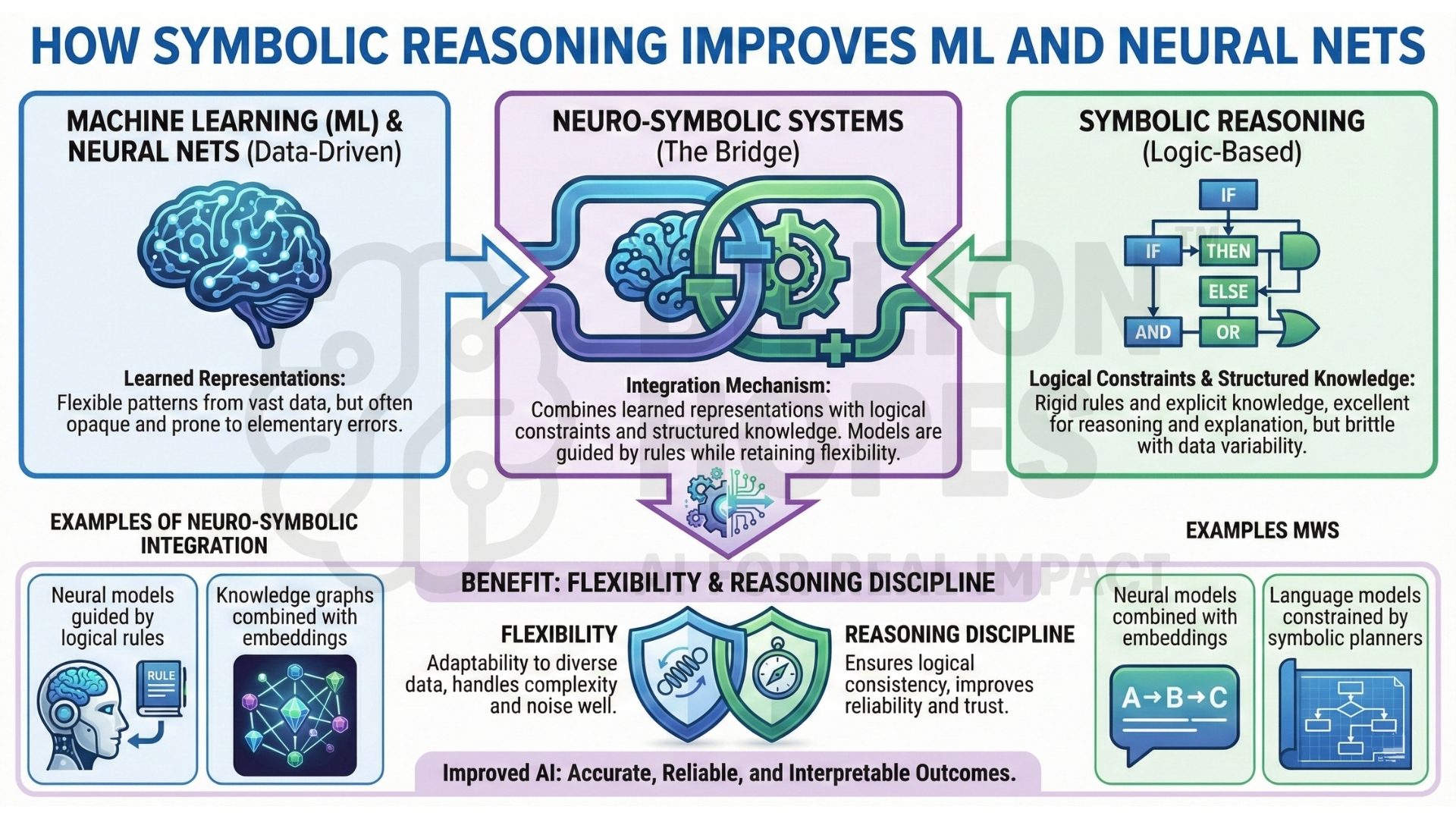
To bridge this gap, researchers increasingly combine symbolic reasoning with machine learning. Neuro-symbolic systems integrate learned representations with logical constraints and structured knowledge.
Examples include:
- Neural models guided by logical rules
- Knowledge graphs combined with embeddings
- Language models constrained by symbolic planners
These hybrids aim to deliver both flexibility and reasoning discipline. Subscribe to our free AI newsletter now.
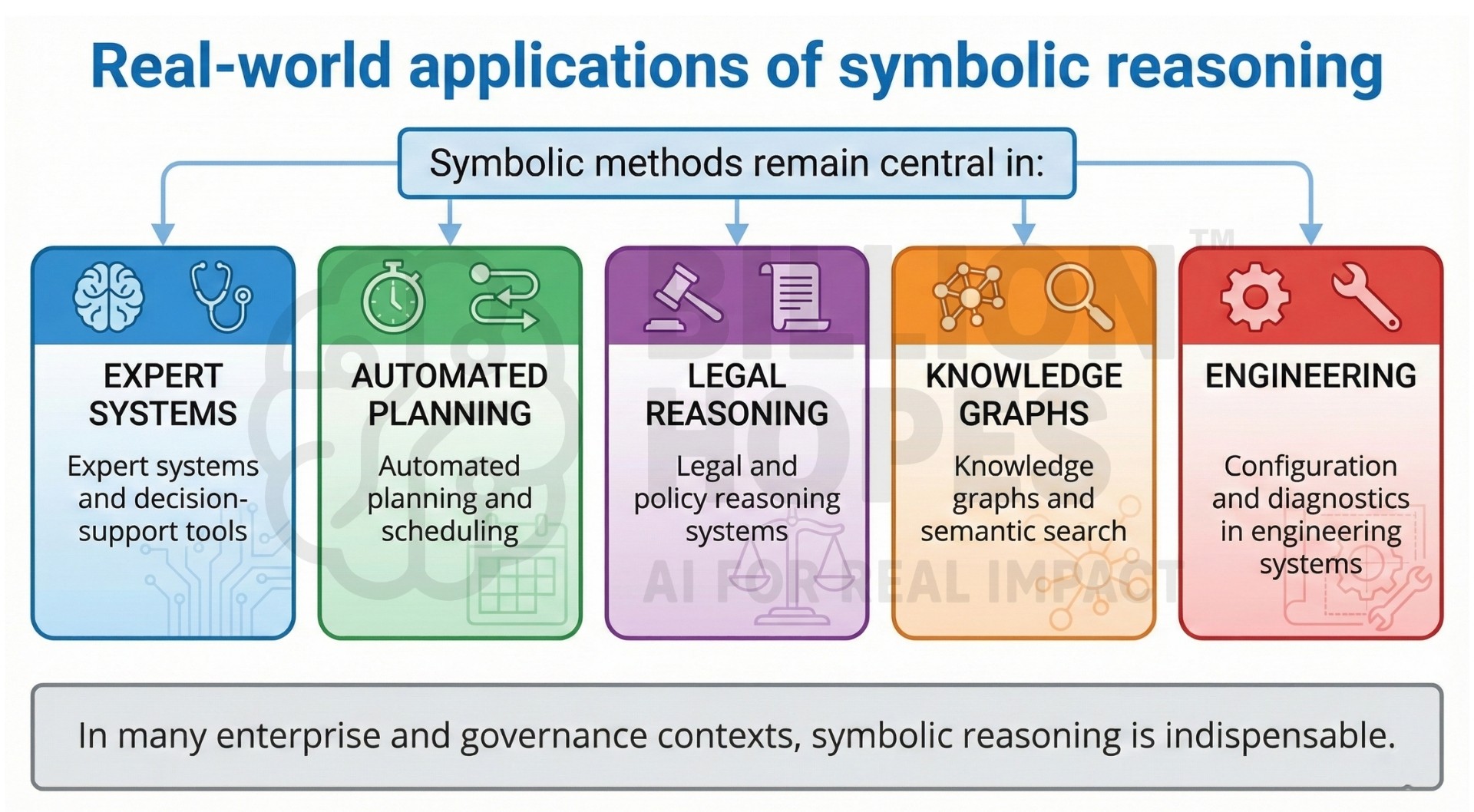
9. Real-world applications of symbolic reasoning
Symbolic methods remain central in:
- Expert systems and decision-support tools
- Automated planning and scheduling
- Legal and policy reasoning systems
- Knowledge graphs and semantic search
- Configuration and diagnostics in engineering systems
In many enterprise and governance contexts, symbolic reasoning is indispensable.
10. The future role of symbolic reasoning in AI
As AI systems are deployed in complex social and organizational settings, the demand for transparency, accountability, and reasoning will grow. Symbolic knowledge representation provides tools to encode values, rules, and responsibilities directly into AI behaviour.
Rather than fading away, symbolic reasoning is becoming a structural complement to learning-based AI – quietly shaping how intelligent systems reason, explain, and align with human intent. Upgrade your AI-readiness with our masterclass.
Summary
Knowledge representation and symbolic reasoning form the conceptual backbone of interpretable and controllable AI. By encoding meaning, structure, and logic explicitly, symbolic systems enable reasoning, explanation, and governance that purely statistical models struggle to provide. As AI systems mature, hybrid approaches that combine learning with symbolic reasoning will play a crucial role in building intelligent systems that are not just powerful, but understandable and trustworthy.
Share this with the world
Related Articles