Understanding ‘harnessing’ in LLM working
Understanding ‘harnessing’ in LLM working
Introduction
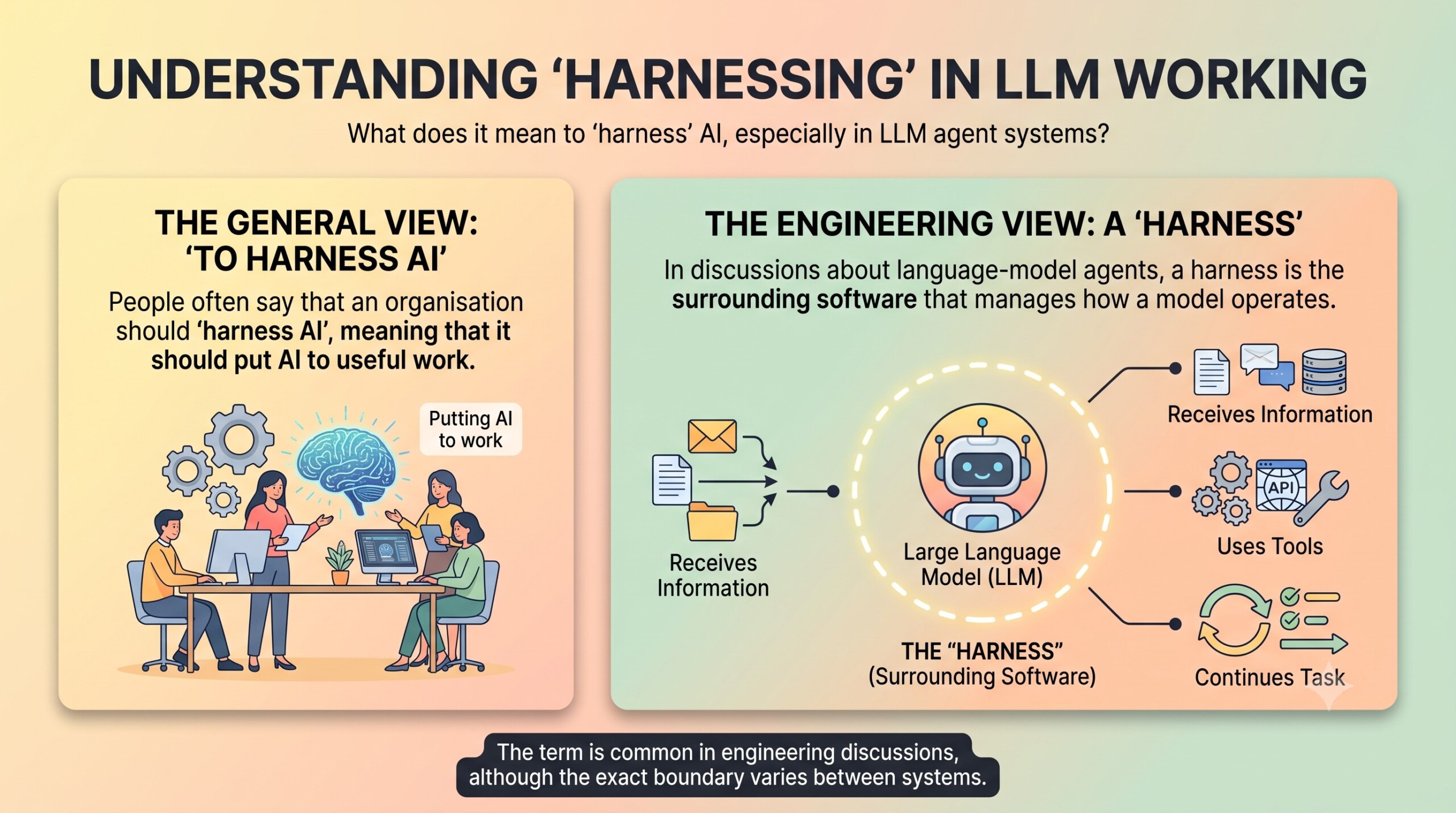
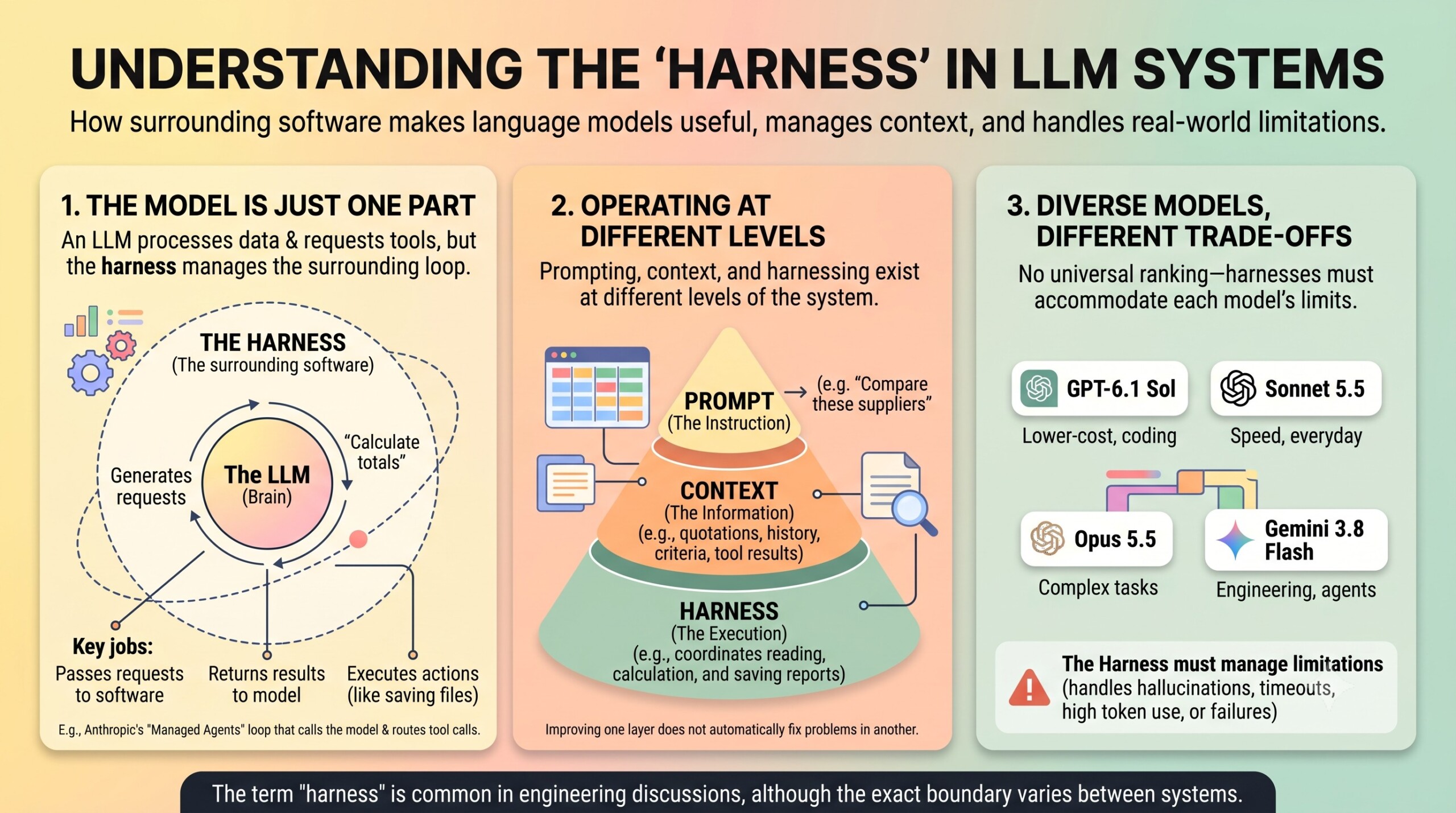
People often say that an organisation should “harness AI”, meaning that it should put AI to useful work. In discussions about language-model agents, a harness has a more specific meaning: the surrounding software that manages how a model receives information, uses tools and continues a task. The term is common in engineering discussions, although the exact boundary varies between systems.
This article uses the model landscape at the end of September 2026 to explain the idea. Imagine a business assistant asked to review supplier quotations and prepare a purchasing brief. Its success depends on the model, but also on which files it receives, how calculations are performed, what happens after an error and whether it can act without approval.
1. The model is one part of the working system
A large language model processes the information presented to it and generates outputs, which may include requests to use tools. The harness manages the surrounding steps, such as passing those requests to available software and returning the results to the model. Anthropic describes a harness in its Managed Agents architecture as the loop that calls Claude and routes its tool calls.
For the supplier-review example, the model might decide that it needs to read a quotation or calculate a total. The surrounding system must provide a working way to do that. A request for access does not itself create access, and an intention to save a report does not prove that the file was saved.
2. Prompting, context and harnessing operate at different levels
A prompt gives instructions or asks for a result, while context includes the information available to the model at that moment. Context can contain documents, conversation history, tool descriptions and previous tool results. Context engineering concerns selecting and maintaining that information as the task develops.
The harness is broader because it also manages execution around the model. In our example, the instruction explains how to compare suppliers, the context contains quotations and criteria, and the harness coordinates reading, calculation and report creation. Improving one layer can help, but it does not automatically repair a problem in another.
3. Different September models offer different trade-offs
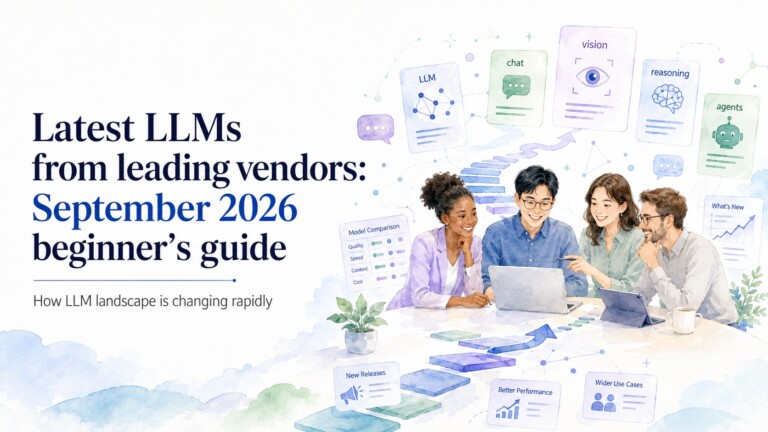
OpenAI introduced GPT-6.1 Sol on 29 September for work including coding, computer use and professional tasks, positioning it as a lower-cost option approaching Astra on selected evaluations. Anthropic’s Sonnet 5.5, introduced on 28 September, emphasises everyday work and speed, while its documentation describes Opus 5.5 as stronger for complex tasks requiring sustained judgement. These are vendor descriptions and task-specific comparisons, not a universal ranking.
Google describes Gemini 3.8 Flash as suited to software engineering, agents and complex knowledge workflows. Its model card also acknowledges hallucinations, possible timeouts and higher token use in some demanding settings. A harness must therefore accommodate limitations rather than assume that a current model always chooses the right action or finishes successfully.
4. Relevant context helps more than an indiscriminate pile of files
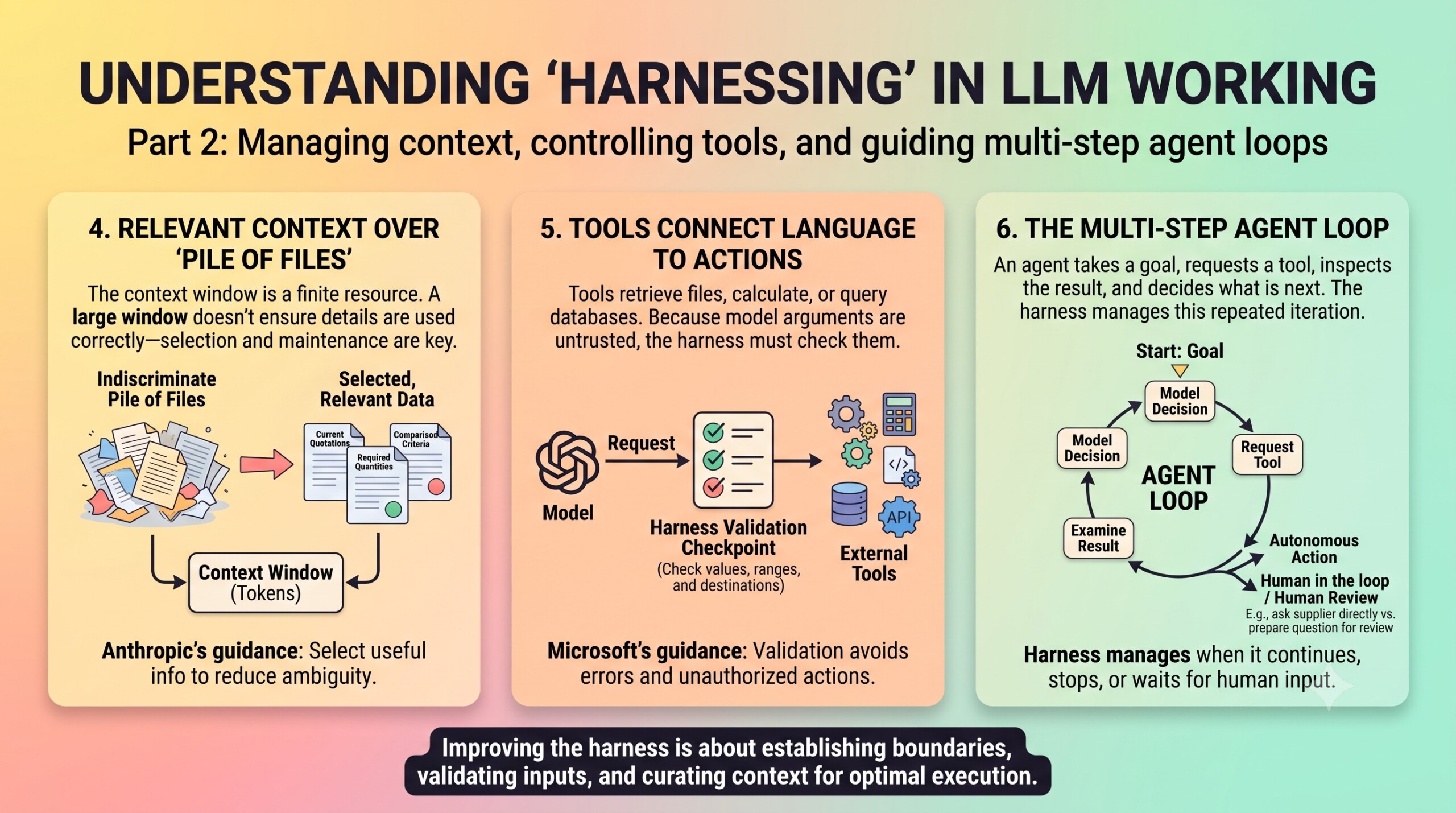
The context window is the amount of information a model can process in one request, usually measured in tokens, or pieces of text and other encoded input. A large window makes more material available, but does not ensure that every relevant detail will be used correctly. Anthropic’s context-engineering guidance emphasises selecting and maintaining useful information within that finite resource.
For the purchasing brief, supply the current quotations, the required quantities and the comparison criteria. Clearly identify superseded versions and missing documents. This suggested arrangement reduces ambiguity and makes it easier for a human reviewer to trace the report back to the intended material.
5. Tools connect language to actions outside the model
A tool can retrieve a file, perform a calculation, query a database or modify another application. The surrounding software must validate the model’s requested inputs before allowing them to drive an operation. Microsoft’s agent guidance recommends checks on acceptable values, ranges and destinations because model-generated tool arguments are untrusted input.
Suppose the assistant needs the total cost of fifty units plus delivery. A calculation tool can perform the arithmetic, but the system still needs the correct quantity, currency and delivery charge. If the source leaves a charge unspecified, the report should explain that uncertainty rather than quietly substitute a number.
6. The agent loop lets work continue through several steps
An agent can receive a goal, request a tool, examine the returned result and decide what to do next. The harness manages this repeated interaction and the conditions under which it continues or stops. Anthropic’s agent documentation describes this combination of model decisions, tool calls and changing information as central to agent behaviour.
Our assistant might first read the quotations, then notice that one delivery date is missing and flag it in the comparison. The workflow should specify whether asking a supplier for clarification is permitted or whether it should simply prepare a question for review. That choice belongs to the task’s operating arrangement, not to an assumption that more autonomous action is always better.
7. Long tasks need a reliable record of progress
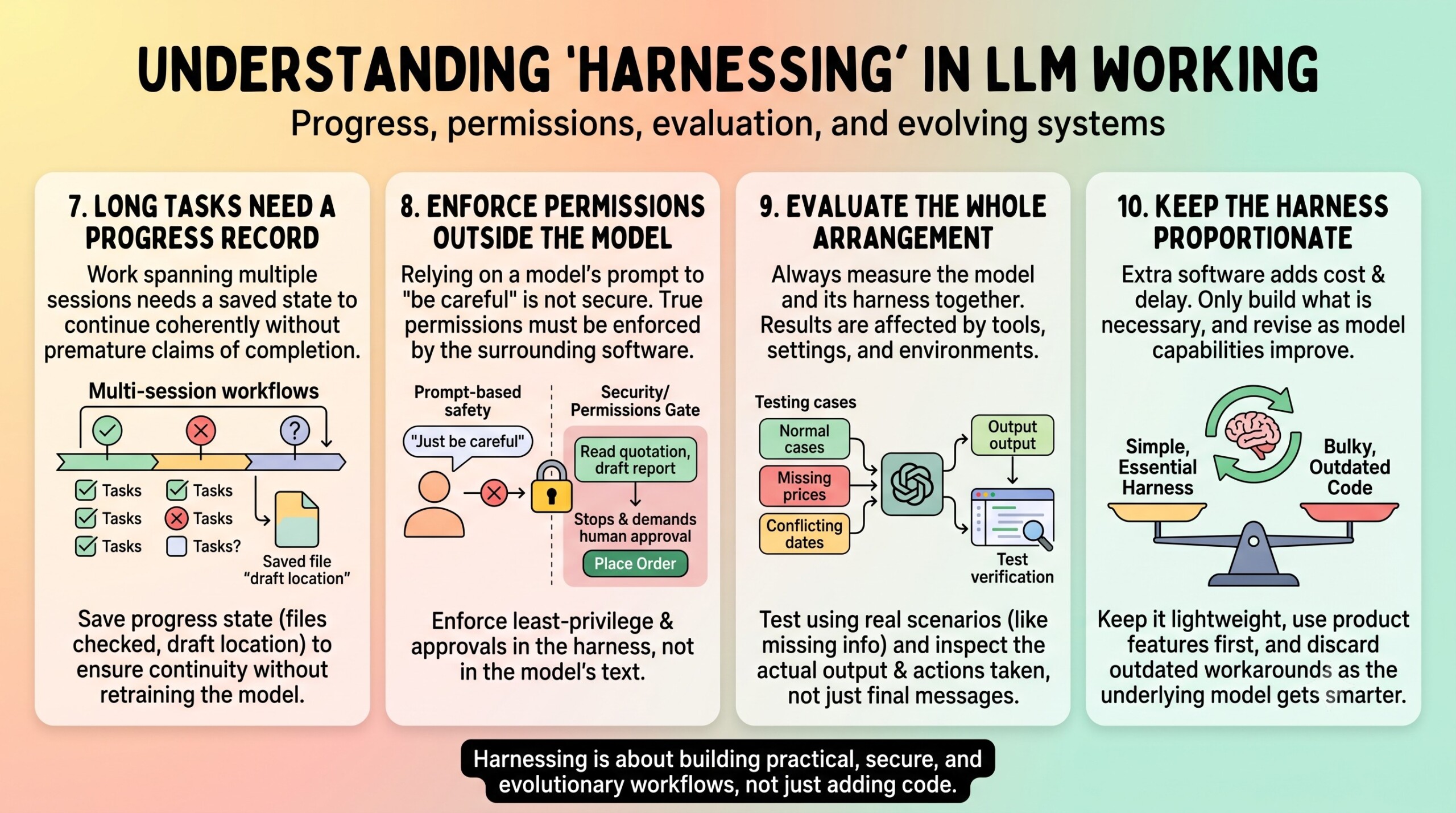
When work spans multiple sessions, the next model call needs enough information to continue coherently. Anthropic’s earlier long-running-agent work used setup instructions, incremental tasks and progress records to address incomplete work and premature claims of completion. Those examples illustrate possible harness techniques rather than mandatory features of every agent.
For a business workflow, a progress record could identify the files already checked, unresolved questions and the location of the current draft. It should also distinguish a proposed action from one that actually happened. Saving this state helps continuity, but does not mean that the base model has been retrained by the task.
8. Permissions should be enforced outside the model’s prose
A useful harness can connect actions to the permissions and approval controls of the surrounding system. Microsoft describes least privilege in terms of limited resource access, data access and allowed operations, together with clear ownership. An instruction to “be careful” does not provide the same protection as a tool that cannot perform an unauthorised operation.
For the supplier assistant, reading approved quotations and preparing a report may be allowed, while placing an order remains unavailable until the right person approves it. The design should also keep instructions found inside a quotation from acquiring the authority of the user’s assignment. These controls reduce exposure without making the system immune to every mistake or attack.
9. Evaluation should examine the whole arrangement
An evaluation harness runs tests and records or assesses results, while an agent harness enables the model to perform work. Anthropic explicitly distinguishes the two and notes that an agent evaluation measures the model and its harness together. This matters when comparing results obtained with different tools, settings or operating environments.
A simple practice test for the quotation assistant could include a normal case, a missing-price case and two documents with conflicting dates. Define the expected behaviour before running the test, including when the assistant should ask for clarification. Inspect the resulting report and any actions taken instead of relying only on the final message.
10. Keep the harness proportionate and revise it as models change
Additional steps can create extra cost, delay and opportunities for failure, so a harness should solve a demonstrated problem. Anthropic has described how a workaround that helped one model became unnecessary with a later model. This is a useful reminder that instructions and control flows can become outdated even when they once improved performance.
A beginner can apply the idea without writing software: save clear task instructions, provide approved material, specify the output and inspect the result. These habits help you use a product’s existing harness, although they do not create technical permission controls by themselves. As your needs grow, ask which controls the product actually provides before granting it broader responsibility.
Conclusion
Harnessing an LLM involves arranging the information, tools and controls that let its capabilities serve a particular task. The end-of-September model choices provide different strengths and costs, while the surrounding system determines how those capabilities are used in practice. Understanding that relationship helps you select products, describe assignments and recognise why a convincing answer still needs to become a verifiable result.