AI Governance Frameworks for Organizations
AI Governance Frameworks for Organizations
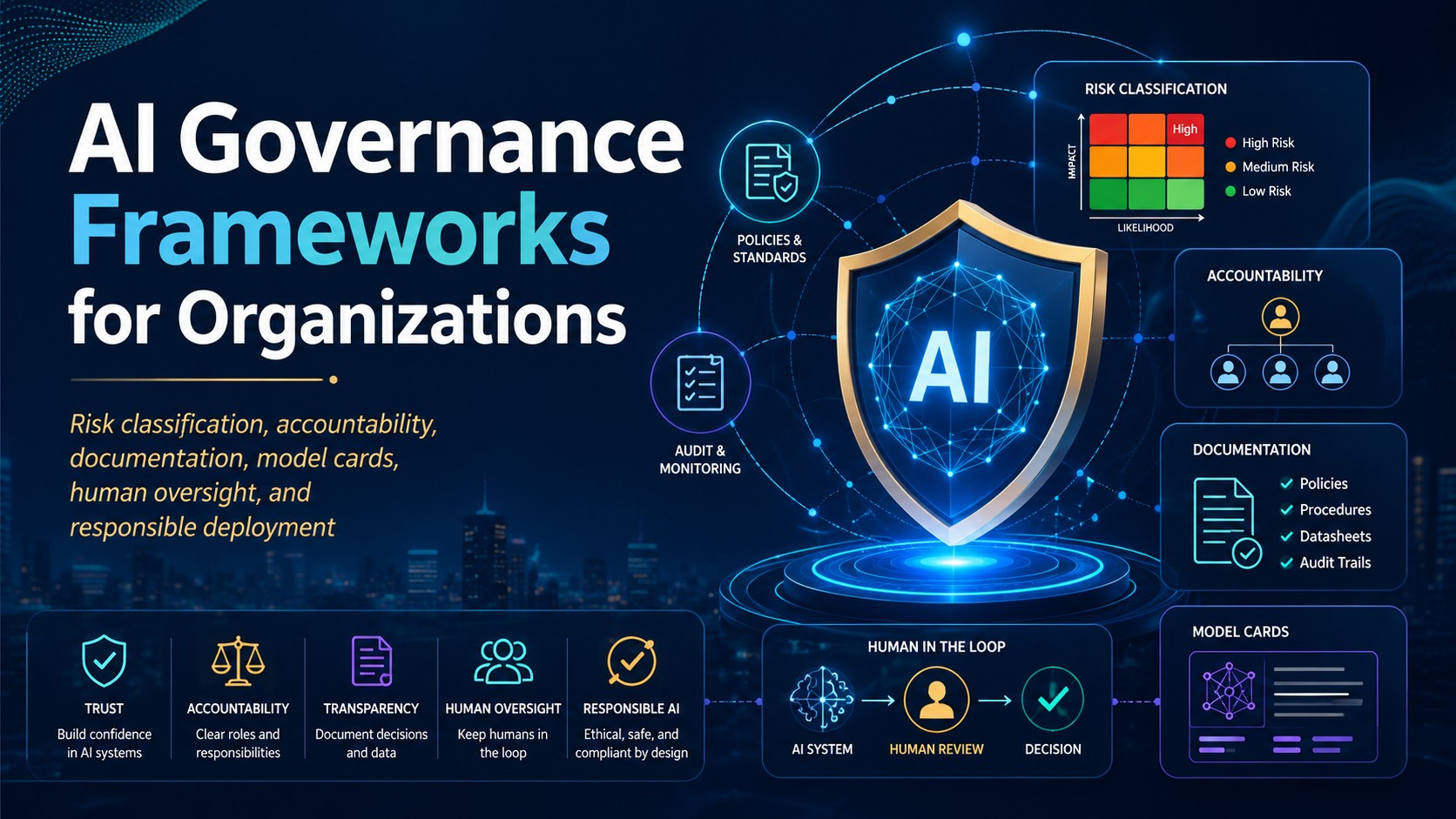
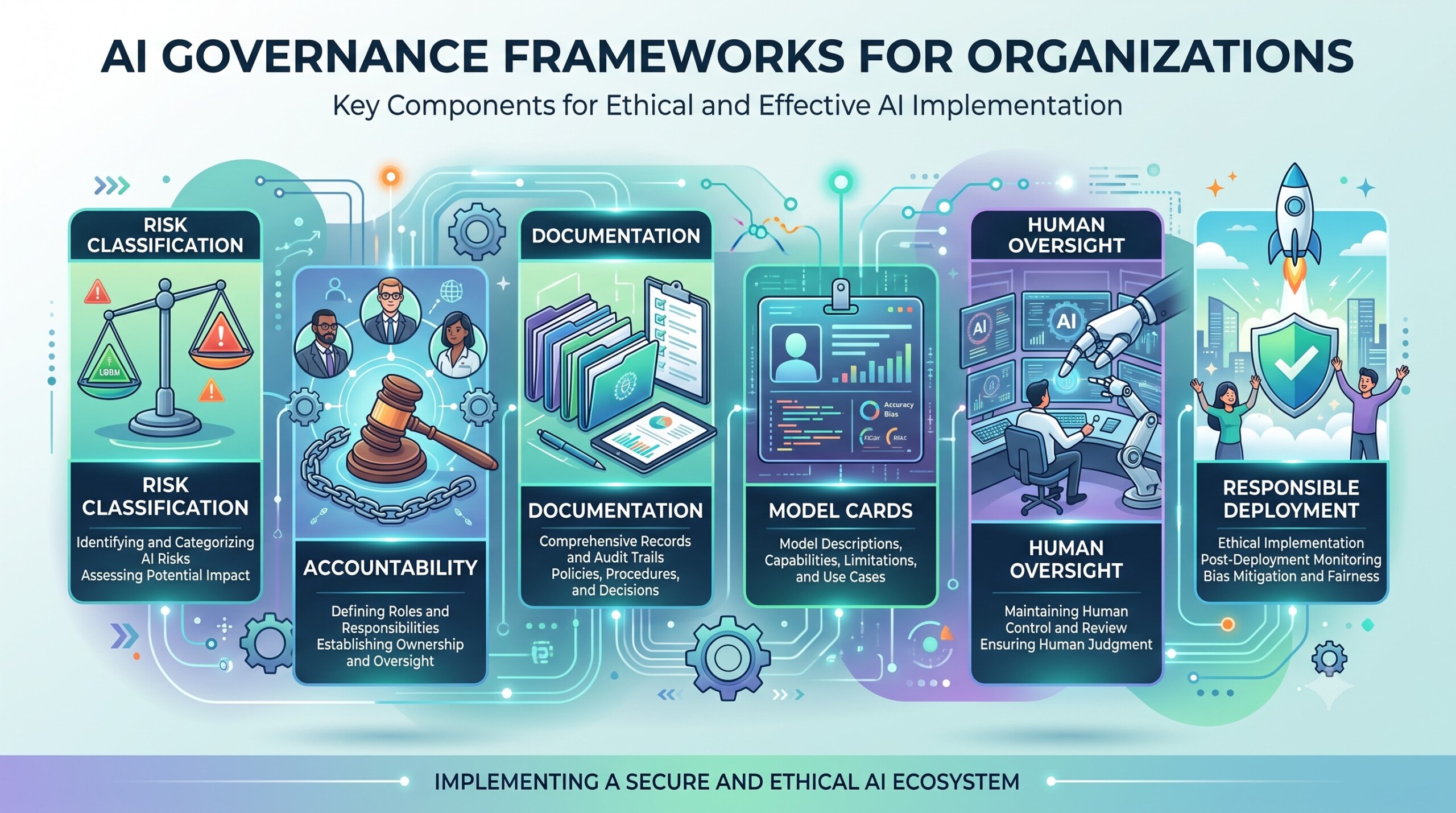
Risk classification, accountability, documentation, model cards, human oversight, and responsible deployment.
Introduction
Artificial intelligence has moved rapidly from experimentation to everyday organizational infrastructure. Companies now use AI for customer service, recruitment, marketing, software development, analytics, forecasting, fraud detection, document processing, research, decision support and increasingly for autonomous or semi-autonomous workflows. As AI becomes embedded in business processes, organizations need more than an AI policy. They need an AI governance framework that determines which systems may be used, what risks must be evaluated, who is accountable, what evidence must be maintained, and when humans must remain involved.
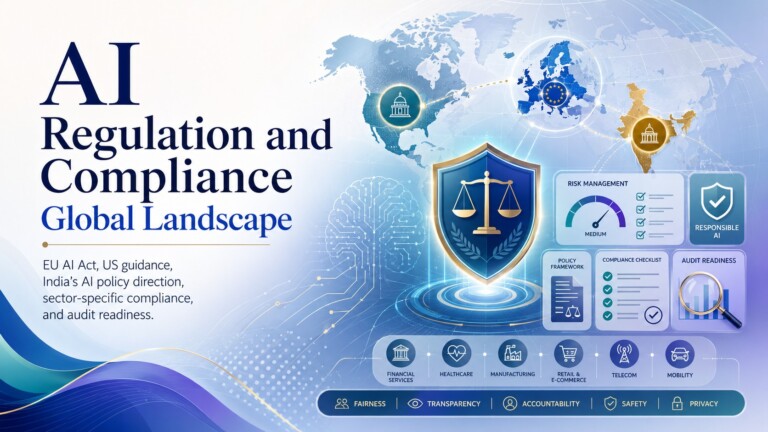
By August 2026, this has become particularly important because AI governance is moving from broad ethical principles toward operational controls and regulatory obligations. The EU AI Act is already being applied in phases, with transparency obligations applying from 2 August 2026 and enforcement of obligations for providers of general-purpose AI models also entering a more mature stage. At the same time, organizations worldwide are using frameworks such as the NIST AI Risk Management Framework and the ISO/IEC 42001 AI management system standard to create structured governance processes. NIST has also stated that AI RMF 1.0 is being revised, illustrating how quickly governance practices themselves are evolving.
Let’s dive deep into the topic now.
1. Begin with risk classification
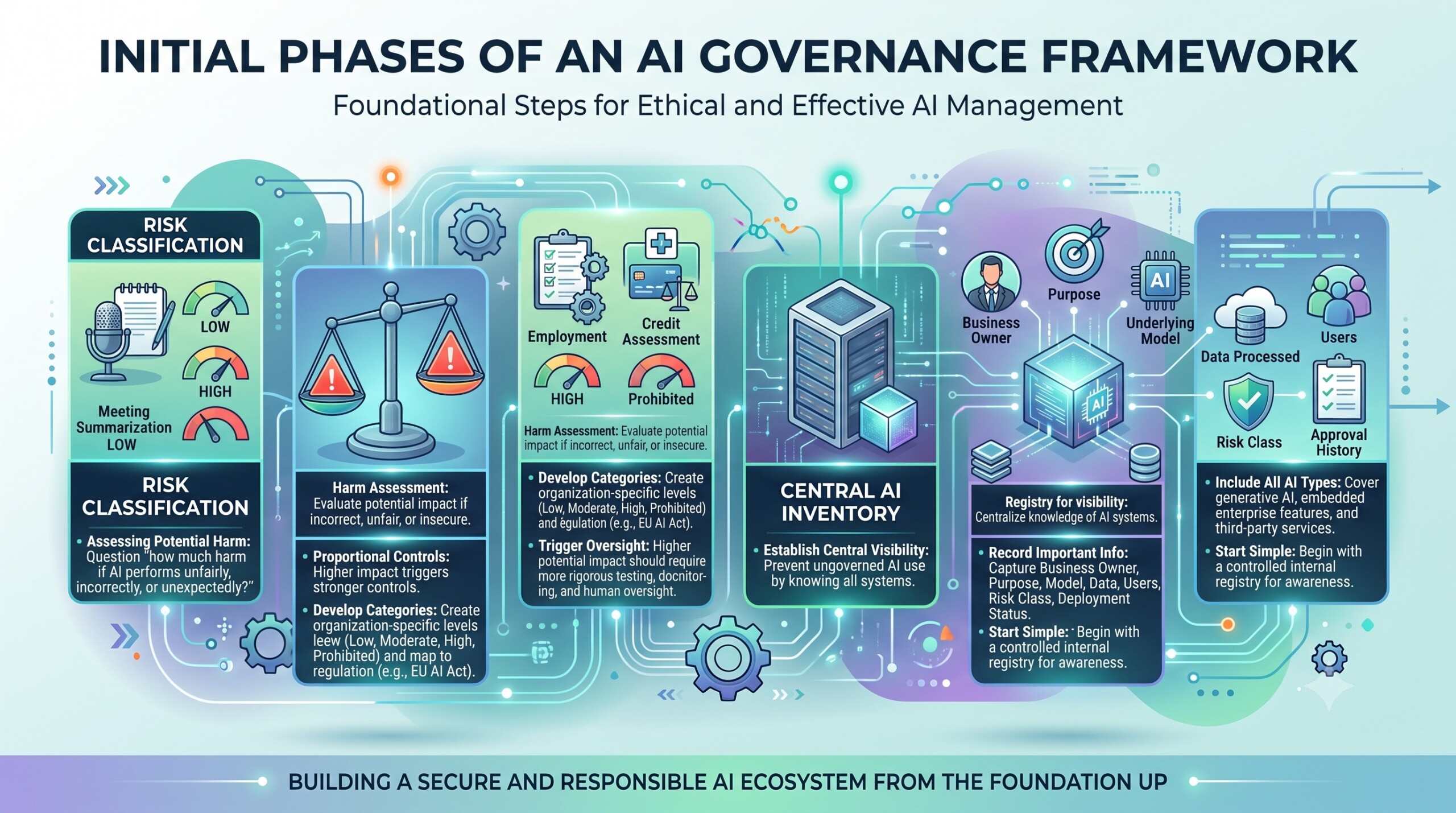
Every AI governance system should begin by asking a simple question: How much harm could this AI system cause if it performs incorrectly, unfairly, insecurely or unexpectedly? An AI tool summarizing internal meeting notes does not normally require the same controls as an AI system involved in employment decisions, credit assessment, healthcare, critical infrastructure or access to essential services. Governance therefore needs to be proportional to the potential impact of the use case.
Organizations can establish their own classification such as low, moderate, high and prohibited risk while mapping it to applicable regulation. The EU AI Act itself follows a risk-based approach that distinguishes prohibited practices, high-risk applications, systems carrying specific transparency risks, and minimal or no-risk applications. The precise legal classification should always be assessed separately, but the organizational principle is valuable everywhere: higher potential impact should trigger stronger testing, approval, documentation, monitoring and human oversight.
2. Maintain a central AI inventory
An organization cannot govern AI systems it does not know it is using. A central AI inventory or AI registry should therefore record important AI systems, models, applications and externally purchased AI services used across departments. This becomes increasingly important as employees independently adopt generative AI applications, embedded AI features in enterprise software and AI agents.
The inventory should capture practical information such as the business owner, purpose, underlying model or service, data being processed, users, risk classification, deployment status and approval history. Organizations do not need an excessively complicated database at the beginning. Even a controlled internal registry creates visibility and prevents a common governance problem where dozens of AI applications are operating without central security, legal, risk or management awareness. An excellent collection of learning videos awaits you on our Youtube channel.
3. Establish clear accountability
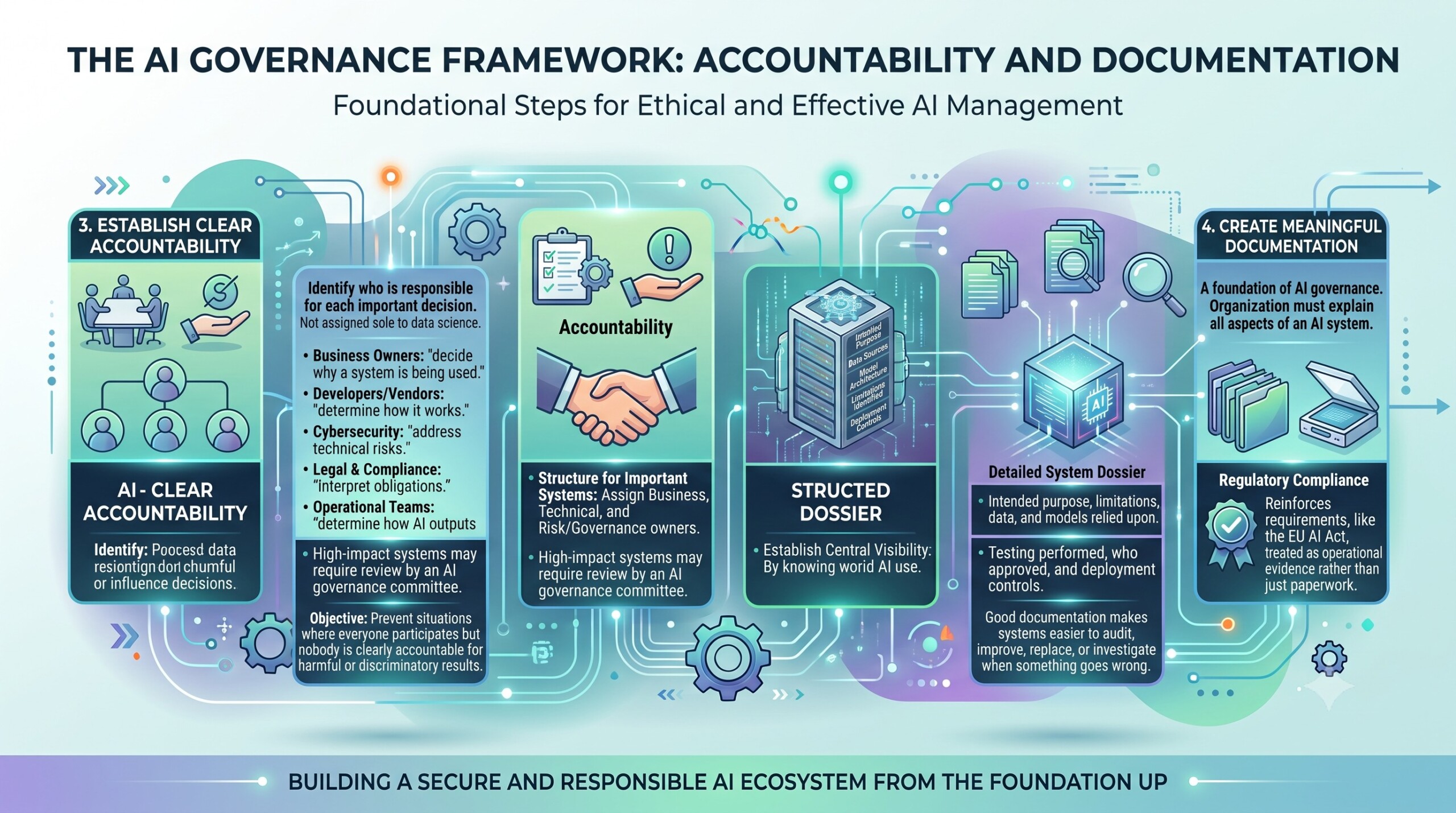
AI governance should identify who is responsible for each important decision. Responsibility cannot simply be assigned to the data science team or technology department. Business leaders decide why a system is being used, developers or vendors determine how it works, cybersecurity teams address technical risks, legal and compliance teams interpret obligations, and operational teams determine how AI outputs influence real decisions.
A useful structure is to assign a business owner, technical owner and risk or governance owner for important AI systems. High-impact systems may additionally require review by an AI governance committee or equivalent body. The objective is not to create bureaucracy. It is to prevent situations where everyone participates in deploying an AI system but nobody is clearly accountable when the system produces harmful, discriminatory, insecure or commercially damaging results.
4. Create meaningful documentation
Documentation is becoming one of the foundations of AI governance. An organization should be able to explain what an AI system is intended to do, what data or models it relies upon, what limitations have been identified, what testing has been performed, who approved the system and what controls apply during deployment.
Regulatory developments reinforce this direction. For example, the EU AI Act requires substantial technical and downstream documentation from providers of general-purpose AI models, including information that helps downstream providers understand model capabilities and limitations. Documentation should therefore be treated as operational evidence rather than paperwork created only for regulators. Good documentation also makes systems easier to audit, improve, replace or investigate when something goes wrong. A constantly updated Whatsapp channel awaits your participation.


5. Use model cards and system cards
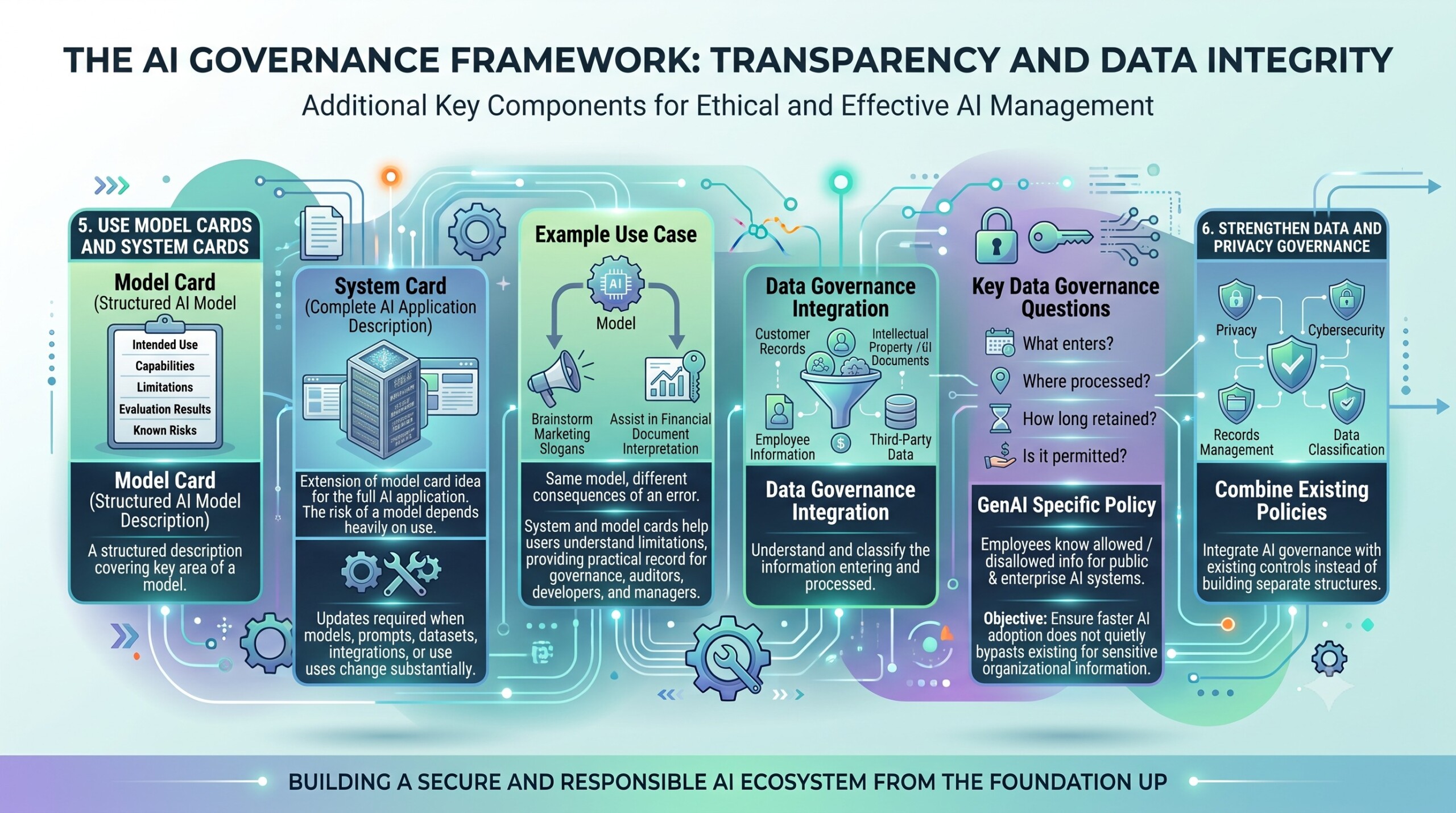
A model card is a structured description of an AI model covering areas such as its intended use, capabilities, limitations, evaluation results and known risks. Organizations can extend this idea into system cards that describe the complete AI application rather than only the underlying model. This distinction matters because the risk of a model depends heavily on how the organization actually uses it.
For example, the same language model could be used to brainstorm marketing slogans or to assist an employee in interpreting financial documents. The underlying model may be identical, but the consequences of an incorrect answer are very different. Model and system cards help users understand such limitations and provide a practical record for governance teams, auditors, developers and business managers. They should be updated when models, prompts, datasets, integrations or intended uses change substantially.
6. Strengthen data and privacy governance
AI governance and data governance are inseparable. Models may process customer records, employee information, intellectual property, confidential documents, operational information or data obtained from third parties. Before deploying AI, organizations should understand what information enters the system, where it is processed, how long it may be retained and whether it is permitted to be used for the intended purpose.
This becomes particularly important with external generative AI services. Employees should know which categories of information may or may not be entered into public or enterprise AI systems. Organizations should combine AI governance with existing privacy, cybersecurity, records-management and data-classification policies instead of building an entirely separate control structure. The objective is to ensure that faster AI adoption does not quietly bypass controls that already exist for sensitive organizational information. Excellent individualised mentoring programmes available.
7. Test before trusting
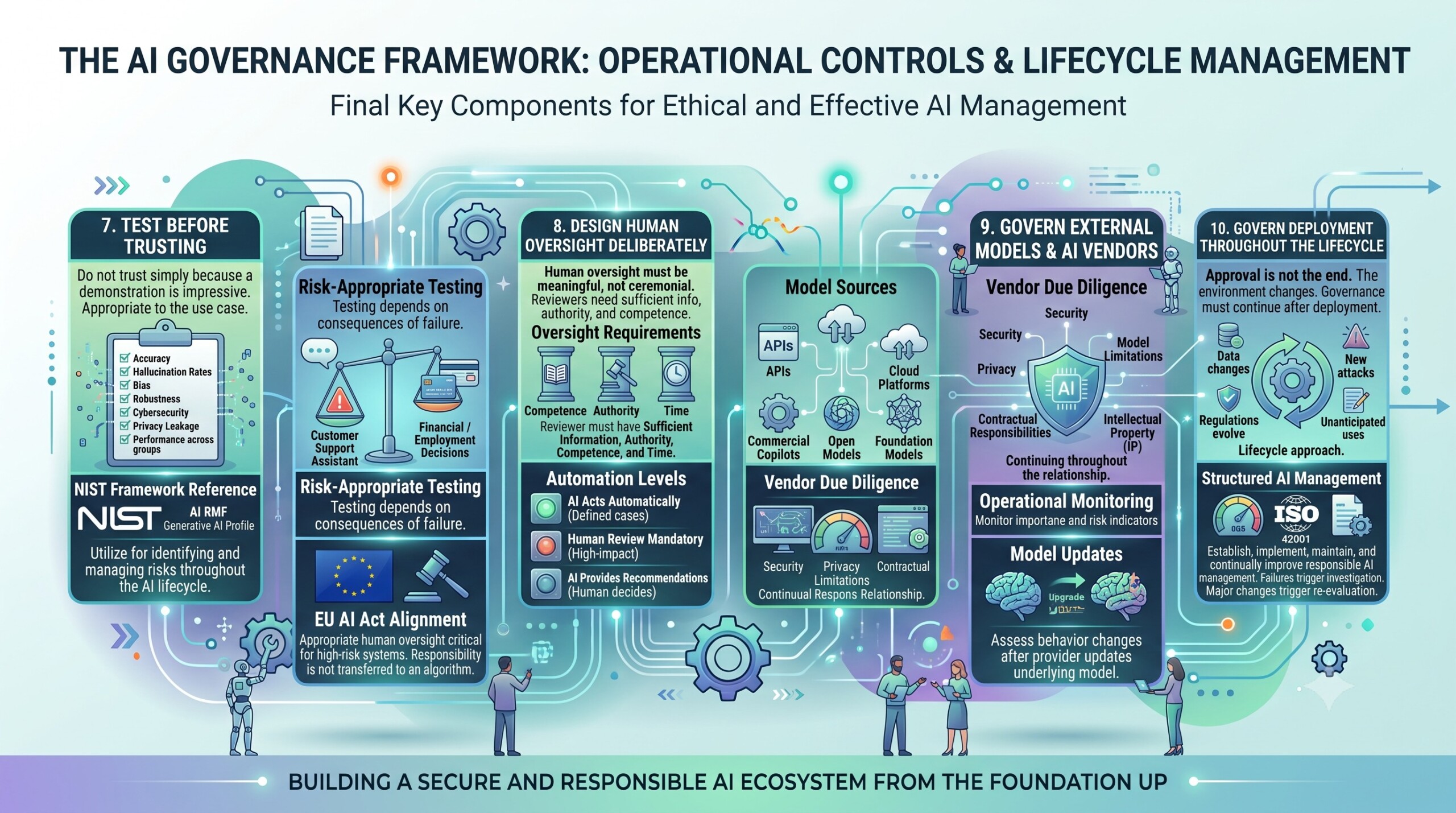
An AI system should not be considered reliable simply because it performs impressively during a demonstration. Governance requires testing, evaluation and validation appropriate to the use case. Organizations may need to test accuracy, hallucination rates, bias, robustness, cybersecurity, privacy leakage, inappropriate outputs, prompt attacks or performance across different groups and operating conditions.
Testing should also reflect the consequences of failure. A customer-support assistant may tolerate occasional mistakes if escalation mechanisms are available, while systems influencing important financial, employment, healthcare or safety decisions require much stronger evidence. NIST’s AI RMF and its Generative AI Profile emphasize risk management throughout the AI lifecycle and provide organizations with practical approaches for identifying and managing risks associated with generative AI.
8. Design human oversight deliberately
Human oversight should not mean placing a person somewhere in the workflow merely so that the organization can claim that a human is involved. The human reviewer must have sufficient information, authority, competence and time to question or override the AI system. Otherwise, human oversight becomes ceremonial rather than protective.
Organizations should therefore define when AI can act automatically, when human review is mandatory and when AI should only provide recommendations. Users should also understand the limitations of the system and know when escalation is required. Human oversight is especially important when AI contributes to consequential decisions. The EU AI Act similarly treats appropriate human oversight as an important control for high-risk AI systems, reinforcing the broader governance principle that responsibility for important decisions cannot simply be transferred to an algorithm. Subscribe to our free AI newsletter now.
9. Govern external models and AI vendors
Many organizations will not develop their most important AI models themselves. They will use APIs, cloud platforms, commercial copilots, open models, foundation models and AI capabilities embedded inside enterprise software. Vendor governance is therefore becoming a major part of AI governance.
Before approving an external AI system, organizations should assess areas such as security, privacy, model limitations, contractual responsibilities, data handling, intellectual-property considerations, availability, monitoring and change management. They should also consider what happens when the provider changes the underlying model. A system tested using one model version may behave differently after an upgrade. Vendor due diligence should therefore continue throughout the relationship rather than ending when the procurement contract is signed.
10. Govern deployment throughout the lifecycle
Approval should not be the end of AI governance. AI systems operate in changing environments. Data changes, models are updated, new attack techniques appear, regulations evolve and employees may start using systems in ways that were never anticipated during initial approval. Governance must therefore continue after deployment.
Organizations should monitor important AI systems, define performance and risk indicators, maintain logs where appropriate, establish incident-reporting mechanisms and periodically reassess higher-risk applications. Serious failures should trigger investigation and corrective action, while major changes should trigger renewed evaluation. This lifecycle approach is consistent with ISO/IEC 42001, which provides organizations with a structured AI management system for establishing, implementing, maintaining and continually improving responsible AI management. Upgrade your AI-readiness with our masterclass.
Conclusion
Effective AI governance is ultimately about making AI usable, accountable and controllable at organizational scale. A practical framework does not require every AI application to pass through months of committees and documentation. It requires controls that are proportionate to risk: an inventory to know what is being used, risk classification to determine the level of scrutiny, clear accountability, reliable documentation and model cards, appropriate testing, strong data governance, meaningful human oversight, vendor controls and continuous monitoring after deployment. In August 2026, organizations should also recognize that governance requirements are still evolving. For example, the current consolidated EU AI Act applies important transparency provisions now, while key high-risk system requirements have later application dates, including 2 December 2027 for specified Annex III systems and 2 August 2028 for certain product-related high-risk systems. The sensible organizational response is therefore not to chase individual regulations one at a time, but to build a durable AI governance operating system that can adapt as technologies, standards and laws continue to change.