AI in Drug Discovery, Genomics & Precision Medicine Careers
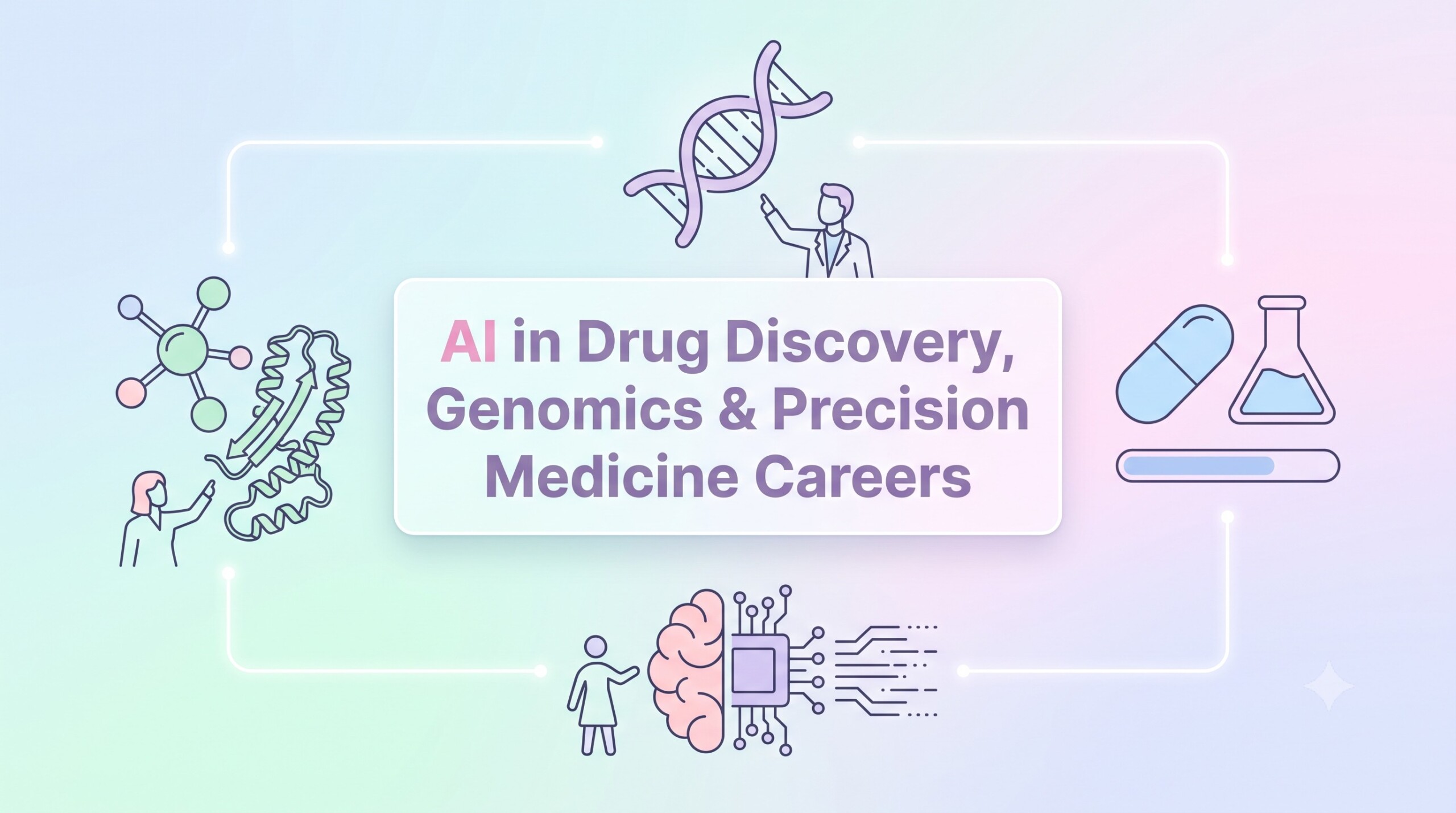
AI in Drug Discovery, Genomics & Precision Medicine Careers
AI for molecule discovery, protein modeling, and clinical trial optimization; Personalized treatment planning and genomic analysis; Collaboration between AI experts, biologists, clinicians, and pharma teams
Introduction
Artificial intelligence is rapidly changing the way new medicines are discovered, tested, and delivered to patients. In the past, drug discovery was mostly a slow, expensive, and uncertain process driven by laboratory experiments, clinical observations, and years of trial and error. Today, AI is helping scientists search through vast chemical libraries, predict protein structures, identify disease patterns, analyze genomes, and design better clinical trials.
This does not mean that AI is replacing doctors, biologists, chemists, or pharmaceutical researchers. Instead, it is becoming a powerful partner. AI can process huge amounts of data quickly, but human experts are still needed to ask the right questions, interpret the results, validate discoveries, and make ethical decisions.
This combination of life sciences and AI is creating a new generation of careers. These careers sit at the intersection of biology, medicine, data science, computer science, biotechnology, and pharmaceutical research. For students, researchers, doctors, engineers, and working professionals, this field offers one of the most exciting career pathways of the future. An excellent collection of learning videos awaits you on our Youtube channel.
Let’s dive deep into this.
1. AI is transforming molecule discovery
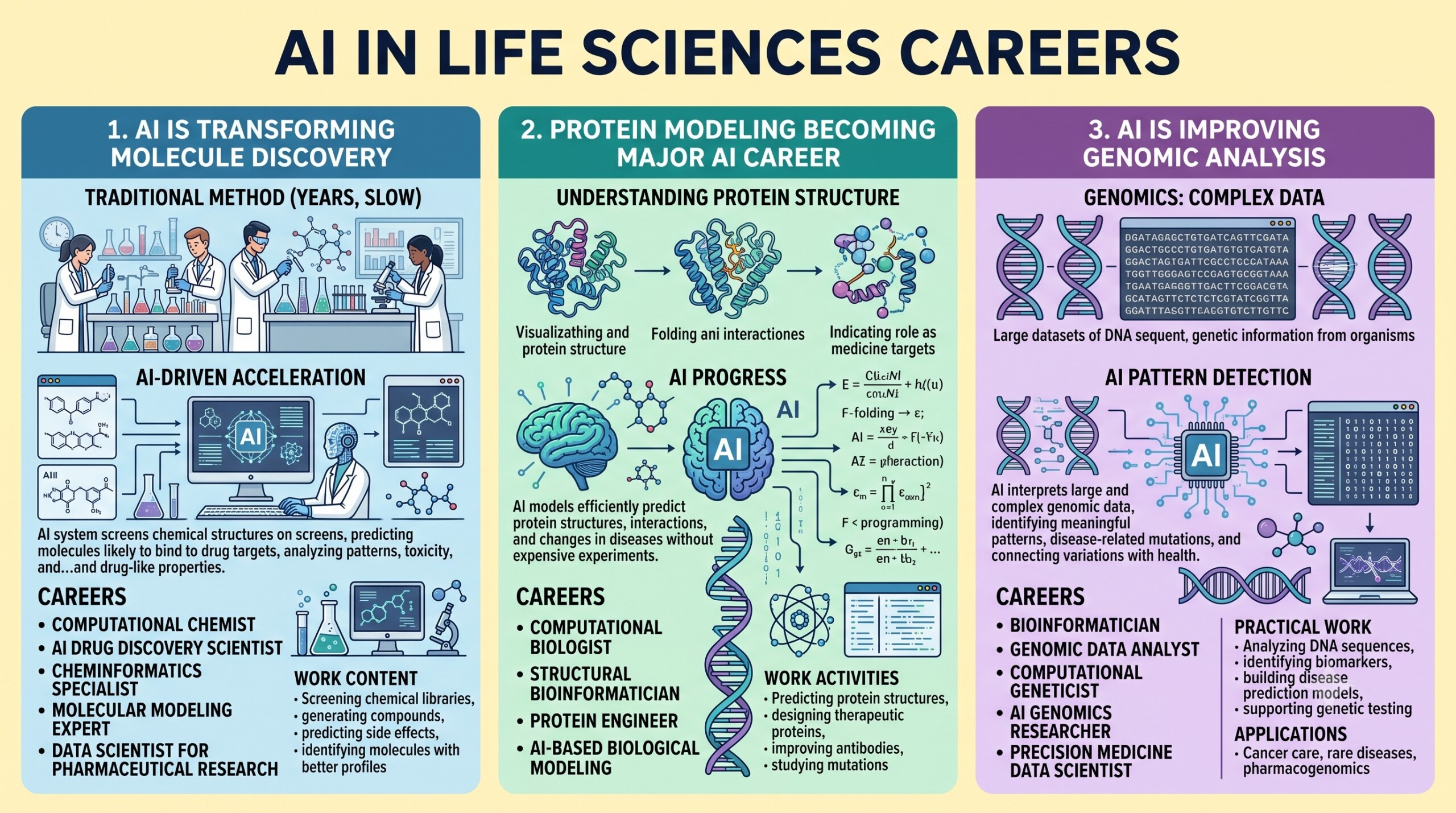
The first major career opportunity lies in AI-driven molecule discovery. Traditionally, scientists had to test thousands or even millions of chemical compounds to find a molecule that might become a useful drug. This process could take years before a promising candidate was identified.
AI can accelerate this stage by predicting which molecules are likely to bind to a disease-related target. Machine learning models can study patterns in chemical structures, biological activity, toxicity, and drug-like properties. Based on this, they can suggest new molecules or improve existing ones.
This has created demand for professionals who understand both chemistry and AI. Careers in this area include computational chemist, AI drug discovery scientist, cheminformatics specialist, molecular modeling expert, and data scientist for pharmaceutical research.
A person working in this field may use AI tools to screen chemical libraries, generate new compounds, predict side effects, or identify molecules that have better absorption and safety profiles. The work requires curiosity, scientific discipline, and the ability to combine algorithmic thinking with biological understanding.
2. Protein modeling is becoming a major AI career area
Proteins are essential to life. They control many biological processes and are often the targets of medicines. Understanding the shape and function of proteins is critical for drug development because the structure of a protein can influence how a drug molecule interacts with it.
AI has made major progress in protein structure prediction and protein modeling. Instead of relying only on expensive and time-consuming experimental methods, researchers can now use AI models to predict how proteins may fold, interact, or change in disease conditions.
This opens new career paths in computational biology, structural bioinformatics, protein engineering, and AI-based biological modeling. Professionals in this space may work on predicting protein structures, designing therapeutic proteins, improving antibodies, or studying how mutations affect protein behavior.
These careers require knowledge of biology, mathematics, programming, and machine learning. A strong foundation in bioinformatics, molecular biology, and Python-based scientific computing can be especially valuable. A constantly updated Whatsapp channel awaits your participation.

3. AI is improving genomic analysis
Genomics is the study of an organism’s complete genetic information. In medicine, genomic analysis helps researchers understand inherited diseases, cancer mutations, rare disorders, drug responses, and disease risks.
The challenge is that genomic data is extremely large and complex. A single human genome contains enormous information, and interpreting it correctly requires advanced computational methods. AI can help identify meaningful patterns in genomic data, detect disease-related mutations, and connect genetic variations with health outcomes.
This has created career opportunities for bioinformaticians, genomic data analysts, computational geneticists, AI genomics researchers, and precision medicine data scientists.
In practical terms, these professionals may analyze DNA sequencing data, identify biomarkers, build disease prediction models, or support genetic testing platforms. Their work can help doctors understand why one patient may respond well to a treatment while another patient may not.
Genomic AI careers are especially important in cancer care, rare disease diagnosis, reproductive medicine, pharmacogenomics, and preventive healthcare.
4. Precision medicine needs AI-enabled treatment planning
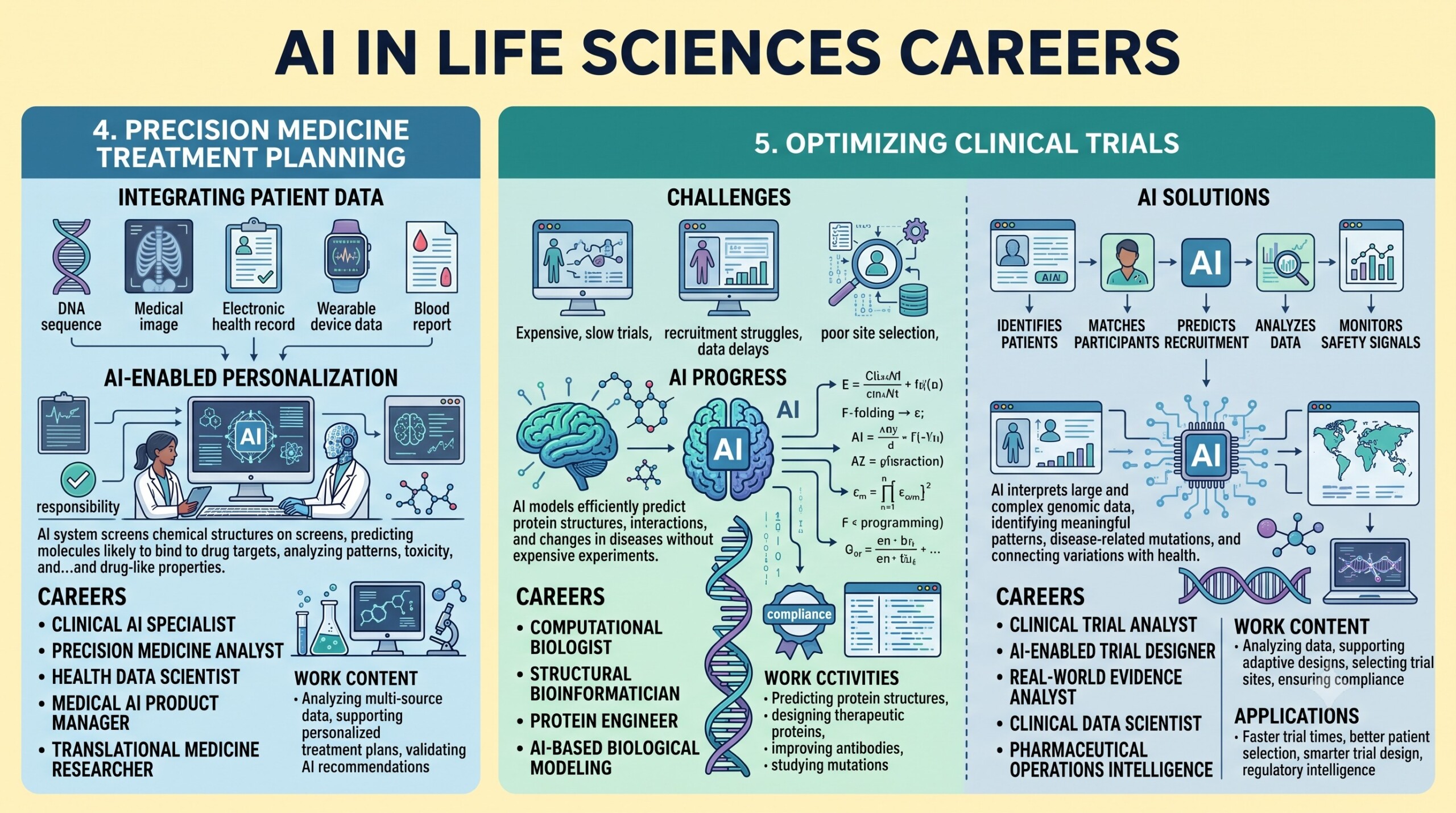
Precision medicine focuses on giving the right treatment to the right patient at the right time. Instead of treating all patients with the same disease in the same way, precision medicine considers genetic profile, lifestyle, medical history, environment, biomarkers, and treatment response.
AI can help by integrating many types of patient data. This may include genomic data, medical images, blood reports, electronic health records, pathology slides, wearable-device data, and clinical notes. By analyzing these data sources together, AI systems can support personalized treatment planning.
This field creates career opportunities for clinical AI specialists, precision medicine analysts, health data scientists, medical AI product managers, and translational medicine researchers.
However, this area also requires great responsibility. AI recommendations in healthcare must be carefully validated. Doctors and clinicians remain central to decision-making because patient care involves judgment, empathy, ethics, and accountability.
The best professionals in precision medicine will not be those who only understand algorithms. They will be those who understand how technology fits into real clinical workflows and how to support better decisions without creating blind dependence on machines. Excellent individualised mentoring programmes available.
5. AI can optimize clinical trials
Clinical trials are essential for proving whether a new medicine is safe and effective. But clinical trials are often expensive, slow, and difficult to manage. Many trials struggle with patient recruitment, dropout rates, poor site selection, and delays in data analysis.
AI can help optimize this process. It can identify suitable patients, match participants to trial criteria, predict recruitment challenges, analyze trial data, monitor safety signals, and support adaptive trial design. AI can also help pharmaceutical companies select better trial locations and reduce unnecessary delays.
This has created new career roles in clinical trial analytics, AI-enabled trial design, real-world evidence analysis, clinical data science, and pharmaceutical operations intelligence.
Professionals in this field need to understand both healthcare regulations and data science. They must be careful because clinical trial decisions directly affect patient safety and the future approval of medicines.
AI can make trials smarter, but trust, transparency, and regulatory compliance remain essential.
6. Collaboration is the heart of this field
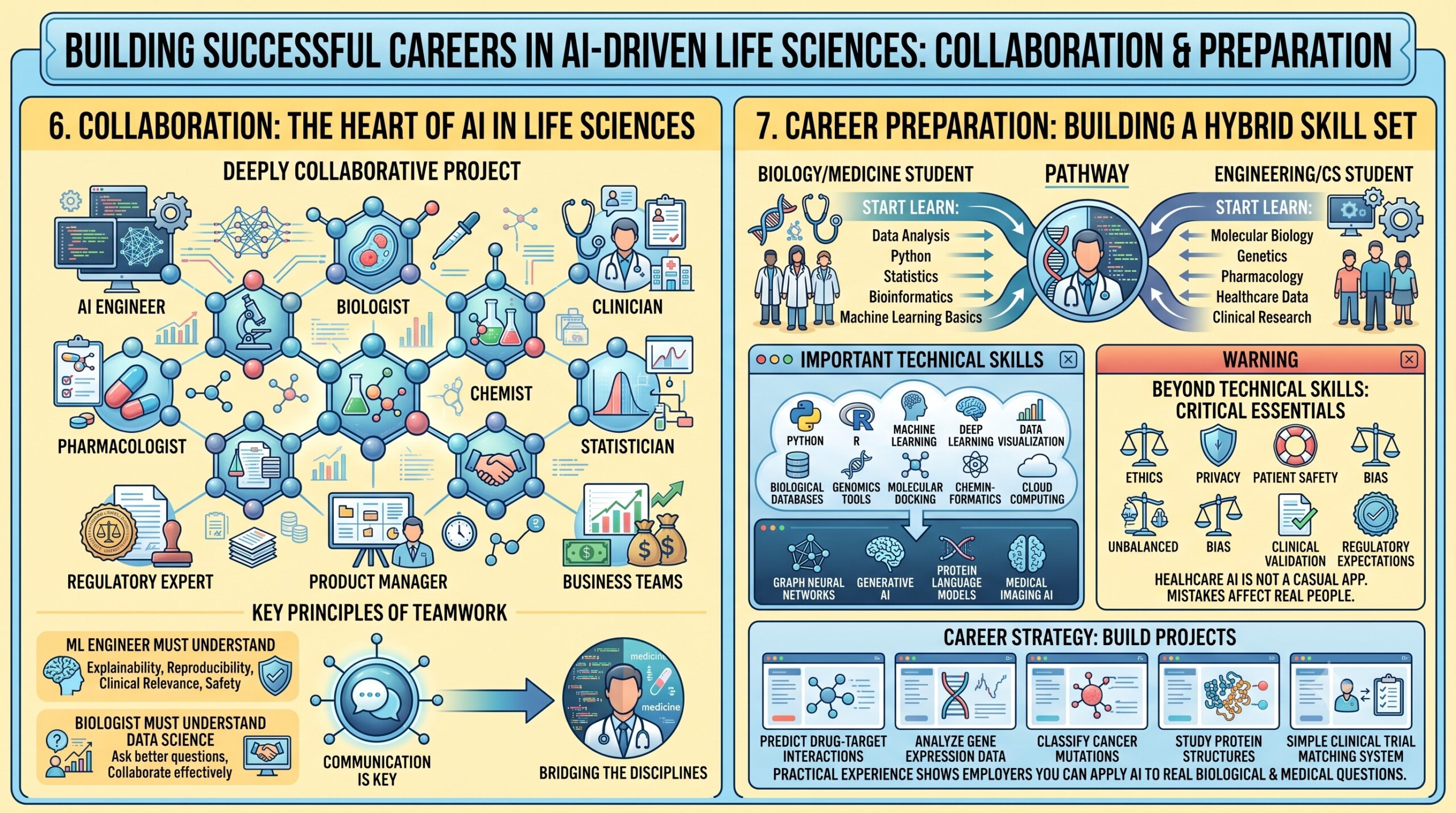
AI in drug discovery and precision medicine is not a solo career path. It is deeply collaborative. A successful project may involve AI engineers, biologists, chemists, clinicians, pharmacologists, statisticians, regulatory experts, product managers, and business teams.
An AI expert may build a powerful model, but a biologist must help interpret whether the output makes biological sense. A clinician must judge whether the result is meaningful for patient care. A pharma team must understand whether the discovery can move through development, trials, approval, and manufacturing.
This is why communication skills are extremely important. Professionals who can translate between technical teams and medical teams will be highly valuable.
For example, a machine learning engineer working in pharma must understand that accuracy alone is not enough. The model must be explainable, reproducible, clinically relevant, and safe. Similarly, a biologist who learns AI does not need to become a full software engineer, but they should understand enough data science to ask better questions and collaborate effectively.
The strongest careers will belong to people who can bridge disciplines. Subscribe to our free AI newsletter now.
7. Career preparation requires a hybrid skill set
To build a career in AI-driven drug discovery, genomics, and precision medicine, learners need a hybrid skill set. The exact path depends on the person’s background.
A biology or medical student can start by learning data analysis, Python, statistics, bioinformatics, genomics, and machine learning basics. A computer science or engineering student can start by learning molecular biology, genetics, pharmacology, healthcare data, and clinical research concepts.
Important technical skills include Python, R, machine learning, deep learning, data visualization, biological databases, genomics tools, molecular docking, cheminformatics, and cloud computing. For advanced roles, knowledge of graph neural networks, generative AI, protein language models, and medical imaging AI may be useful.
But technical skills alone are not enough. Professionals must also understand ethics, privacy, patient safety, bias, clinical validation, and regulatory expectations. Healthcare AI is not like building a casual app. Mistakes can affect real people.
A good career strategy is to build projects that combine AI with life science problems. Examples include predicting drug-target interactions, analyzing gene expression data, classifying cancer mutations, studying protein structures, or building a simple clinical trial matching system.
Practical project experience can help learners show employers that they can apply AI to real biological and medical questions.
Conclusion
AI in drug discovery, genomics, and precision medicine is one of the most promising career areas of the coming decade. It brings together the power of computation with the complexity of biology and the human importance of medicine.
AI can help discover molecules faster, model proteins more accurately, analyze genomes more deeply, personalize treatments, and improve clinical trials. But the success of this field depends not only on algorithms. It depends on collaboration between AI experts, biologists, clinicians, pharmaceutical teams, regulators, and patients.
For students and professionals, this is a field of great opportunity. A person does not need to know everything on day one. A biologist can learn AI step by step. A programmer can learn life sciences step by step. A doctor can learn how AI supports clinical decisions. A pharma professional can learn how data-driven tools improve research and development.
The future of medicine will not be built by AI alone. It will be built by people who know how to use AI wisely, scientifically, ethically, and collaboratively. Upgrade your AI-readiness with our masterclass.