AI in HR, Talent Intelligence & Future of Work Careers
AI in HR, Talent Intelligence & Future of Work Careers
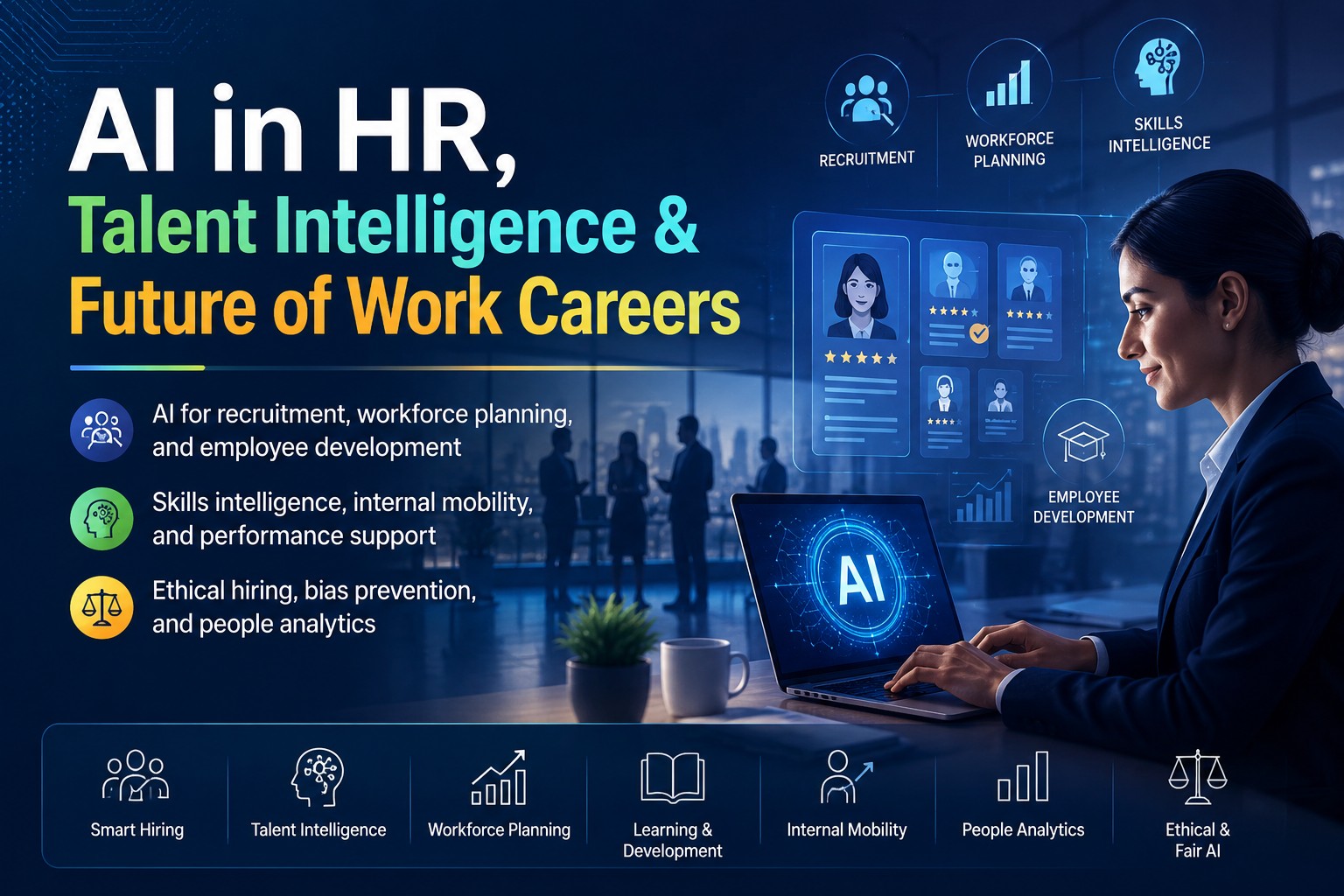
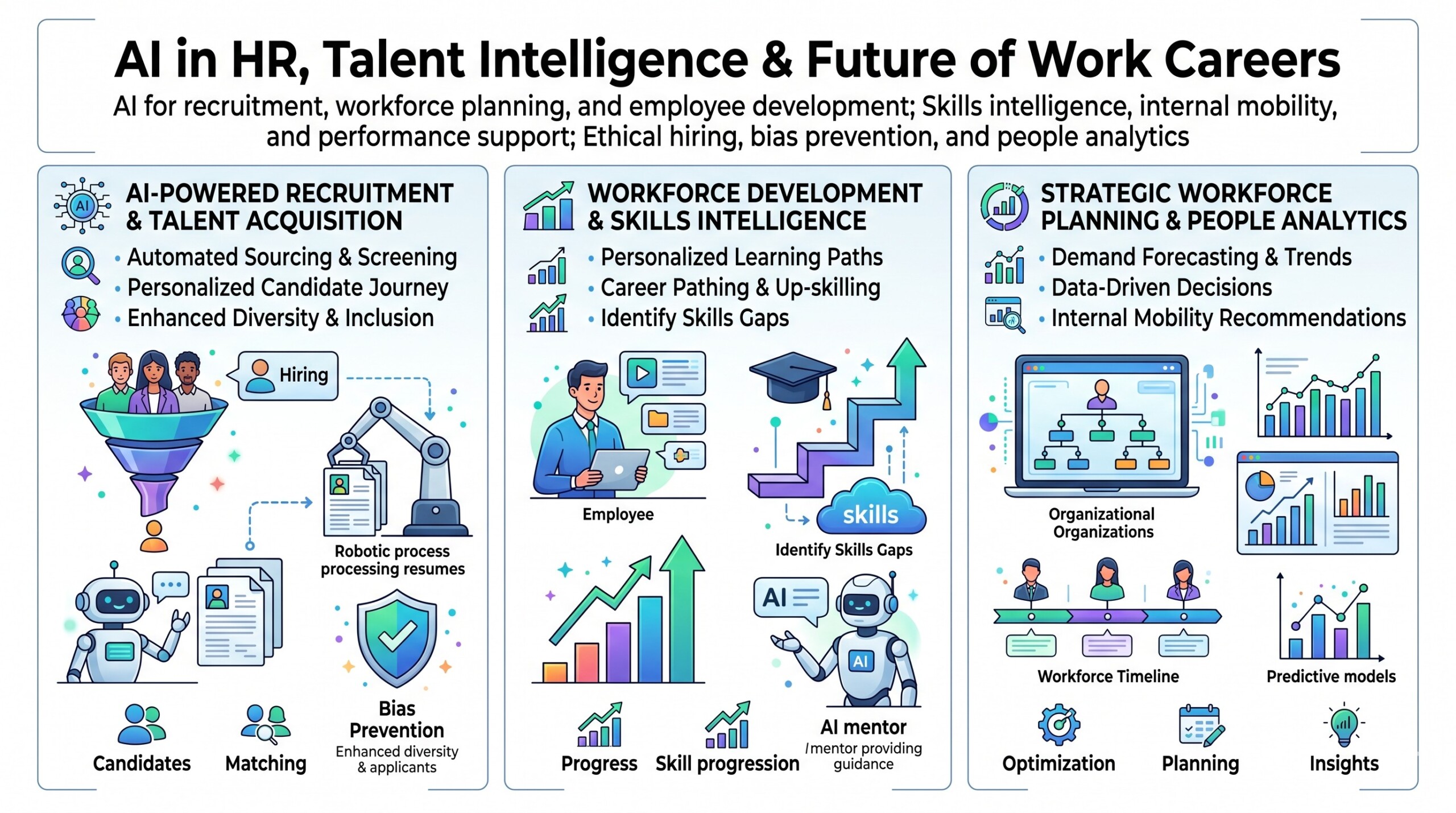
AI for recruitment, workforce planning, and employee development; Skills intelligence, internal mobility, and performance support; Ethical hiring, bias prevention, and people analytics
Introduction
The workplace is undergoing one of the most significant transformations in history. Artificial Intelligence (AI) is reshaping how organizations hire talent, develop employees, plan workforce needs, and support career growth. Human Resources (HR), once focused primarily on administrative functions, is rapidly evolving into a strategic business partner powered by data, analytics, and intelligent technologies.
Organizations today face multiple challenges: talent shortages, rapidly changing skill requirements, hybrid work environments, employee retention concerns, and increasing pressure to improve productivity. AI offers powerful solutions to address these challenges by helping organizations make smarter, faster, and more objective decisions.
The emergence of Talent Intelligence – the practice of using data and AI to understand workforce capabilities, skills gaps, employee potential, and future talent needs—is transforming workforce management. AI can identify suitable candidates, predict future workforce requirements, recommend personalized learning pathways, support internal career mobility, and provide insights that help leaders make informed decisions.
At the same time, the adoption of AI in HR requires careful consideration of ethics, fairness, transparency, and privacy. Organizations must ensure that AI systems enhance human judgment rather than replace it and that they promote diversity, inclusion, and equal opportunities.
As businesses prepare for the future of work, AI is becoming a critical enabler of workforce agility, talent development, and organizational success. An excellent collection of learning videos awaits you on our Youtube channel.
Let’s dive deep into this.
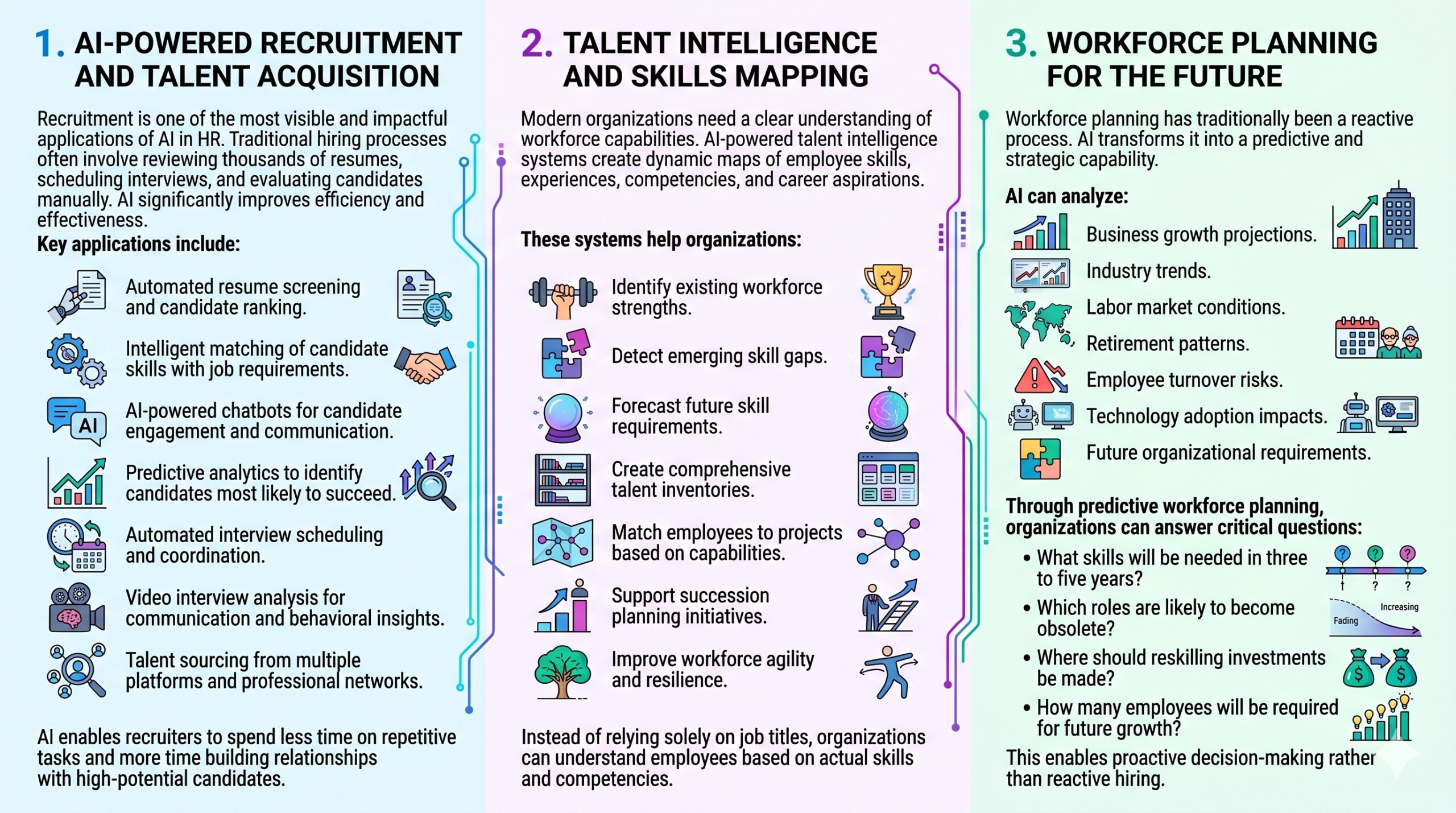
1. AI-Powered Recruitment and Talent Acquisition
Recruitment is one of the most visible and impactful applications of AI in HR. Traditional hiring processes often involve reviewing thousands of resumes, scheduling interviews, and evaluating candidates manually. AI significantly improves efficiency and effectiveness.
Key applications include:
- Automated resume screening and candidate ranking.
- Intelligent matching of candidate skills with job requirements.
- AI-powered chatbots for candidate engagement and communication.
- Predictive analytics to identify candidates most likely to succeed.
- Automated interview scheduling and coordination.
- Video interview analysis for communication and behavioral insights.
- Talent sourcing from multiple platforms and professional networks.
AI enables recruiters to spend less time on repetitive tasks and more time building relationships with high-potential candidates.
2. Talent Intelligence and Skills Mapping
Modern organizations need a clear understanding of workforce capabilities. AI-powered talent intelligence systems create dynamic maps of employee skills, experiences, competencies, and career aspirations.
These systems help organizations:
- Identify existing workforce strengths.
- Detect emerging skill gaps.
- Forecast future skill requirements.
- Create comprehensive talent inventories.
- Match employees to projects based on capabilities.
- Support succession planning initiatives.
- Improve workforce agility and resilience.
Instead of relying solely on job titles, organizations can understand employees based on actual skills and competencies. A constantly updated Whatsapp channel awaits your participation.

3. Workforce Planning for the Future
Workforce planning has traditionally been a reactive process. AI transforms it into a predictive and strategic capability.
AI can analyze:
- Business growth projections.
- Industry trends.
- Labor market conditions.
- Retirement patterns.
- Employee turnover risks.
- Technology adoption impacts.
- Future organizational requirements.
Through predictive workforce planning, organizations can answer critical questions:
- What skills will be needed in three to five years?
- Which roles are likely to become obsolete?
- Where should reskilling investments be made?
- How many employees will be required for future growth?
This enables proactive decision-making rather than reactive hiring.
4. Employee Development and Personalized Learning
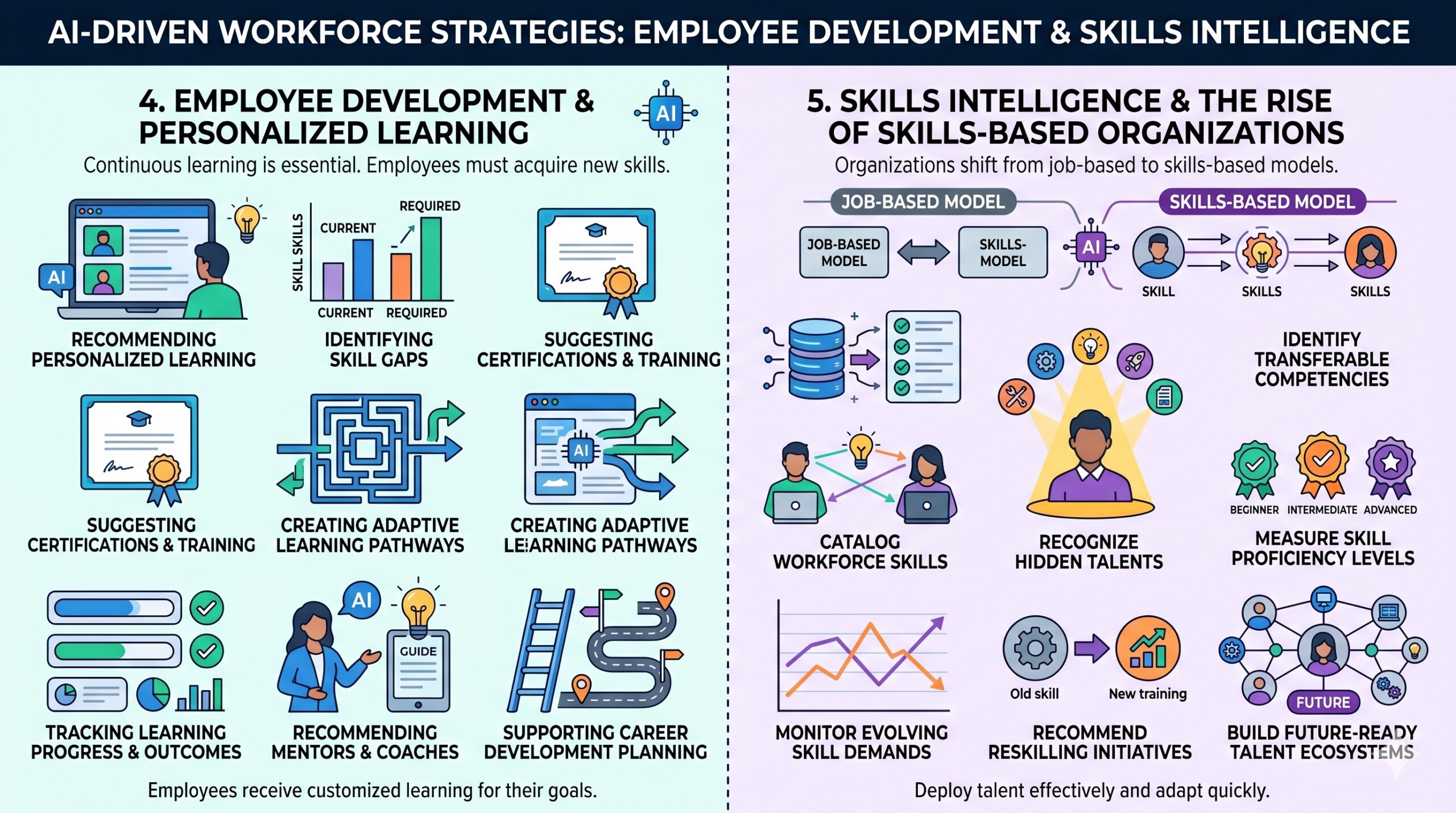
Continuous learning has become essential in the age of AI and digital transformation. Employees must constantly acquire new skills to remain relevant.
AI supports employee development by:
- Recommending personalized learning programs.
- Identifying skill gaps for individual employees.
- Suggesting certifications and training opportunities.
- Creating adaptive learning pathways.
- Tracking learning progress and outcomes.
- Recommending mentors and coaches.
- Supporting career development planning.
Employees receive customized learning experiences tailored to their current capabilities and future career goals. Excellent individualised mentoring programmes available.
5. Skills Intelligence and the Rise of Skills-Based Organizations
Organizations are increasingly shifting from job-based structures to skills-based models.
AI-driven skills intelligence platforms help companies:
- Catalog workforce skills.
- Identify transferable competencies.
- Recognize hidden talents.
- Measure skill proficiency levels.
- Monitor evolving skill demands.
- Recommend reskilling initiatives.
- Build future-ready talent ecosystems.
This approach allows organizations to deploy talent more effectively and adapt quickly to changing business requirements.
6. Internal Mobility and Career Growth
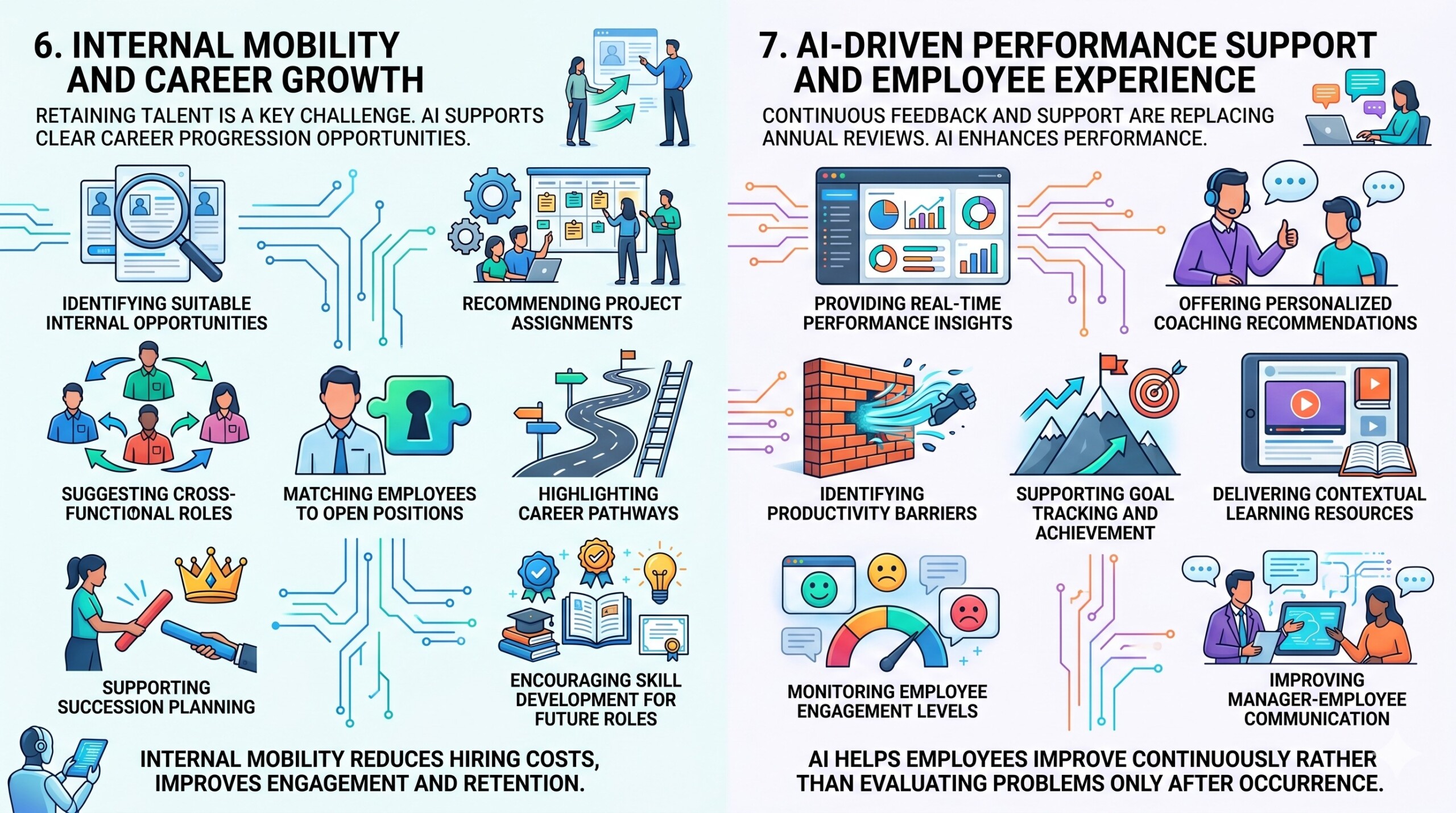
One of the biggest challenges organizations face is retaining talented employees. Many employees leave because they cannot see clear career progression opportunities.
AI supports internal mobility by:
- Identifying suitable internal opportunities.
- Recommending project assignments.
- Suggesting cross-functional roles.
- Matching employees to open positions.
- Highlighting career pathways.
- Supporting succession planning.
- Encouraging skill development for future roles.
Internal mobility reduces hiring costs while improving employee engagement and retention. Subscribe to our free AI newsletter now.
7. AI-Driven Performance Support and Employee Experience
Traditional annual performance reviews are being replaced by continuous feedback and performance support systems.
AI enhances employee performance by:
- Providing real-time performance insights.
- Offering personalized coaching recommendations.
- Identifying productivity barriers.
- Supporting goal tracking and achievement.
- Delivering contextual learning resources.
- Monitoring employee engagement levels.
- Improving manager-employee communication.
Rather than evaluating performance only after problems occur, AI helps employees improve continuously.
Conclusion
AI is redefining HR, talent management, and the future of work. From recruitment and workforce planning to skills intelligence, employee development, and performance support, AI is enabling organizations to become more agile, data-driven, and employee-centric. Talent intelligence platforms provide unprecedented visibility into workforce capabilities, while people analytics supports more informed and strategic decision-making.
However, the true value of AI in HR lies not in replacing human judgment but in enhancing it. Ethical hiring practices, bias prevention, transparency, and employee trust must remain at the center of every AI initiative. Organizations that successfully balance technological innovation with human values will create stronger, more inclusive, and future-ready workplaces.
As the world of work continues to evolve, AI-powered HR will become a cornerstone of organizational success. Companies that embrace intelligent workforce strategies today will be better positioned to attract talent, develop skills, improve employee experiences, and thrive in an increasingly dynamic and competitive future. Upgrade your AI-readiness with our masterclass.