AI Career portfolio: Five projects to help you get a Job

AI Career portfolio: Five projects to help you get a Job
Introduction
Job applicants entering the workforce in 2027 will increasingly encounter employers who expect familiarity with artificial intelligence. AI assistants can help people research information, analyse spreadsheets, prepare business communications and organise administrative work. However, familiarity with a product’s interface provides limited evidence of professional ability. Employers need to understand whether an applicant can identify a problem, produce useful work, evaluate results and explain the decisions involved.
A practical AI portfolio can help candidates demonstrate these abilities. It consists of completed assignments supported by evidence such as documents, spreadsheets, working demonstrations and explanations of the process followed. Students can create portfolios using publicly available information or fictional business situations, while experienced professionals can apply their existing industry knowledge without disclosing confidential information. The following seven steps explain how to prepare five useful projects and present them effectively during a job search.
Let’s dive deep into it.
1. Project One: Prepare an industry research report
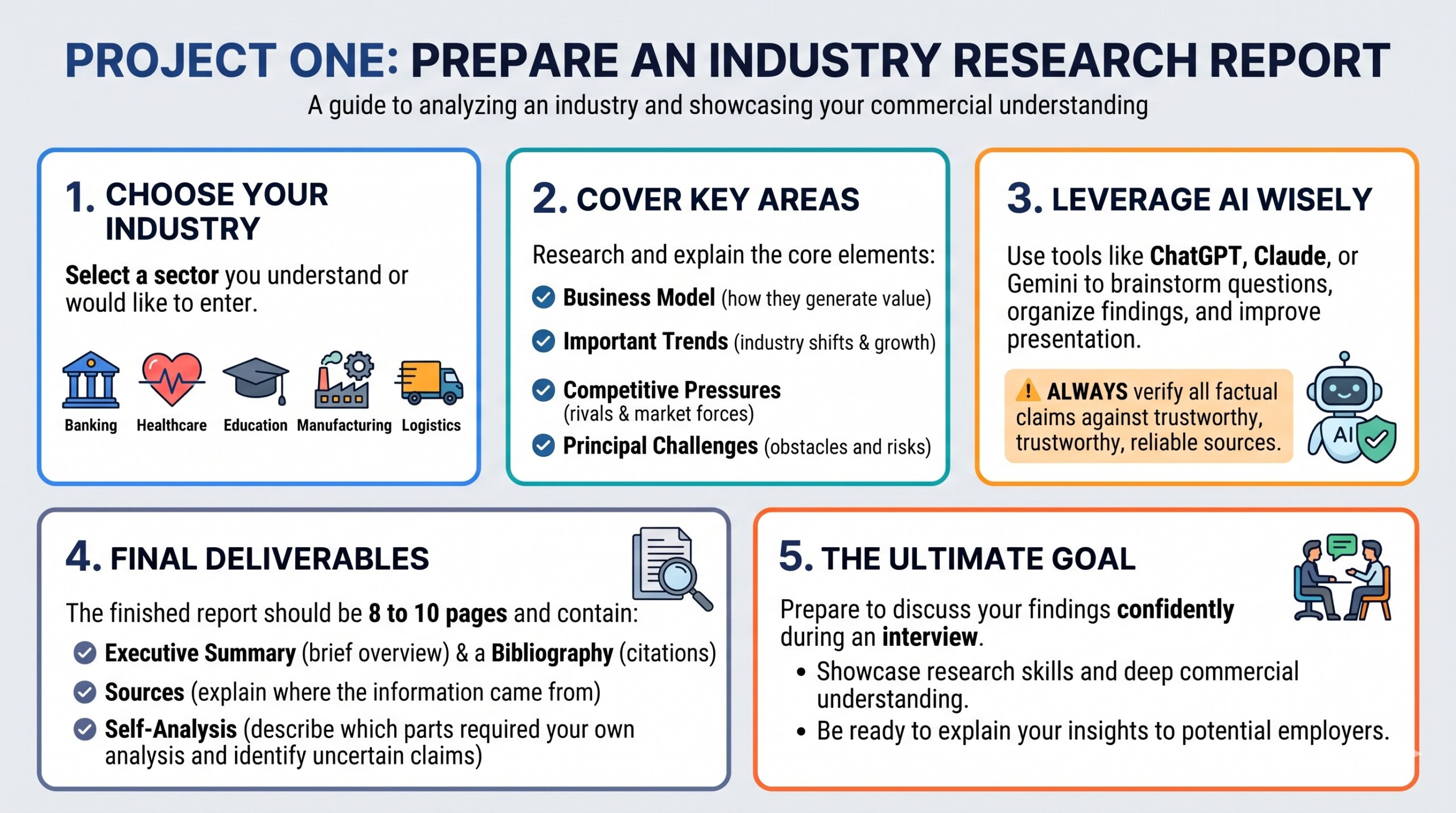
Select an industry you understand or would like to enter, such as banking, healthcare, education, manufacturing or logistics. Prepare a report explaining its business model, important trends, competitive pressures and principal challenges. AI assistants such as ChatGPT, Claude and Gemini can help develop research questions, organise findings and improve the presentation, while factual claims should be checked against trustworthy sources.
The finished assignment might contain eight to ten pages, a brief executive summary and a bibliography. Explain where the information came from, identify uncertain claims and describe which parts of the work required your own analysis. During an interview, the ability to discuss the findings confidently will demonstrate research skills and commercial understanding.
2. Project Two: Analyse spreadsheet data and create a dashboard
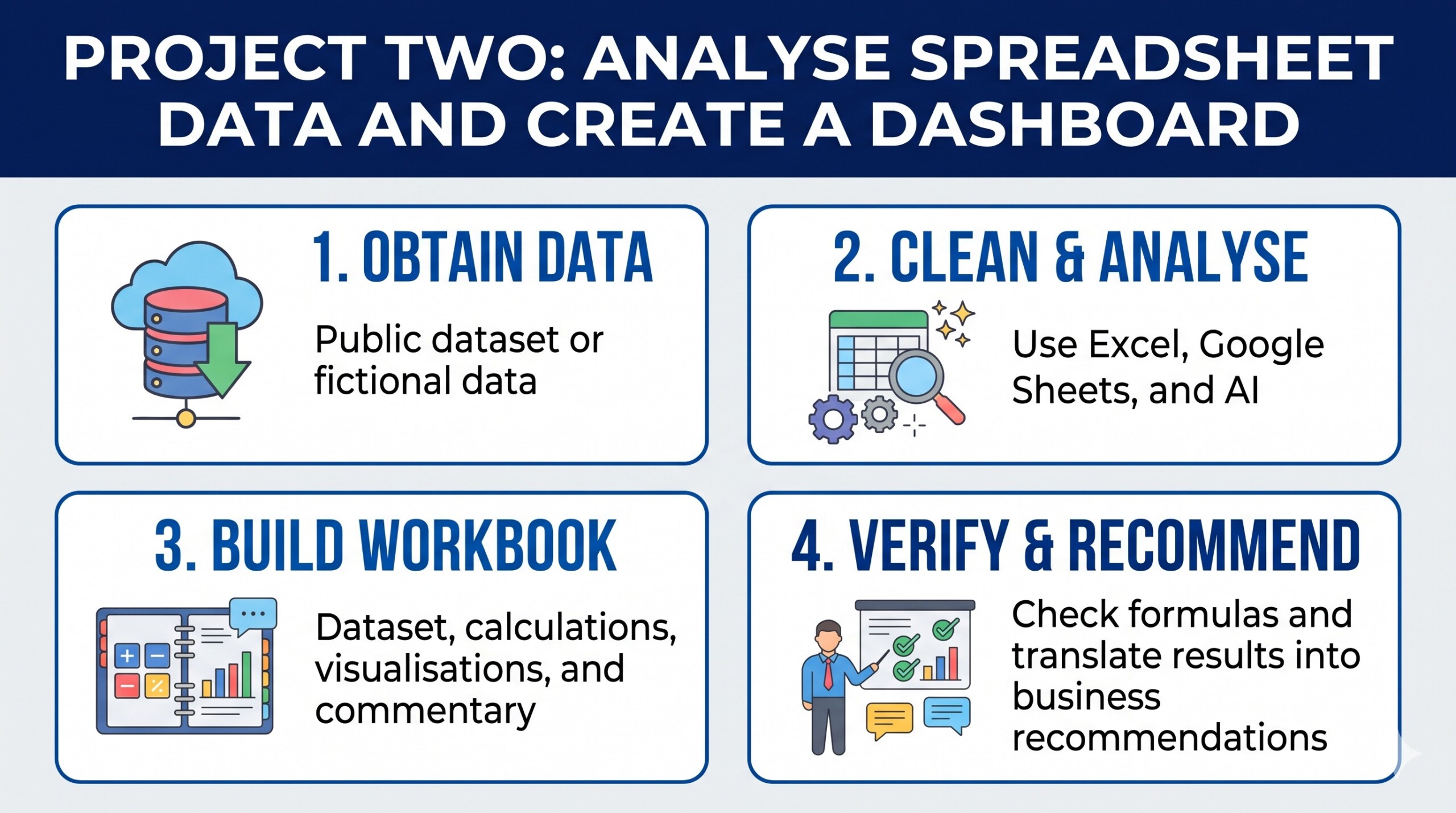
Data analysis is relevant to finance, sales, operations, administration and many other professional functions. Obtain a suitable public dataset or create realistic fictional data containing information such as monthly sales, expenses, inventory or customer enquiries. Use Microsoft Excel, Google Sheets and an AI assistant to help clean the data, develop formulas and explore useful comparisons.
Create a workbook containing the dataset, calculations, visualisations and a short management commentary. Check the formulas manually and ensure that the charts support the conclusions presented. Employers may be interested in how you handled missing information, recognised unusual values and translated numerical results into practical business recommendations.
3. Project Three: Build a customer-service knowledge assistant
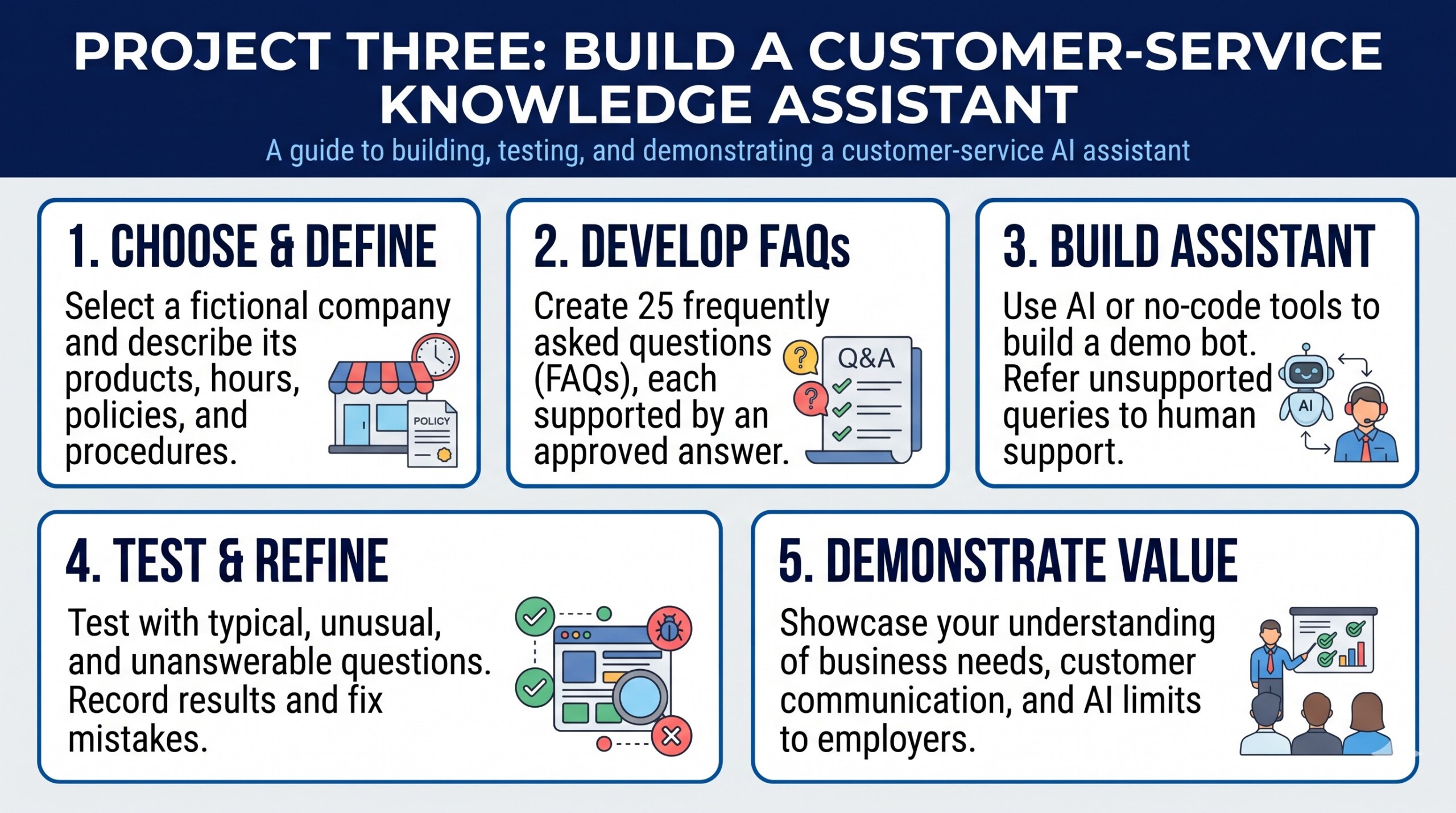
Choose a fictional company and prepare a clear description of its products, working hours, policies and customer-service procedures. Develop twenty-five frequently asked questions, each supported by an approved answer. Use an AI platform or appropriate no-code tool to build a demonstration assistant that responds to these questions and refers unsupported requests to a human representative.
Test the assistant with ordinary questions, unusual wording and situations where the available information does not contain an answer. Record the questions tested, the responses produced and any mistakes requiring correction. The completed demonstration can show employers that you understand business requirements, customer communication, system testing and the limitations of automated assistance.
4. Project Four: Create a professional communications package
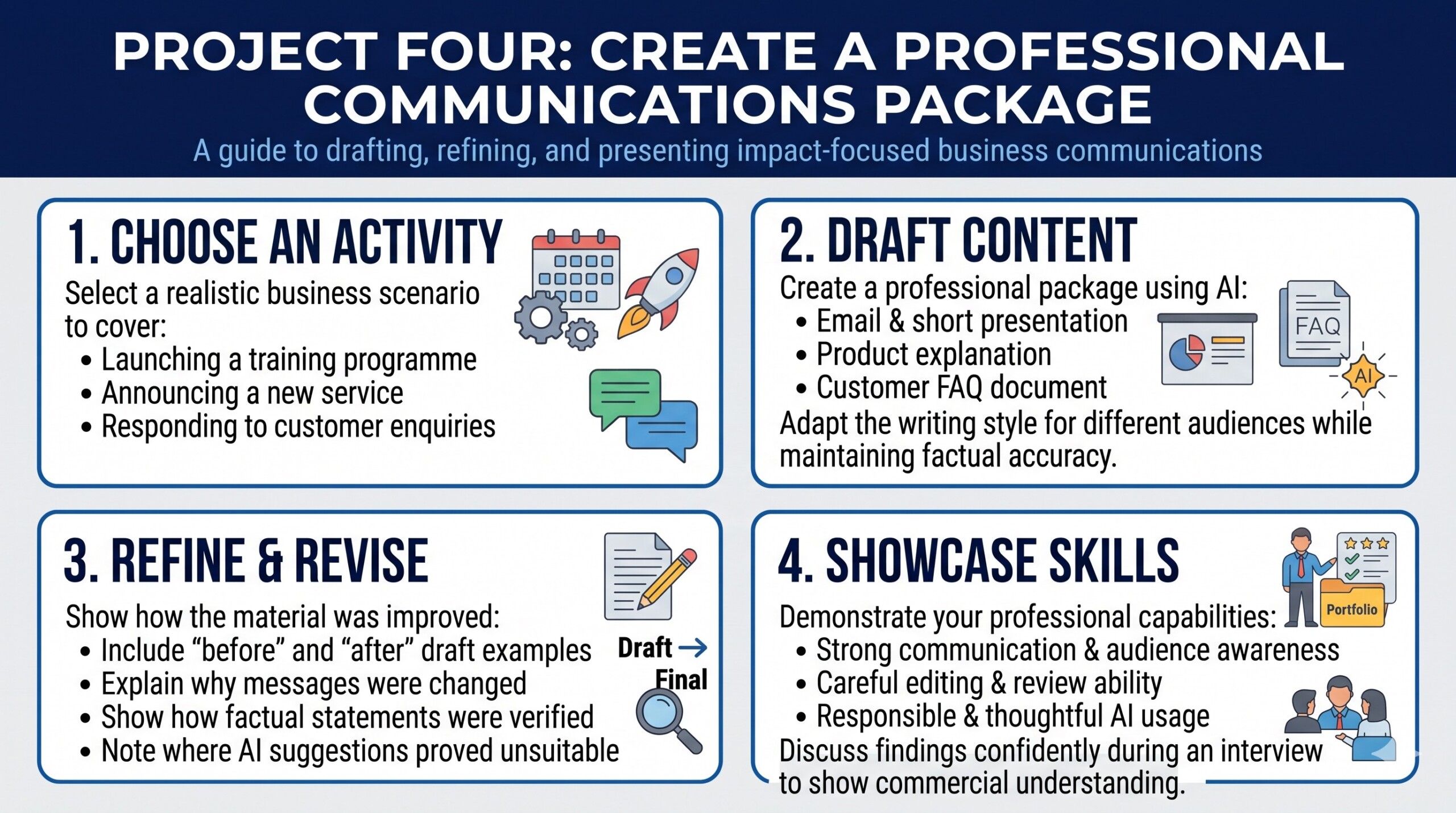
Select a realistic business activity, such as launching a training programme, announcing a new service or responding to customer enquiries. Use AI tools to assist with preparing a professional email, short presentation, product explanation and customer FAQ document. Adapt the writing style for different audiences while maintaining factual accuracy and consistency.
Include examples showing how the material improved through revision. Explain why particular messages were changed, how factual statements were verified and where AI suggestions proved unsuitable. The project can demonstrate communication skills, audience awareness, editing ability and responsible AI usage.
5. Project Five: Improve a business workflow
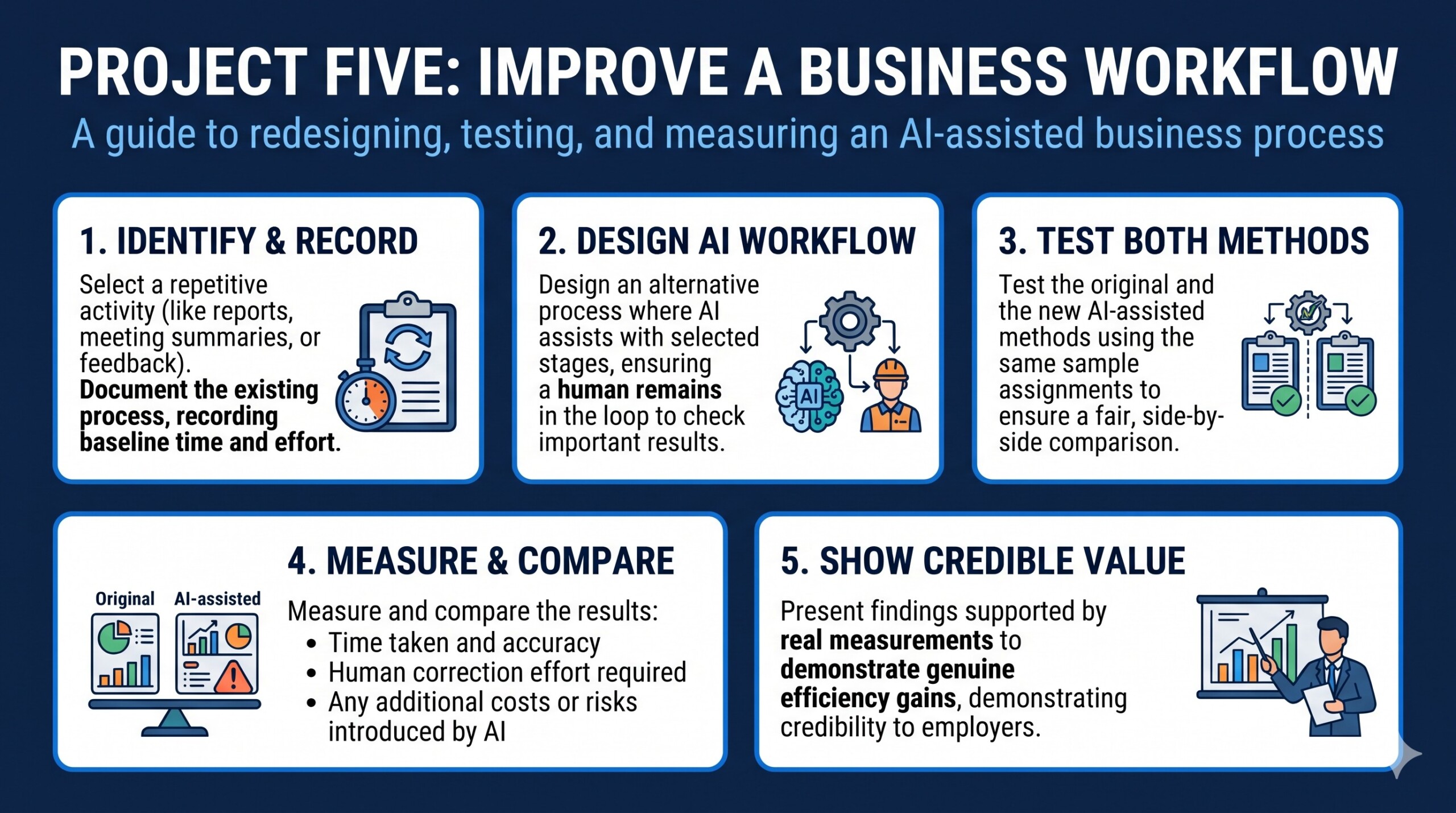
Identify a repetitive activity such as preparing a weekly report, summarising meeting notes or categorising customer feedback. Describe the existing process and record the time and effort required to complete it. Then design an alternative process in which AI assists with selected stages while a human checks the important results.
Test both methods on the same sample assignments and measure the results. Compare time taken, accuracy, correction effort and any additional costs or risks introduced by AI. A project supported by real measurements will be more credible than one claiming impressive productivity improvements without evidence.
6. Organise the projects into a professional portfolio
Present the completed assignments through a simple website, appropriate document-sharing service or professional repository. Each project should explain the problem, tools used, deliverables produced and your personal contribution. Include screenshots, sample outputs, selected prompts and short explanations where they help demonstrate the work.
Avoid filling the portfolio with material that you cannot explain independently. Interviewers may ask how a formula works, why a recommendation was made or how an assistant behaves when it receives an unexpected question. Candidates who understand the underlying work will be better prepared to answer such questions and demonstrate practical competence.
7. Match the portfolio to specific job opportunities
Different employers will value different combinations of the five projects. A business analyst may emphasise spreadsheet analysis and research, while a customer-support applicant can highlight the knowledge assistant. Candidates pursuing marketing roles may give greater prominence to the communications package, and operations professionals can concentrate on workflow improvement.
Study job descriptions and identify the abilities repeatedly requested for your target positions. Present the most relevant projects first, explain their connection with the work and prepare demonstrations where appropriate. Continue improving the portfolio as you acquire new skills, while avoiding claims of experience that go beyond the projects actually completed.

Conclusion
A practical AI career portfolio can help candidates turn learning into evidence of professional capability. The five projects cover research, data analysis, customer service, communication and workflow improvement, making them relevant across a broad range of occupations. They can be completed using accessible tools and suitable sample information, with the emphasis placed on quality, verification and independent understanding. Although no portfolio guarantees employment, applicants who can demonstrate useful work and explain their decisions will be better prepared to compete for opportunities in 2027.