Multimodal AI Experience & Interface Careers
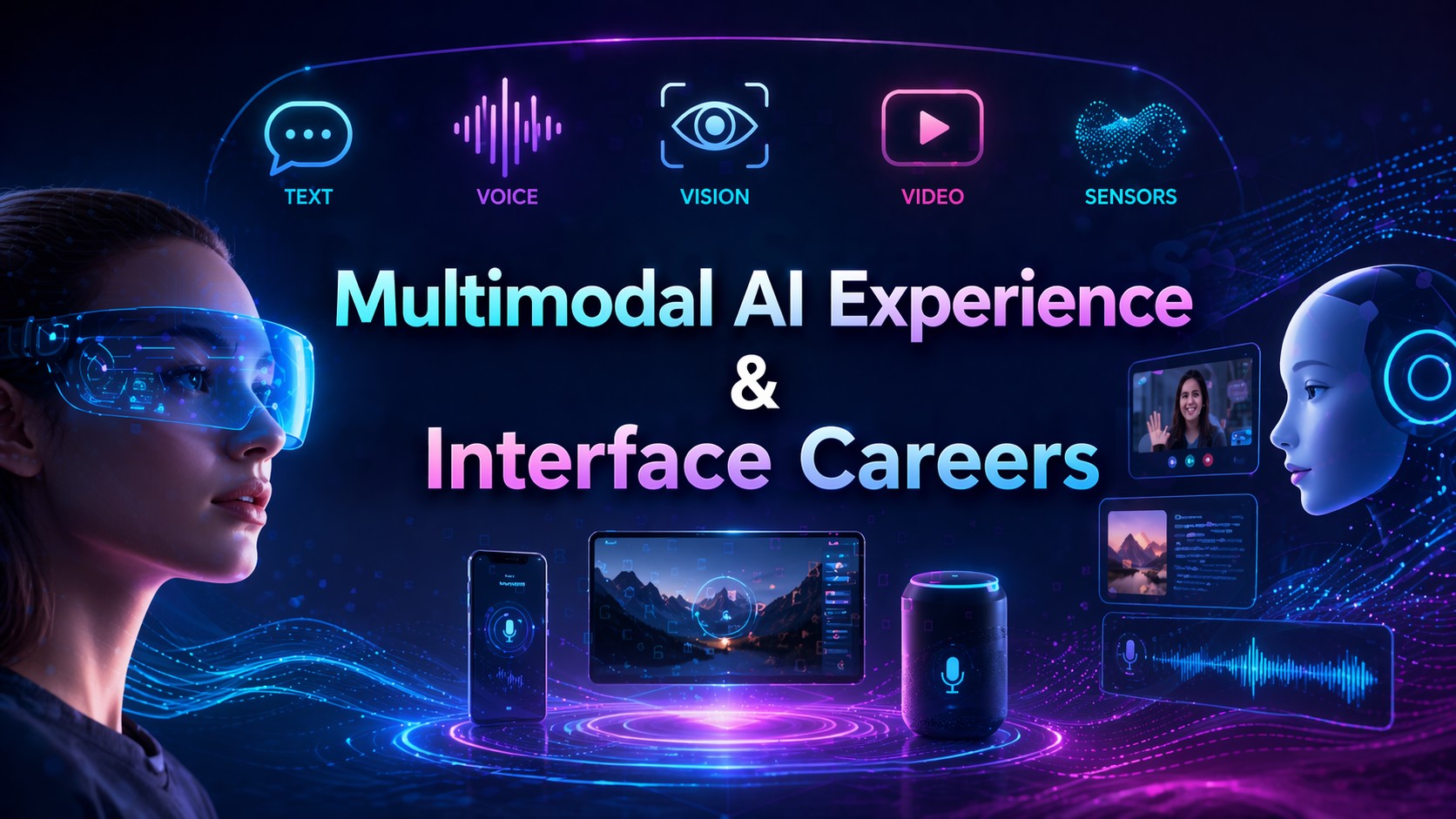
Multimodal AI Experience & Interface Careers
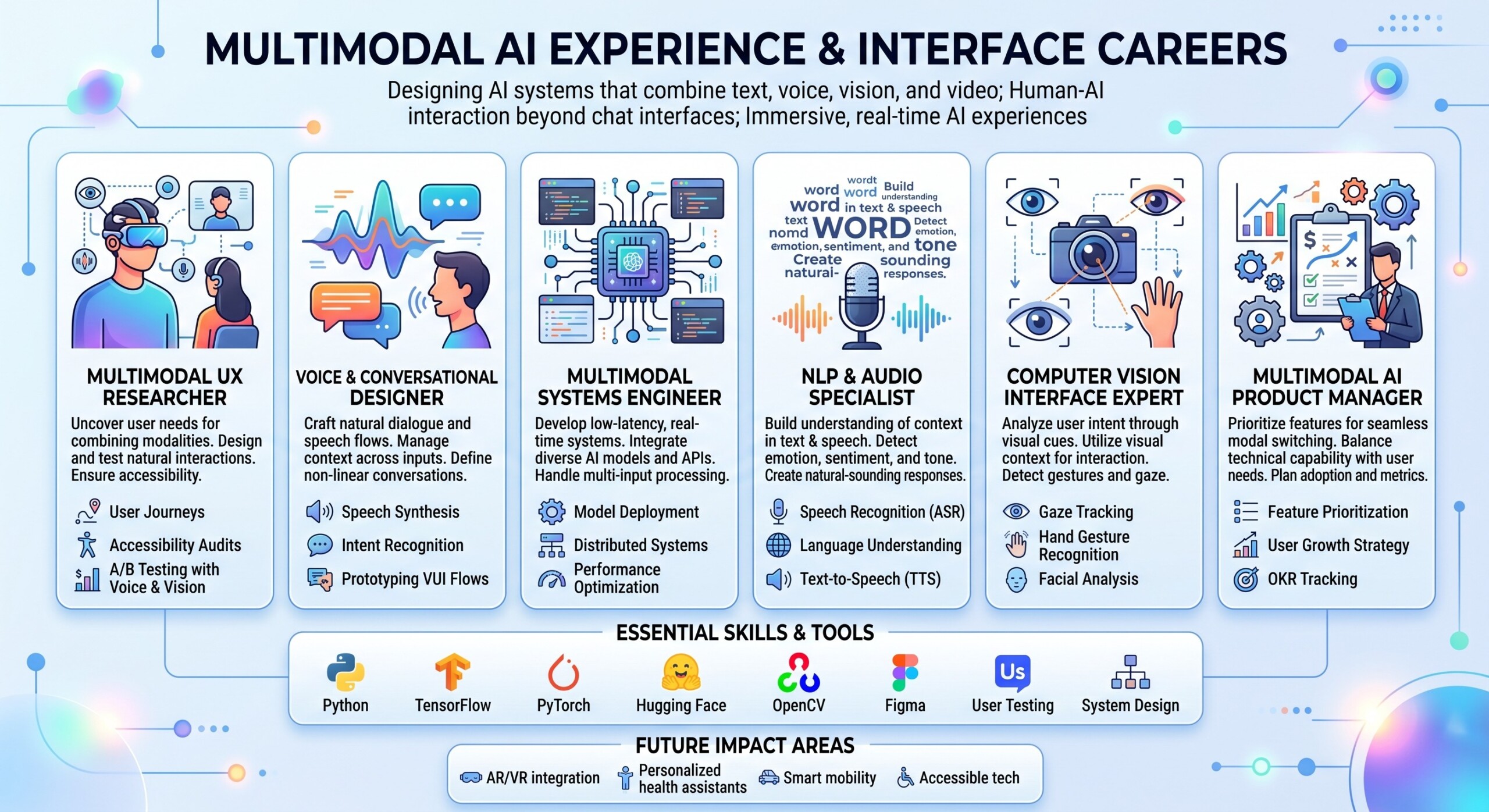
Designing AI systems that combine text, voice, vision, and video;
Human-AI interaction beyond chat interfaces; Immersive, real-time AI experiences
Introduction
Artificial intelligence is moving beyond text-based interaction into a richer, more human-like form of communication. Earlier systems relied heavily on typed input and written responses. Today, AI can listen, see, speak, and respond across multiple formats at the same time. This shift has given rise to multimodal AI, where text, voice, images, video, and real-world signals are processed together.
This transformation is changing how people interact with technology. Users no longer need to adapt to machines. Instead, machines are adapting to human behavior. Conversations can happen through speech, visual cues can guide decisions, and systems can respond instantly in dynamic environments.
As this shift accelerates, a new category of careers is emerging. Multimodal AI experience and interface roles focus on designing how humans and AI interact across these different modes. These careers sit at the intersection of engineering, design, and human understanding. They are about creating systems that feel natural, intuitive, and responsive in real-world contexts.
In 2026 and beyond, this field is expected to play a central role in shaping how AI integrates into everyday life, from consumer products to enterprise platforms.
Let’s dive deep into the topic now.
1. From Single-Mode Systems to Multimodal Intelligence
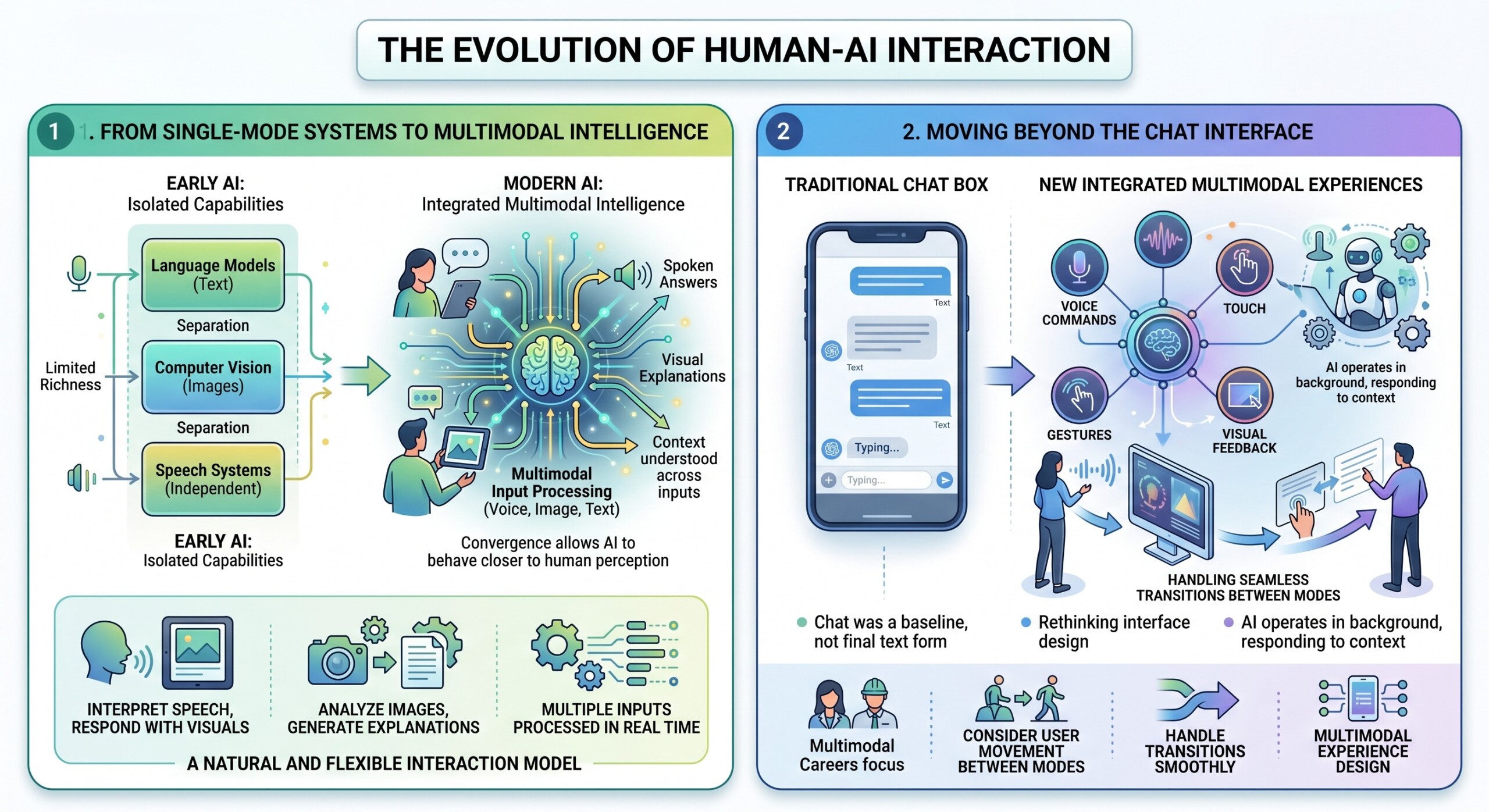
Early AI systems were built around a single capability. Language models handled text, computer vision models handled images, and speech systems worked independently. This separation limited the richness of interaction.
Modern systems are breaking these boundaries. A user can speak to an AI assistant, show an image, and receive both spoken and visual feedback. The system understands context across different inputs and responds accordingly. This convergence allows AI to behave in a way that is closer to human perception.
- AI can interpret speech and respond with visuals
- Systems can analyze images and generate explanations
- Multiple inputs can be processed together in real time
The result is a more natural and flexible interaction model. An excellent collection of learning videos awaits you on our Youtube channel.
2. Moving Beyond the Chat Interface
The chat interface played an important role in making AI accessible, but it is no longer the final form of interaction. Multimodal careers focus on designing experiences that extend beyond a simple text box.
Interaction can now include voice commands, touch, gestures, and visual feedback. In some environments, AI operates in the background, responding to context without explicit prompts. This requires rethinking how interfaces are designed.
Designers and engineers must consider how users move between different modes of interaction. A person may start with voice, switch to visuals, and then refine with text. The system must handle these transitions smoothly.
3. Real-Time and Immersive Experiences
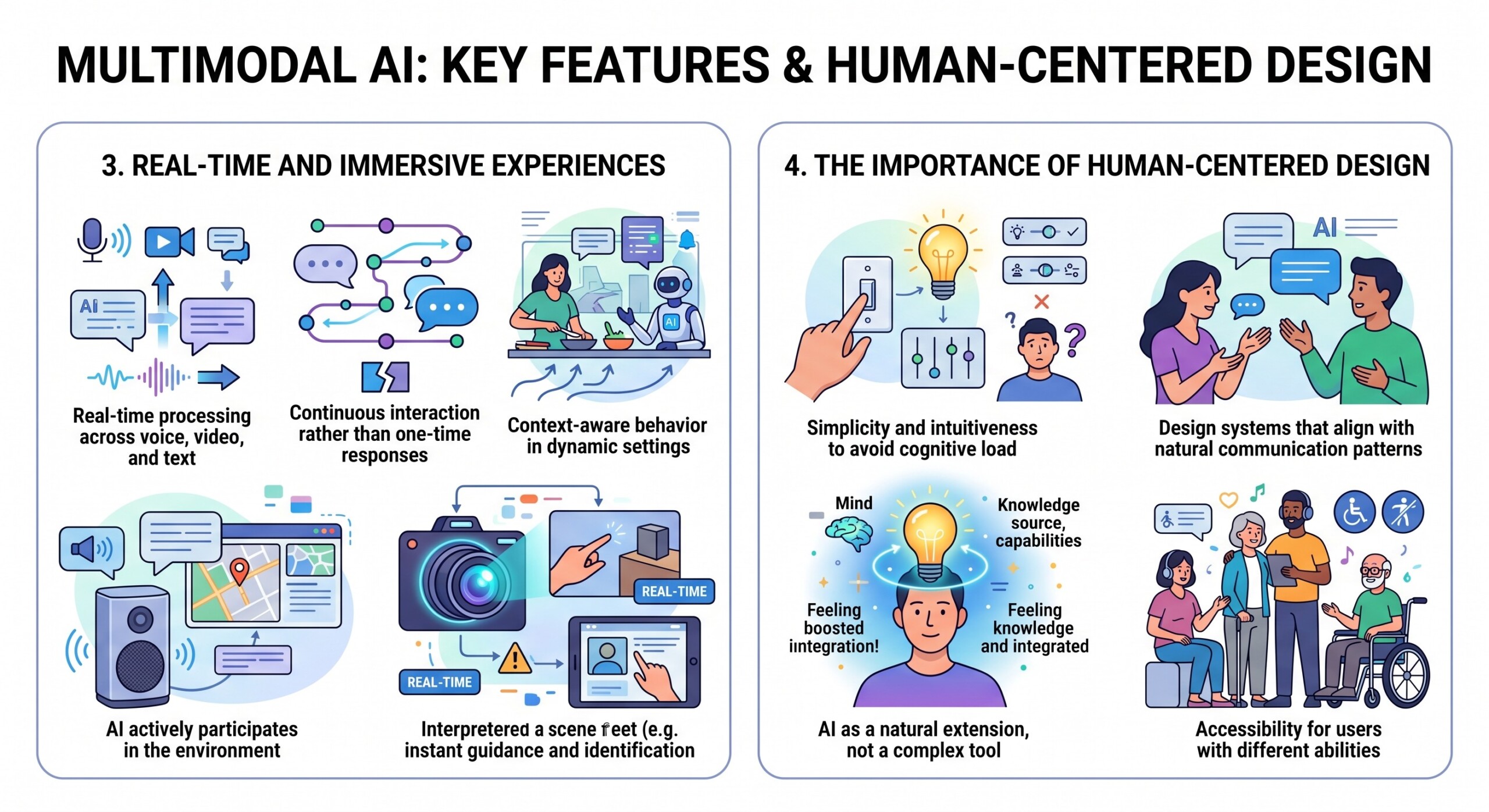
A defining characteristic of multimodal AI is its ability to operate in real time. Users expect immediate responses that combine different forms of output. This creates immersive experiences where interaction feels continuous rather than fragmented.
Examples include virtual assistants that speak while displaying relevant visuals, or systems that interpret a live video feed and provide guidance instantly. In such cases, the AI is not just responding to queries but actively participating in the user’s environment.
- Real-time processing across voice, video, and text
- Continuous interaction rather than one-time responses
- Context-aware behavior in dynamic settings
This shift makes AI more engaging and practical in everyday scenarios. A constantly updated Whatsapp channel awaits your participation.
4. The Importance of Human-Centered Design
Multimodal AI is not only a technical challenge but also a design challenge. Systems must be built with a deep understanding of human behavior. Poorly designed interactions can confuse users or increase cognitive load.
Professionals in this field focus on making interactions simple and intuitive. They study how people naturally communicate and design systems that align with those patterns. Accessibility is also a key concern, ensuring that systems work for users with different abilities and preferences.
The goal is to make AI feel like a natural extension of human capability rather than a complex tool.
5. Skills Required for Multimodal AI Careers
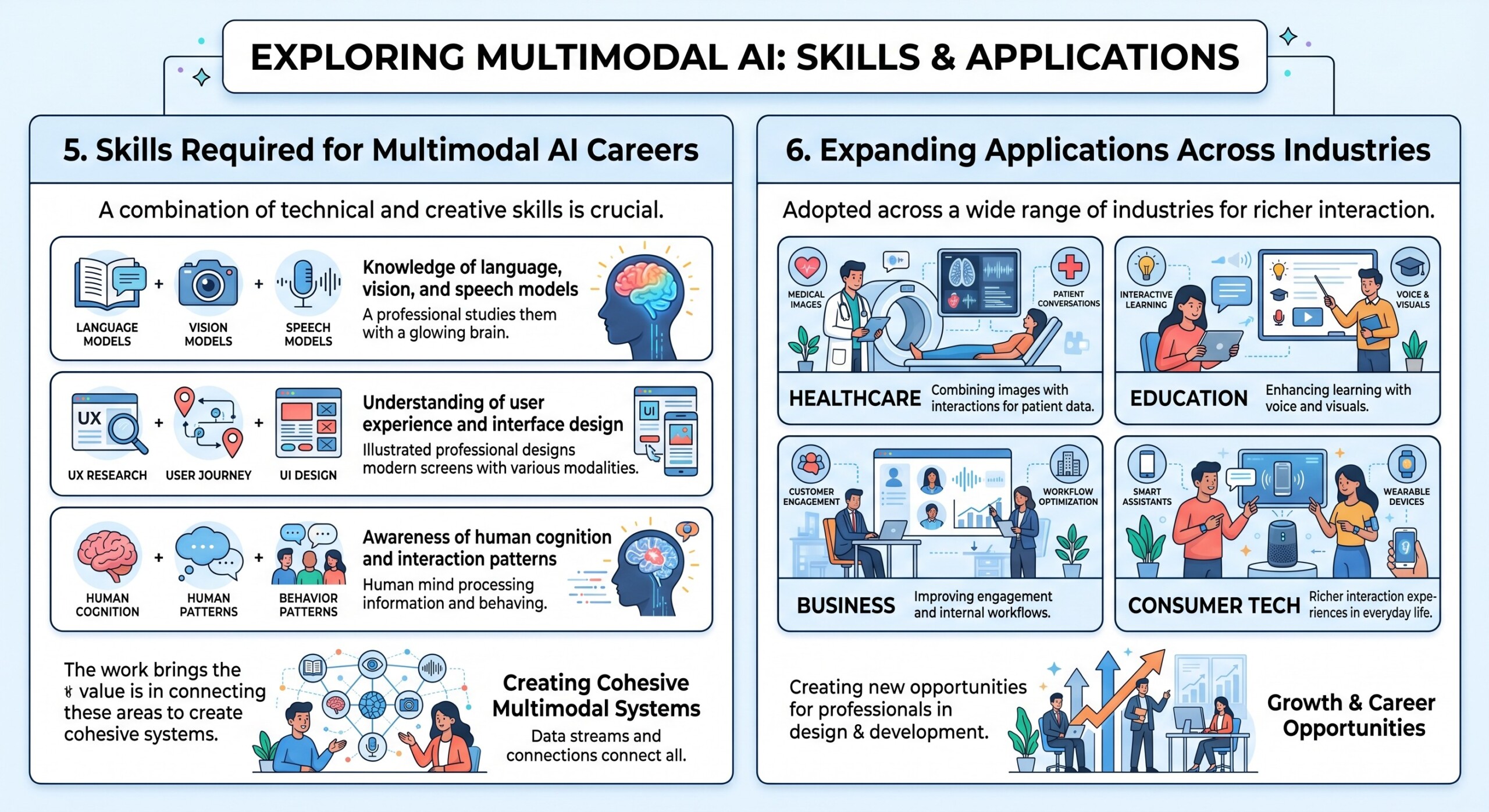
These careers require a combination of technical and creative skills. Professionals must understand how different AI models work while also designing user experiences that integrate them effectively.
- Knowledge of language, vision, and speech models
- Understanding of user experience and interface design
- Awareness of human cognition and interaction patterns
The ability to connect these areas is what makes these roles valuable. It is not just about building components but about creating a cohesive system. Excellent individualised mentoring programmes available.
6. Expanding Applications Across Industries
Multimodal AI is being adopted across a wide range of industries. In healthcare, systems combine medical images with patient conversations. In education, interactive platforms use voice and visuals to enhance learning.
In business, multimodal interfaces improve customer engagement and internal workflows. Consumer technologies such as smart assistants and wearable devices are also evolving rapidly, offering richer interaction experiences.
These applications are creating new opportunities for professionals who can design and build such systems.
7. The Future of Human-AI Interaction
The long-term direction of AI is toward deeper integration with human life. Multimodal systems are a step toward this future. They allow AI to understand context more effectively and respond in ways that feel natural.
Interaction will become less about issuing commands and more about ongoing collaboration. AI systems will adapt to user behavior, learn preferences, and operate seamlessly across different environments.
- Interaction becomes more intuitive and less structured
- AI responds to context rather than explicit instructions
- The boundary between user and system becomes less rigid
Careers in this space will shape how this future unfolds. Subscribe to our free AI newsletter now.
Conclusion
Multimodal AI experience and interface careers represent a significant evolution in the field of artificial intelligence. They move the focus from isolated capabilities to integrated systems that combine text, voice, vision, and real-time interaction.
As AI becomes more embedded in everyday life, the need for thoughtful design and seamless interaction will continue to grow. These roles are not only about technology but also about understanding people and how they communicate.
In the years ahead, professionals who can bridge the gap between advanced AI capabilities and human experience will play a crucial role. They will define how AI is not just used, but experienced, making it more accessible, intuitive, and impactful in the real world. Upgrade your AI-readiness with our masterclass.