Personal AI Agents, Digital Twins & Life Automation
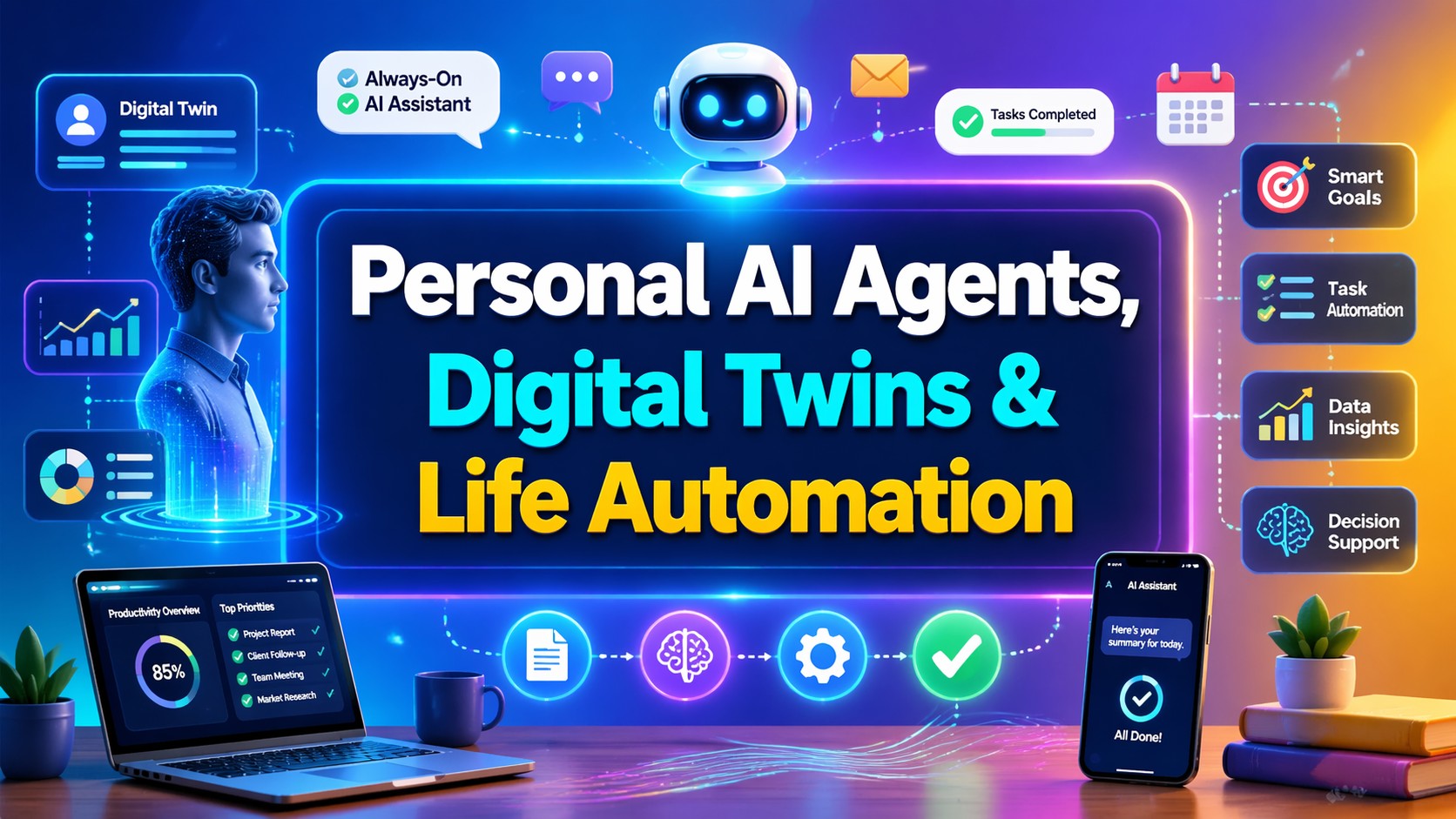
Personal AI Agents, Digital Twins & Life Automation
AI agents for personal productivity, Digital replicas for work and decision-making, Always-on AI assistants and autonomy
Introduction
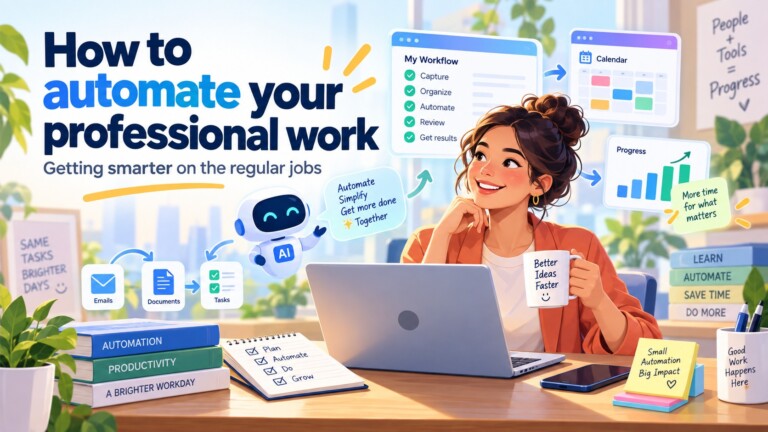
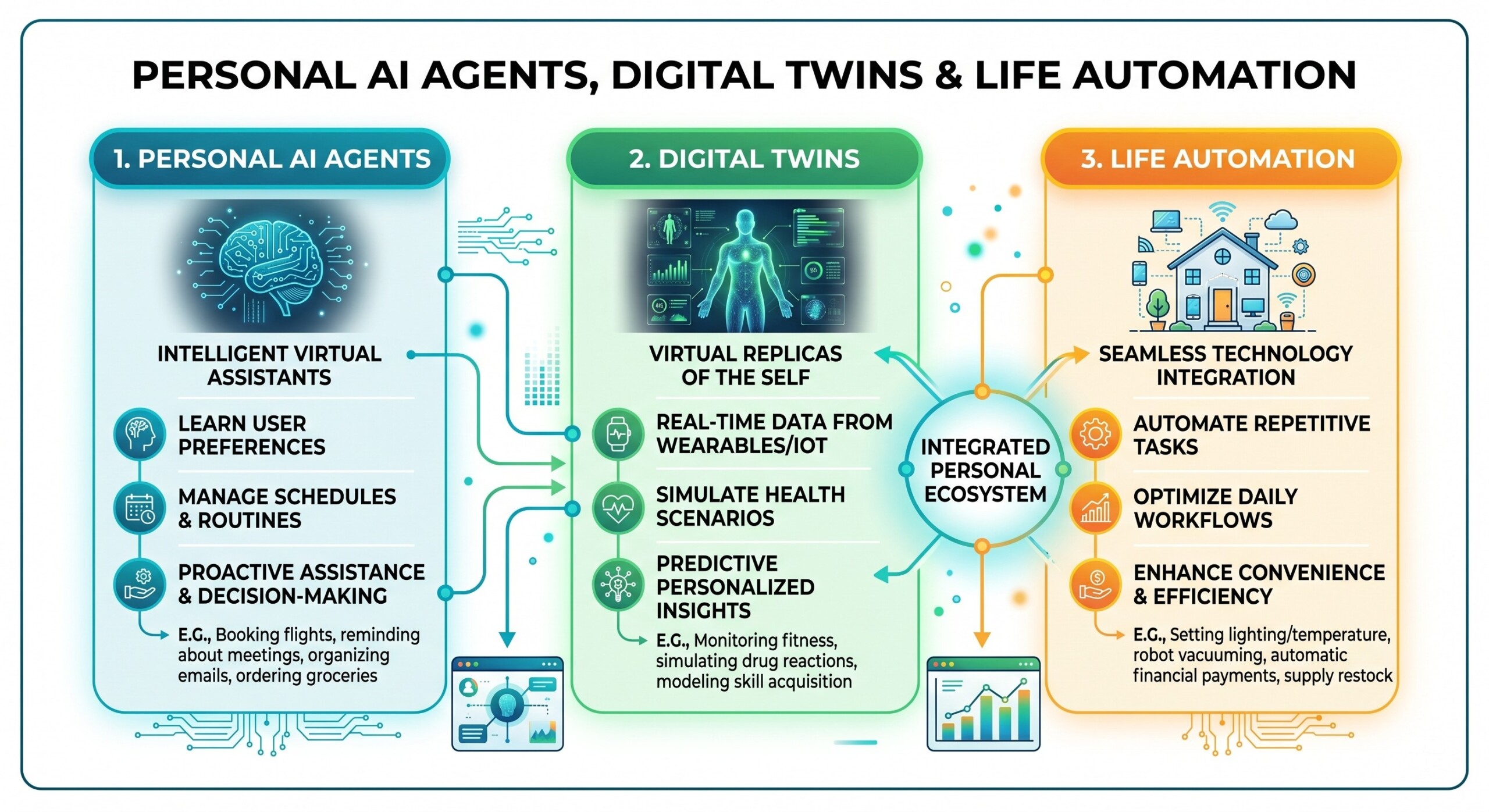
We are entering a phase where AI is no longer just a tool that responds to prompts. It is becoming an active participant in our daily lives. Personal AI agents can take actions on our behalf. Digital twins can represent our thinking patterns and preferences. Always-on assistants can manage workflows continuously without waiting for instructions.
This shift is not about convenience alone. It is about delegation, augmentation, and eventually autonomy. The real question is not whether these systems can help, but how deeply they can integrate into our personal and professional lives.
Let’s dive deep into the topic.
1. Build a Personal AI Agent for Task Execution, Not Just Chat
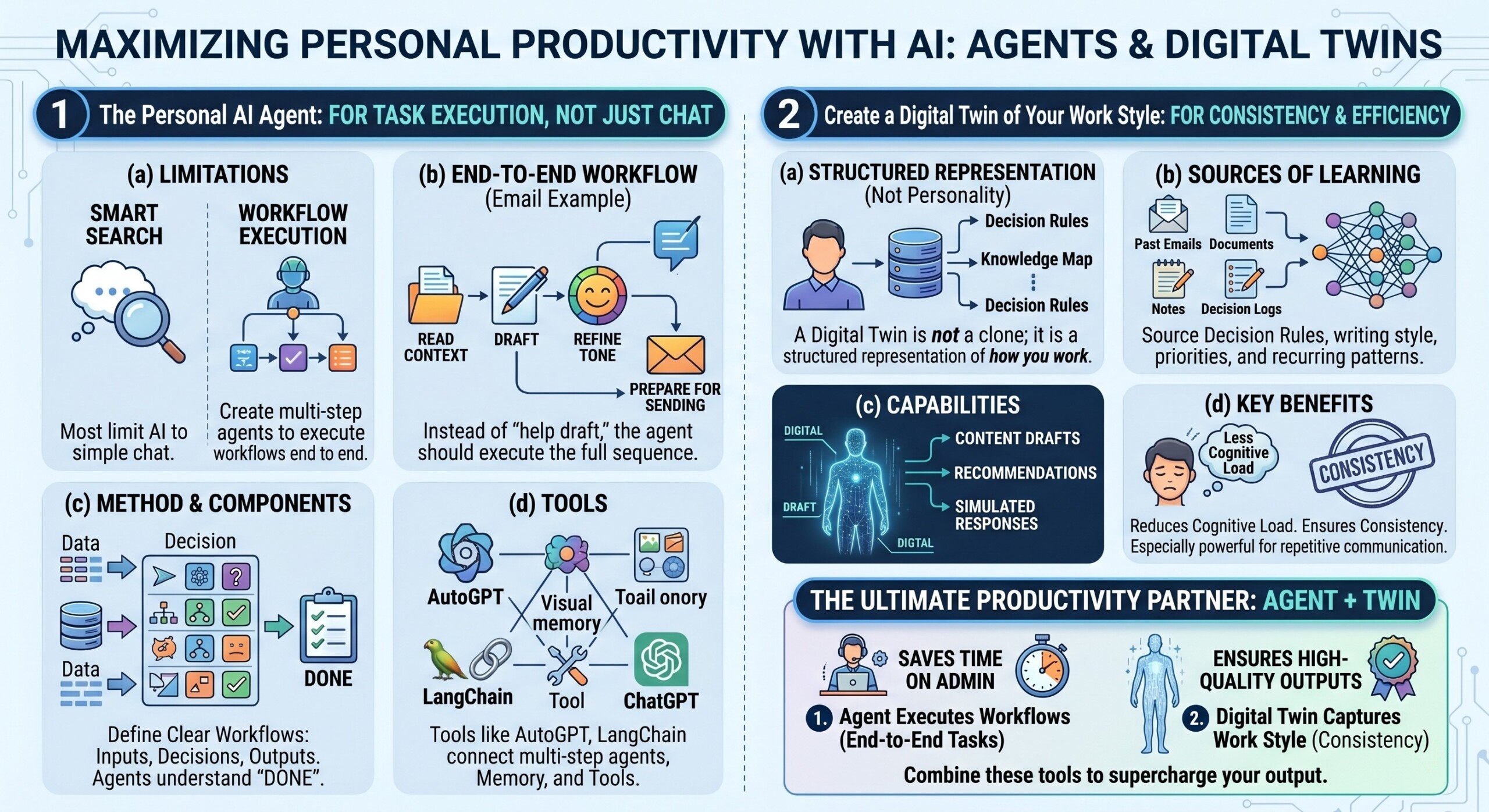
Most people still use AI like a smarter search engine. That is limiting. A personal AI agent should be designed to execute workflows end to end.
For example, instead of asking for help drafting an email, your agent should read context, draft the email, refine tone based on past preferences, and prepare it for sending. Tools like ChatGPT, AutoGPT, and LangChain allow you to create multi-step agents that connect memory, tools, and actions.
The key is to define clear workflows. Think in terms of inputs, decisions, and outputs. Your agent should not wait for constant instructions. It should understand what “done” looks like. An excellent collection of learning videos awaits you on our Youtube channel.
2. Create a Digital Twin of Your Work Style
A digital twin is not a clone of your personality. It is a structured representation of how you think and work.
Start by capturing your decision rules, writing style, priorities, and recurring patterns. Feed past emails, documents, and notes into a system that can learn your tone and reasoning. Over time, your AI can draft content, make recommendations, and even simulate how you would respond in specific scenarios.
This is especially powerful for professionals who deal with repetitive communication or decision-heavy roles. A well-trained digital twin reduces cognitive load and ensures consistency across outputs.
3. Use Always-On AI for Continuous Monitoring and Action
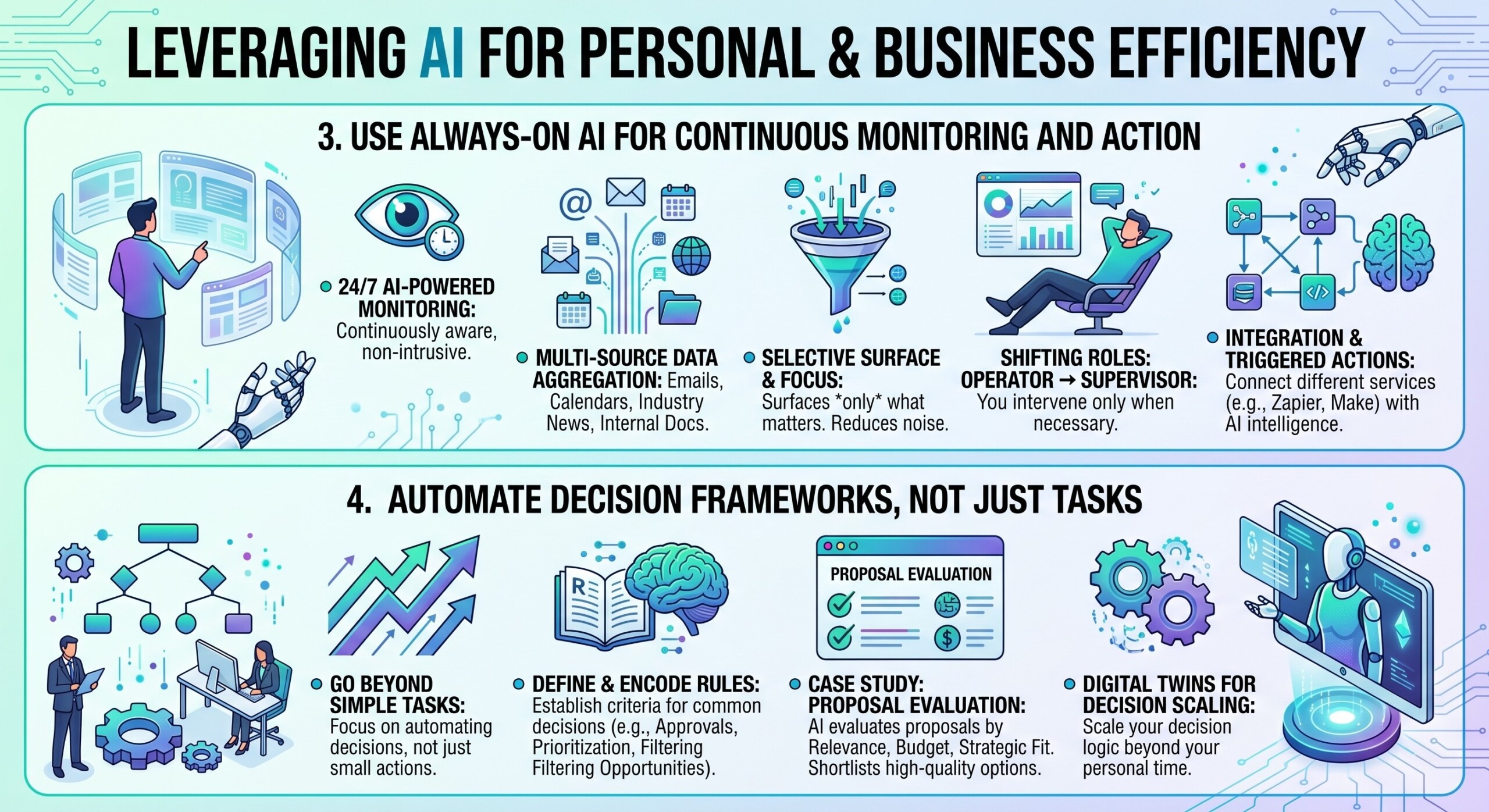
The real power of AI agents comes when they are always active. Not intrusive, but continuously aware.
An always-on assistant can monitor emails, calendar changes, news related to your industry, and internal documents. Instead of you checking everything, the system surfaces only what matters.
Tools like Zapier and Make can connect different services and trigger actions automatically. Combine them with AI models to add intelligence to these triggers.
This shifts your role from operator to supervisor. You intervene only when necessary. A constantly updated Whatsapp channel awaits your participation.
4. Automate Decision Frameworks, Not Just Tasks
Most automation today focuses on tasks. The real leverage comes from automating decisions.
Define rules for common decisions such as approving requests, prioritizing work, or filtering opportunities. Then encode these rules into your AI system. Over time, the system can handle a large percentage of routine decisions without your involvement.
For example, an AI agent can evaluate incoming proposals based on criteria like relevance, budget, and strategic fit. It can shortlist options and present only high-quality choices.
This is where digital twins become powerful. They allow your decision logic to scale beyond your time.
5. Build Memory Systems That Compound Over Time
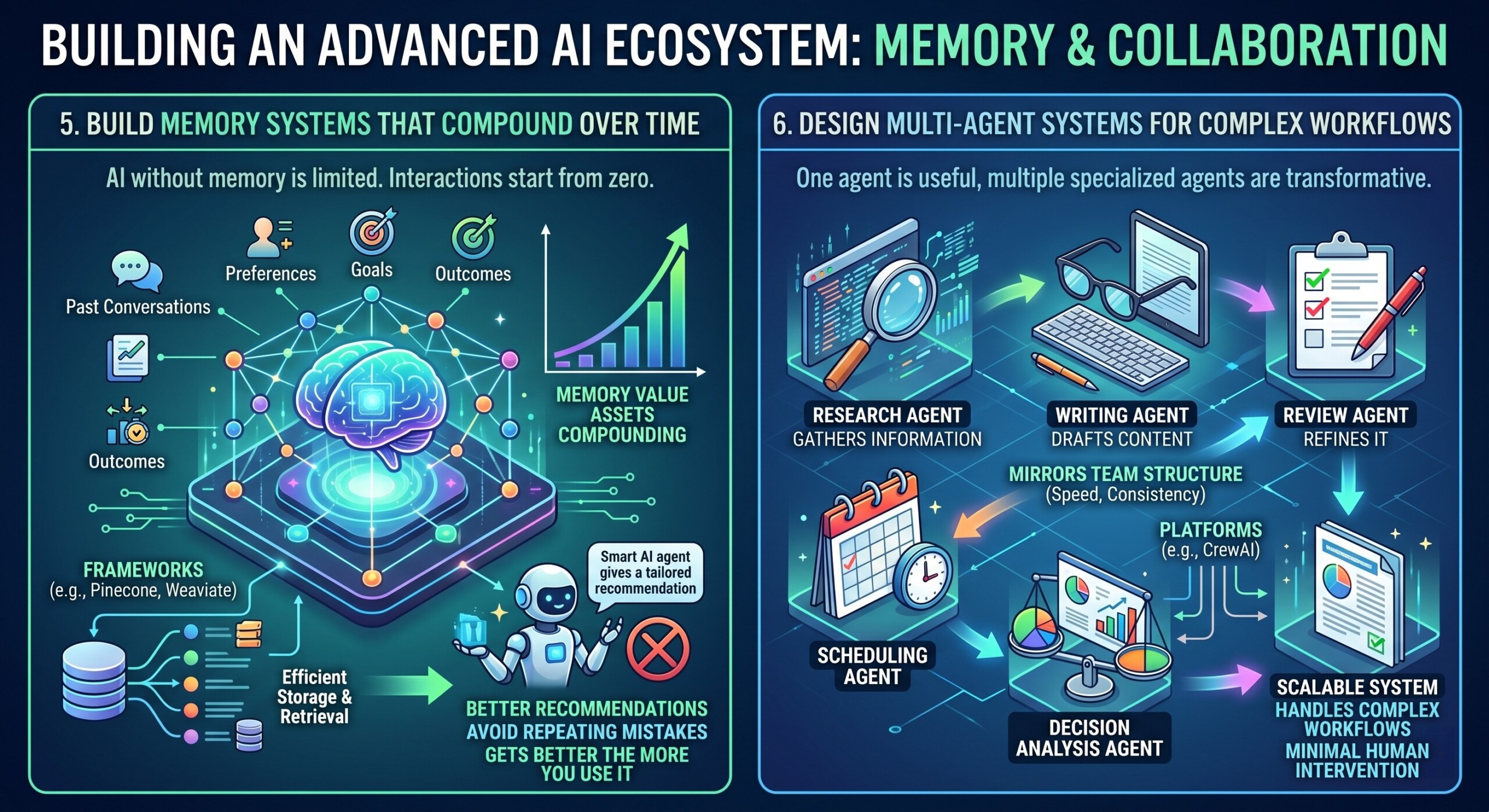
AI without memory is limited. Each interaction starts from zero.
A personal AI ecosystem should include structured memory. This includes past conversations, preferences, goals, and outcomes. Over time, this memory becomes a valuable asset.
Frameworks like Pinecone and Weaviate help store and retrieve contextual information efficiently. Your AI agent can use this memory to provide better recommendations and avoid repeating mistakes.
The goal is to create a system that gets better the more you use it. Excellent individualised mentoring programmes available.
6. Design Multi-Agent Systems for Complex Workflows
One agent is useful. Multiple specialized agents are transformative.
Instead of one general-purpose assistant, create a system where different agents handle different roles. For example, one agent for research, one for writing, one for scheduling, and one for decision analysis.
These agents can collaborate. A research agent gathers information, a writing agent drafts content, and a review agent refines it. This mirrors how teams work, but with speed and consistency.
Platforms like CrewAI enable this kind of orchestration. The result is a scalable system that can handle complex workflows with minimal human intervention.
7. Set Boundaries and Governance for Autonomous Systems
As AI agents become more autonomous, control becomes critical.
Define clear boundaries for what your AI can and cannot do. Set approval layers for sensitive actions. Maintain logs of decisions and actions taken by the system.
Autonomy without oversight creates risk. The goal is not full independence, but controlled delegation. You remain accountable for outcomes, even if the system executes tasks.
This is especially important when dealing with financial decisions, communication, or external stakeholders. Subscribe to our free AI newsletter now.
Conclusion
Personal AI agents, digital twins, and life automation are not future concepts. They are practical systems that can be built today. The shift is from using AI occasionally to embedding it deeply into how you operate.
The real advantage will not come from access to AI, but from how well you design your systems. Those who build structured, memory-driven, and action-oriented AI ecosystems will move faster, think clearer, and scale their impact far beyond individual effort.
The opportunity is not just productivity. It is the ability to extend yourself through intelligent systems that work with you, for you, and sometimes ahead of you. Upgrade your AI-readiness with our masterclass.