How to survive large-scale layoffs

How to survive large-scale layoffs
Introduction
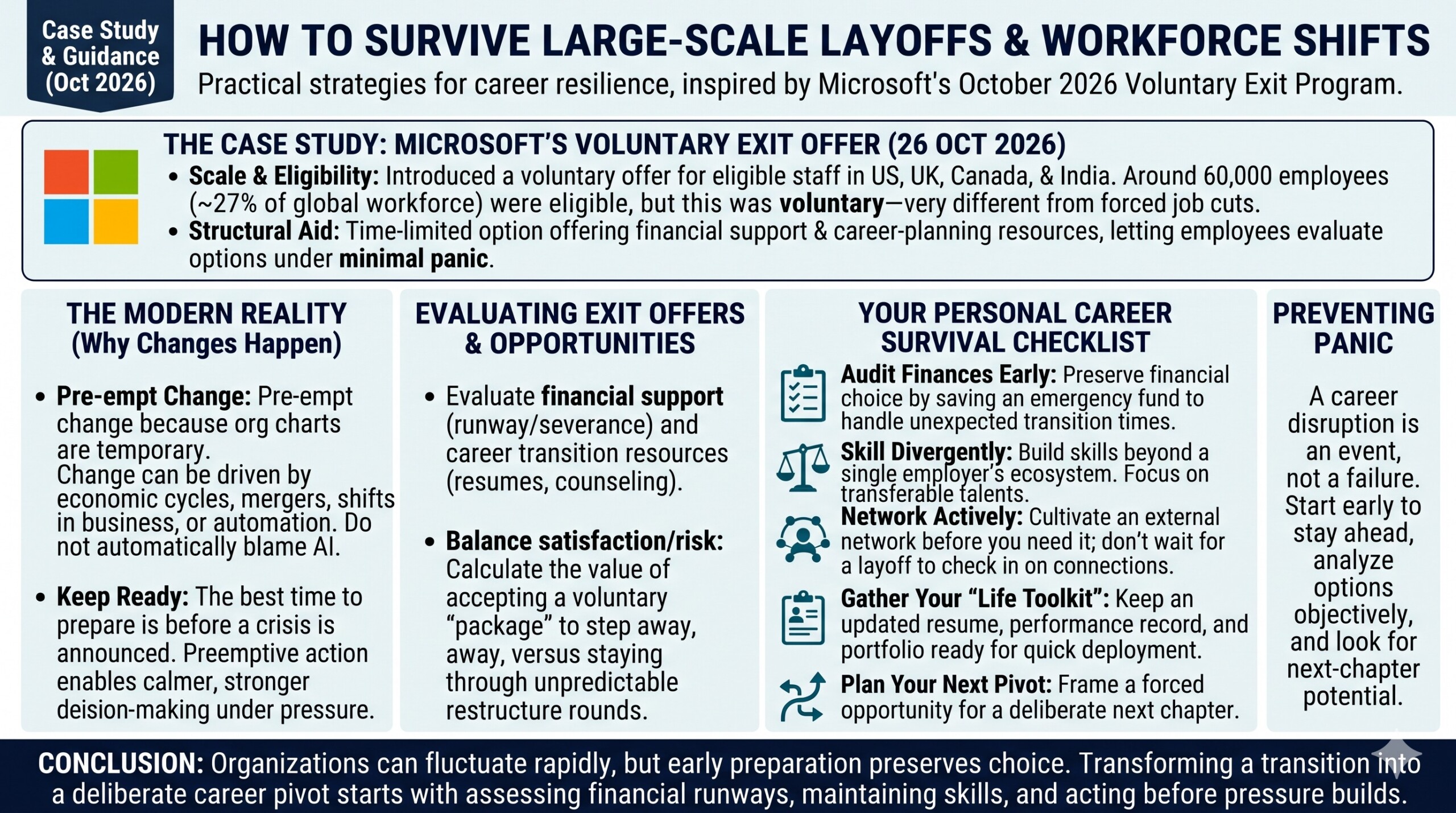
On 26 October 2026, Microsoft introduced a voluntary exit offer for eligible employees in participating teams across the United States, United Kingdom, Canada and India. Around 60,000 employees, or approximately 27% of the company’s global workforce, were reportedly eligible, but eligibility is very different from an announcement that 60,000 people will lose their jobs. Microsoft’s official explanation described a time-limited option involving financial support and career-planning resources, while emphasising that participation was voluntary.
For professionals looking toward 2027, the announcement captures an uncomfortable reality: even a prestigious employer cannot promise that today’s organisation chart will remain unchanged. Economic cycles, mergers, changing business priorities and advances in automation can all alter the demand for particular roles, although any individual layoff should not automatically be blamed on AI. People who prepare early can make stronger decisions under pressure, preserve their financial choices and sometimes turn a forced career interruption into a more deliberate next chapter.
Let’s dive deep into it.
1. Understand what the announcement actually means
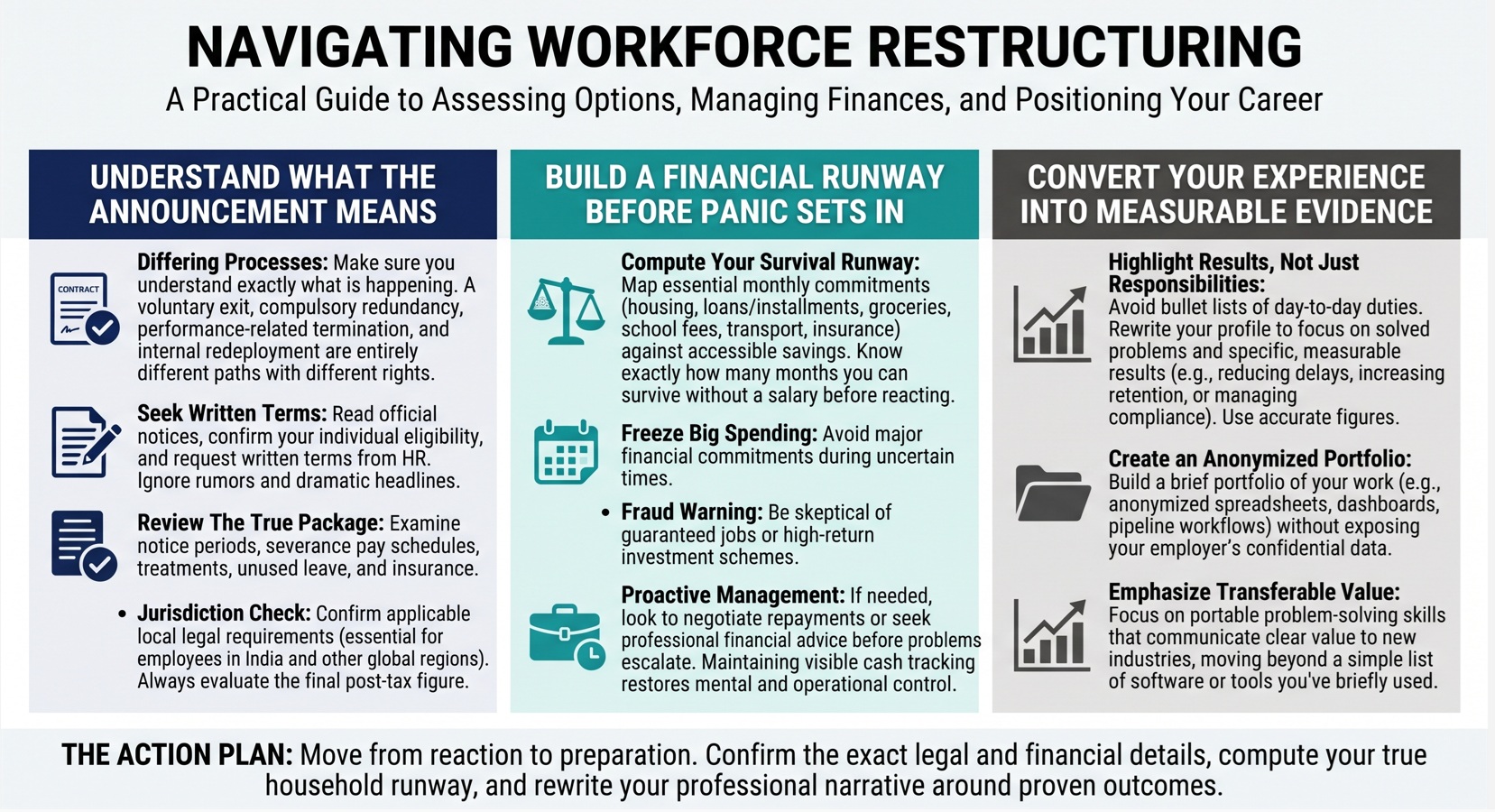
When a company announces restructuring, employees need reliable details before making personal decisions. A voluntary exit programme, a compulsory redundancy, a performance-related termination and an internal redeployment exercise are different processes, with different rights and potential consequences. Read the official notice, confirm your own eligibility and ask human resources for the written terms rather than relying on rumours or alarming social-media headlines.
If an exit package is offered, examine the payment schedule, notice period, unused leave, insurance arrangements, tax treatment and any conditions attached to accepting it. Employees in India should check the terms of their employment and applicable local requirements, while those in other countries should seek advice appropriate to their jurisdiction. A decision that looks attractive before tax or benefits are considered may look less appealing once the practical details are understood.
2. Build a financial runway before panic makes the decisions
The first practical question is how long your household can function without your normal salary. Add essential monthly commitments such as rent, loan instalments, groceries, school fees, insurance and transport, then compare them with accessible savings and reliable income from other sources. This gives you a realistic financial runway and helps you decide whether to search selectively, accept temporary work or cut expenditure immediately.
Avoid making major financial commitments while your employment situation is uncertain, and be cautious about expensive promises of guaranteed jobs or quick investments. A professional facing a sudden transition may need to negotiate repayments or seek qualified financial advice before a problem compounds. Keeping a clear picture of cash, benefits and obligations restores a measure of control that emotional reassurance alone cannot provide.
3. Convert your experience into measurable evidence
Many people describe their careers in terms of responsibilities, but employers increasingly want evidence of problems solved and outcomes achieved. Rewrite your professional profile around specific results, such as reducing delivery delays, improving customer retention or leading a successful compliance project. Use accurate figures where you have permission to disclose them, and avoid exaggerating an achievement simply to impress automated screening systems.
Create a short portfolio that demonstrates your work without exposing confidential employer information. A finance manager might present an anonymised dashboard design, while a sales professional might explain how they improved a pipeline or resolved a difficult customer issue. For career changers, credible examples frequently communicate transferable value more clearly than a list of tools they have briefly tried.
4. Learn AI through the work you already understand
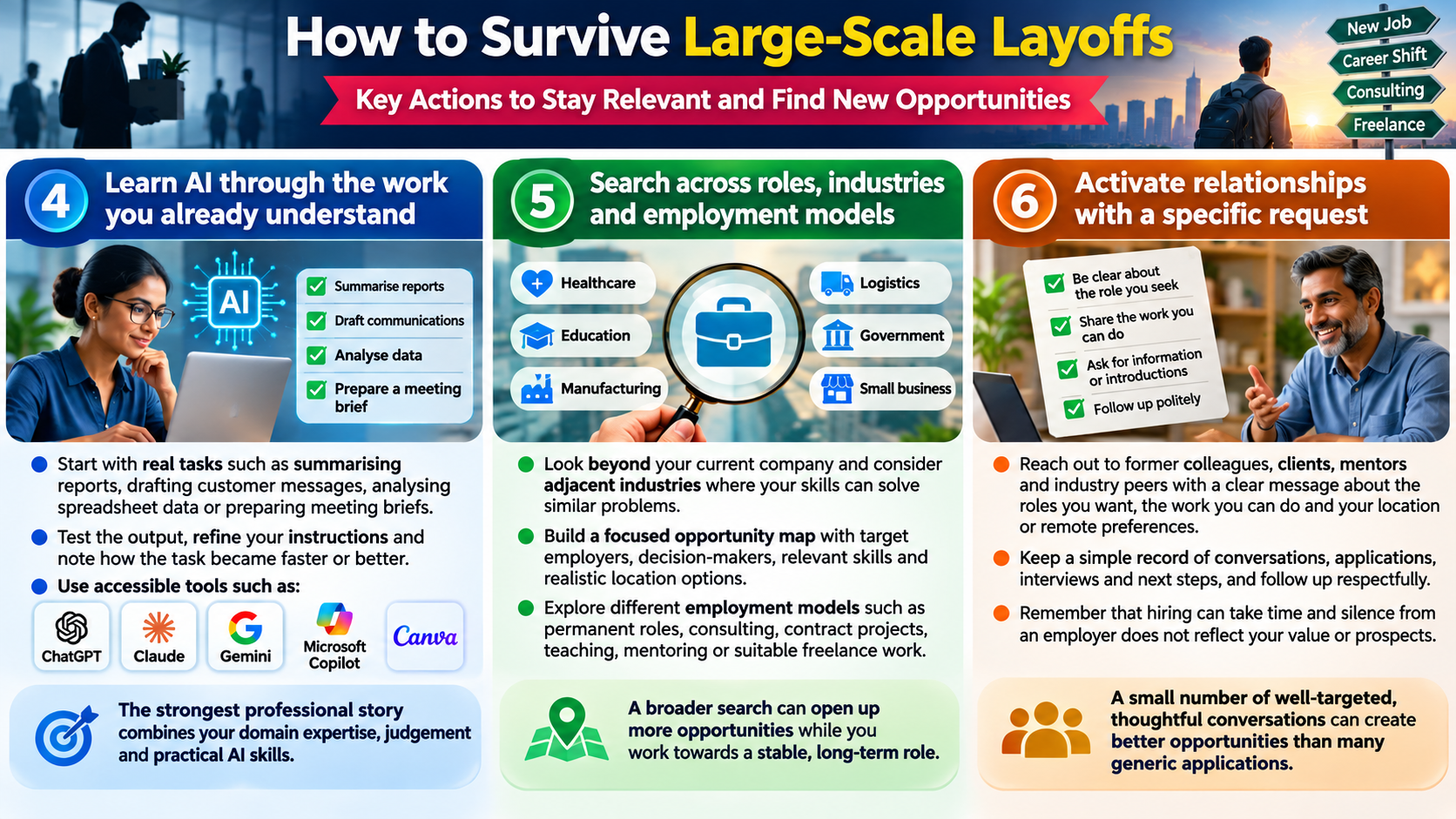
By 2027, familiarity with AI assistants may be useful in many office roles, but learning AI does not require everyone to become a machine-learning engineer. Begin with a real assignment: summarise non-sensitive reports, draft alternative customer communications, analyse sample spreadsheet data or prepare a meeting brief. Test the output carefully, improve the instructions and document which parts of the task were actually made faster or better.
Tools such as ChatGPT, Claude, Gemini, Microsoft Copilot and Canva can provide an accessible practice environment, subject to each product’s availability and data policies. The strongest professional story combines domain knowledge, judgment and practical AI skills. Someone who can explain how AI improved a genuine business process is usually more credible than someone who simply adds the word ‘AI’ to a résumé.
5. Search across roles, industries and employment models
After years in one company, it is easy to imagine that the next job must have the same title in a similar organisation. Consider adjacent industries where your expertise solves comparable problems, including healthcare, education, manufacturing, logistics, government contracting or smaller businesses. A project manager experienced in complex software delivery, for instance, may bring valuable coordination skills to an organisation modernising its operations.
Make a focused opportunity map with target employers, decision-makers, relevant skills and realistic location constraints. Alongside permanent roles, examine consulting assignments, contract projects, teaching, mentoring and carefully chosen freelance work when appropriate. These routes have different financial and legal implications, but they can expand the range of options while you seek a stable longer-term position.
6. Activate relationships with a specific request
A useful professional network is rarely built by sending a vague public message saying that you are available for anything. Contact former colleagues, clients, mentors and industry peers with a concise description of the work you can do, the roles you seek and the geographic or remote arrangements you can consider. Ask for information about particular teams or introductions, while making it easy for contacts to decline without embarrassment.
Keep a simple record of conversations, applications, interviews and next steps, then follow up respectfully. Recruitment can be slow even for strong candidates, and silence from an employer does not reliably measure your worth or prospects. A small number of well-targeted, thoughtful conversations can produce better opportunities than hundreds of uncustomised applications.
7. Protect your judgement, health and negotiating position
Large-scale employment announcements are unsettling because people must process uncertainty while continuing to deliver at work and care for their families. Establish a routine that includes job-search hours, learning time, physical activity and contact with people who offer sound advice. If anxiety, sleep disturbance or low mood becomes persistent, speaking with an appropriate healthcare professional can be a sensible part of managing the transition.
Prepare for interviews by practising a calm explanation of your situation that avoids blaming individuals or revealing confidential details. Review contracts before accepting a new role, negotiate from accurate market evidence and be alert to recruiters who demand fees or sensitive documents prematurely. The aim is to leave a difficult period with your reputation, finances and future choices as intact as possible.

Conclusion
The coming year may bring further workforce reorganisations, but nobody can responsibly predict that every profession will face mass layoffs or that AI alone will determine who keeps a job. Microsoft’s October announcement is a reminder to prepare without assuming the worst: understand the facts, strengthen your finances, demonstrate your achievements, learn practical AI skills and broaden your professional connections. Career resilience in 2027 will depend less on chasing each new technology headline and more on being able to show how your experience helps organisations solve important problems.