Copyright tangles in LLM generations: Text versus Images
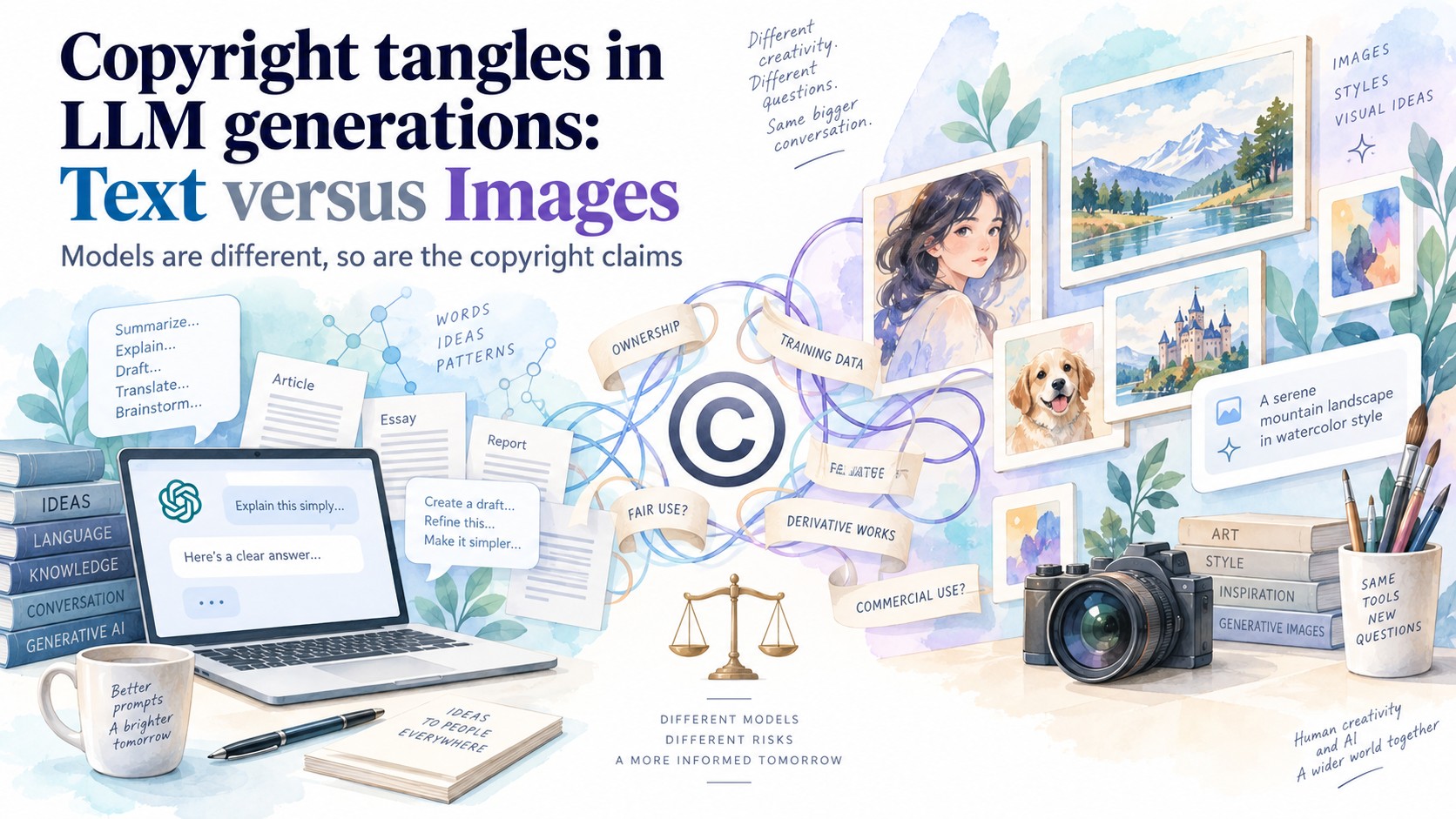
Copyright tangles in LLM generations: Text versus Images
Models are different, so are the copyright claims
Introduction
Generative AI has made copyright easier to encounter and harder to understand. A person can now ask a language model to write an article or an image model to create an advertisement, illustration or edited photograph without opening conventional publishing or design software.
The resulting material may appear original, but copyright law asks questions about training data, human authorship, substantial similarity, licensing and infringement that the model cannot decide for the user. Text and images share some legal principles, yet they produce different practical risks, which makes understanding the distinction increasingly important in September 2026.
Let’s dive deep into this now.
1. Training copyright and output copyright are different issues
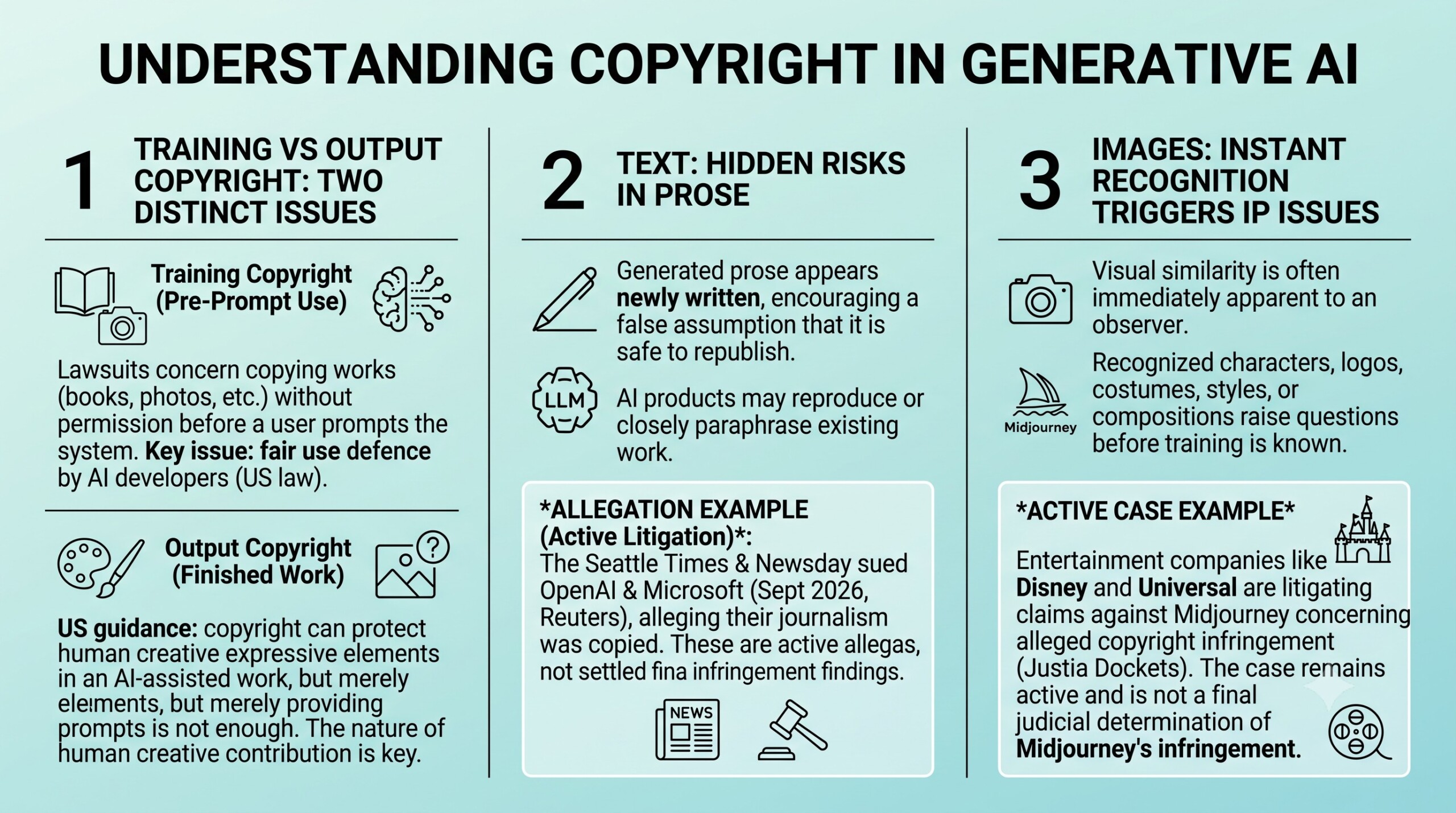
Many prominent lawsuits concern what happened before the user typed a prompt. Publishers, photographers, writers and other rightsholders have argued that copyrighted works were copied without permission for training or operating generative AI systems, while AI developers have raised defences including fair use under US law.
A separate question concerns the finished output. US Copyright Office guidance says copyright can protect human-authored expressive elements in an AI-assisted work, but merely providing prompts does not by itself make machine-generated expression copyrightable. The amount and nature of human creative contribution therefore matter.
2. Text can hide copyright problems more easily
Generated prose usually appears as newly written text rather than an obvious reproduction of a newspaper page or book. That appearance can encourage users to assume that everything generated by an LLM is automatically safe to republish.
Current litigation shows why the assumption is risky. The Seattle Times and Newsday sued OpenAI and Microsoft in September 2026, alleging that their journalism was copied without permission for AI systems and that AI products can reproduce or closely paraphrase their work. These are allegations being litigated, not settled findings of infringement. An excellent collection of learning videos awaits you on our Youtube channel.
3. Images make similarity much easier to notice
Visual similarity is often immediately apparent to a human observer. A generated image can contain a recognisable character, logo, costume, graphic style or composition that raises intellectual-property questions before anyone knows how the underlying model was trained.
Disney, Universal and other entertainment companies are currently litigating claims against Midjourney concerning alleged copyright infringement involving generated images. The case remains active, which means the allegations should not be presented as a final judicial determination that Midjourney infringed the works in question.
4. GPT-Image-2 makes professional editing easier
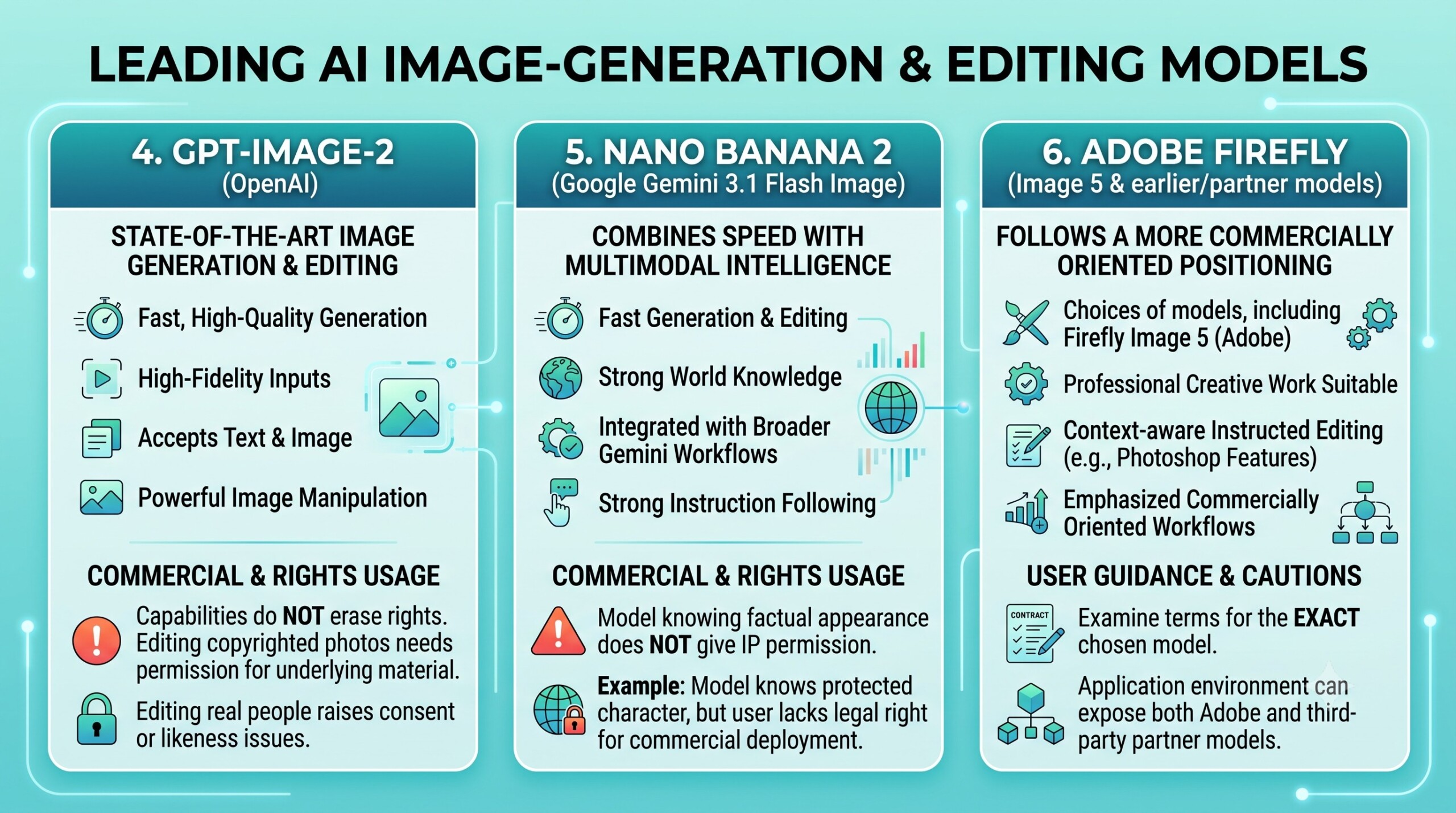
OpenAI currently describes GPT-Image-2 as its state-of-the-art image-generation model for fast, high-quality generation and editing. The model accepts text and image inputs, can generate and edit images, and supports high-fidelity image inputs.
Those capabilities make image manipulation far more accessible, but they do not erase rights attached to the source material. Editing a copyrighted photograph with AI does not automatically create permission to use the underlying photograph, while editing an image of a real person can raise additional consent or likeness issues. A constantly updated Whatsapp channel awaits your participation.
5. Nano Banana 2 combines speed with multimodal intelligence
Google’s Nano Banana 2 is Gemini 3.1 Flash Image and is generally available through Google’s enterprise AI environment. Google positions it as a fast image-generation and editing model with strong world knowledge, instruction following and integration into broader Gemini workflows.
Its ability to use broader real-world knowledge can improve the accuracy of visual generation, but factual knowledge is different from intellectual-property permission. A model knowing exactly what a protected character or product looks like does not give the user the legal right to deploy that representation commercially.


6. Adobe Firefly follows a more commercially oriented positioning
Adobe’s current image-model choices include Firefly Image 5 alongside earlier Firefly models and partner models. Adobe describes Firefly Image 5 as suitable for professional creative work, and Photoshop now uses it for features such as context-aware instructed editing. (Adobe)
Adobe has emphasised commercially oriented generative workflows, but users should still examine the terms that apply to the exact model they choose. This is especially important because modern Adobe applications can expose both Adobe models and third-party partner models inside the same creative environment. Excellent individualised mentoring programmes available.
7. Midjourney V8.2 shows how quickly visual generation is improving
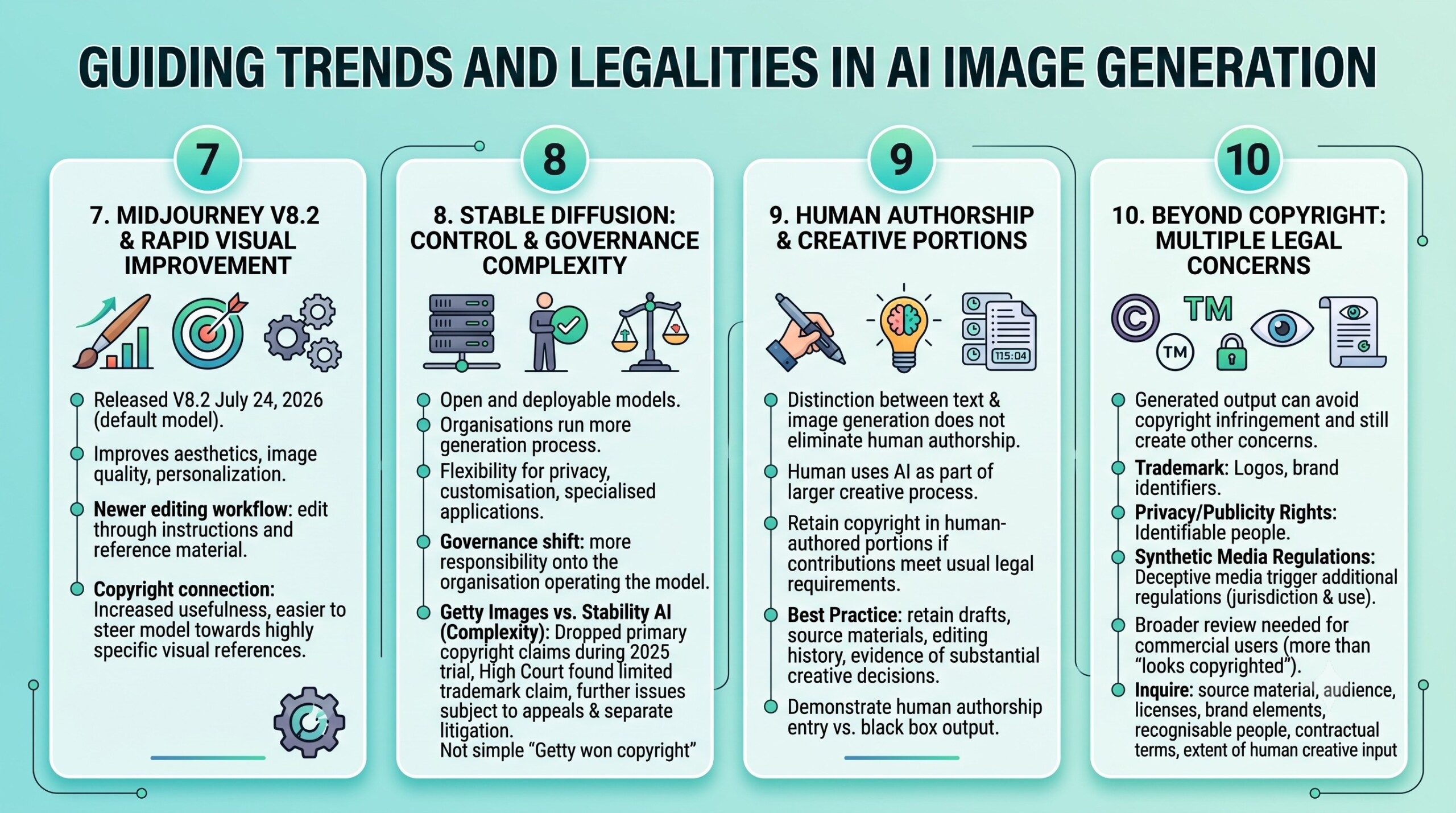
Midjourney released V8.2 on July 24, 2026 and currently uses it as the default model. Midjourney says the version improves aesthetics, image quality and personalisation, and its newer editing workflow allows users to edit images through instructions and reference material.
These improvements make the active copyright litigation surrounding Midjourney especially interesting. Better adherence and editing increase creative usefulness, while also making it increasingly easy for users to steer a model towards highly specific visual references.
8. Stable Diffusion raises a different question about control
Open and deployable image models allow organisations to run more of the generation process themselves. That flexibility can be useful for privacy, customisation and specialised applications, but it can also shift more responsibility for governance onto the organisation operating the model.
The Getty Images litigation involving Stability AI illustrates the complexity. In the UK case, Getty dropped certain primary copyright claims during the 2025 trial, the High Court ultimately found for Getty on a limited trademark claim, and further issues have remained subject to appeals and separate litigation. Describing the case simply as “Getty won its copyright lawsuit” would therefore be inaccurate. Subscribe to our free AI newsletter now.
9. Human authorship matters for both text and images
The distinction between text and image generation does not eliminate the central role of human authorship. A human can use AI as part of a larger creative process while retaining copyright in the human-authored portions of the work, provided those contributions meet the usual legal requirements.
For commercially valuable work, it therefore makes sense to retain drafts, source materials, editing history and evidence of substantial creative decisions. Such records can help demonstrate where human authorship entered the process instead of treating the final AI output as an unexplained black box.
10. Copyright is only one part of the legal problem
A generated output can avoid copyright infringement and still create other legal concerns. Logos and brand identifiers may raise trademark questions, images of identifiable people may involve privacy or publicity rights, and deceptive synthetic media may trigger additional regulations depending on jurisdiction and use.
Commercial users therefore need a broader review than a simple question asking whether the image “looks copyrighted”. The relevant inquiry can include the source material, intended audience, licences, brand elements, recognisable people, contractual terms and the extent of human creative input.
Conclusion
Text and image generation share many copyright principles, but their risks often appear differently. Images make similarity immediately visible, while text can conceal source resemblance inside apparently fresh prose. GPT-Image-2, Nano Banana 2, Firefly Image 5, Midjourney V8.2 and other modern systems are extraordinarily capable creative tools, but none functions as a legal permission engine. The safest professional approach combines AI creativity with human editing, documented authorship, sensible similarity checks and legal review when the work has significant commercial value.