Google going the Nvidia way now
Google going the Nvidia way now
Introduction
For years, Nvidia has been the undisputed king of the AI hardware revolution. Its GPUs became the foundation upon which OpenAI, Anthropic, Meta, Microsoft, and countless startups built their artificial intelligence ambitions. As AI demand exploded, Nvidia transformed from a chip company into one of the most strategically important technology firms in the world.
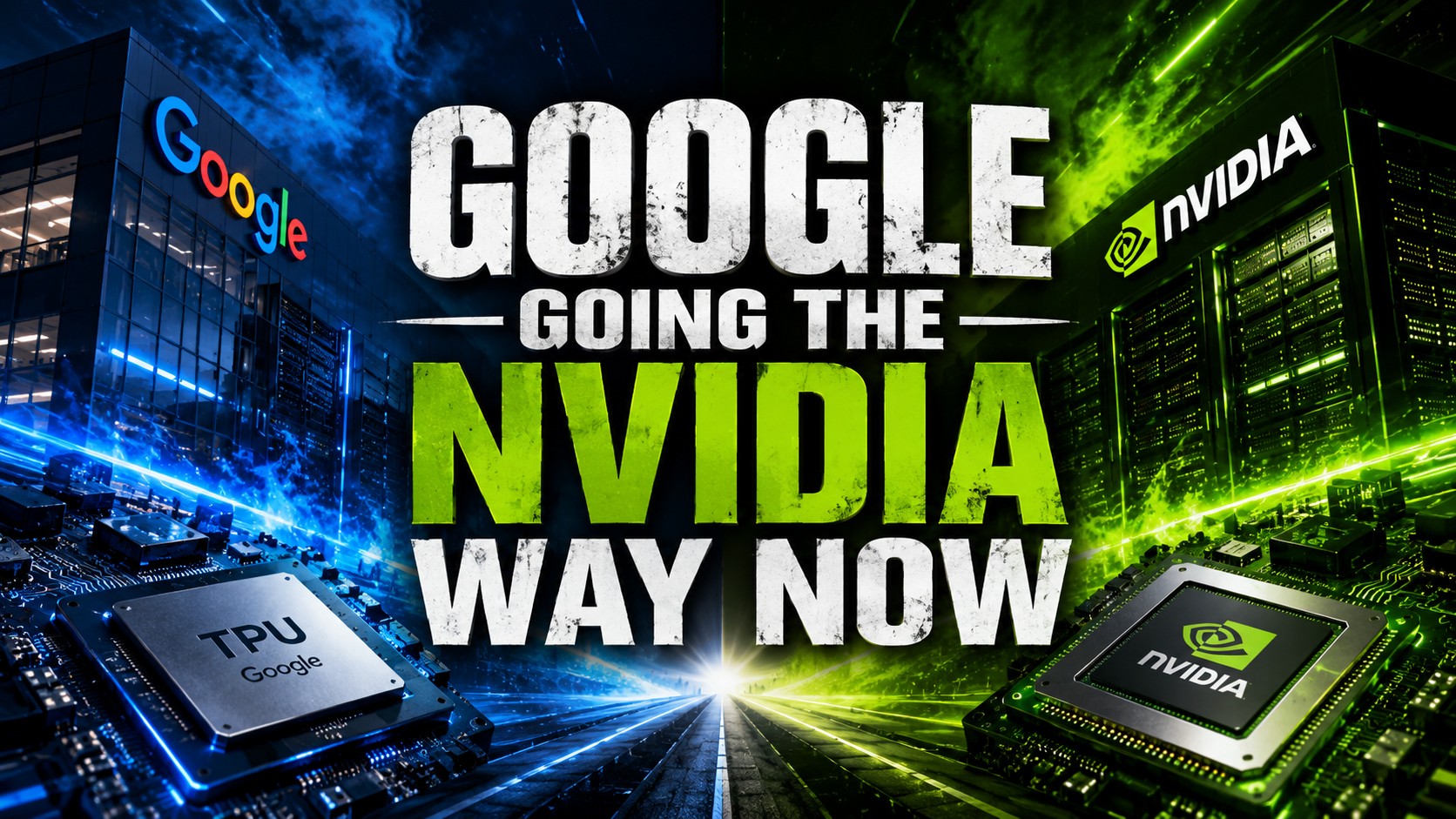
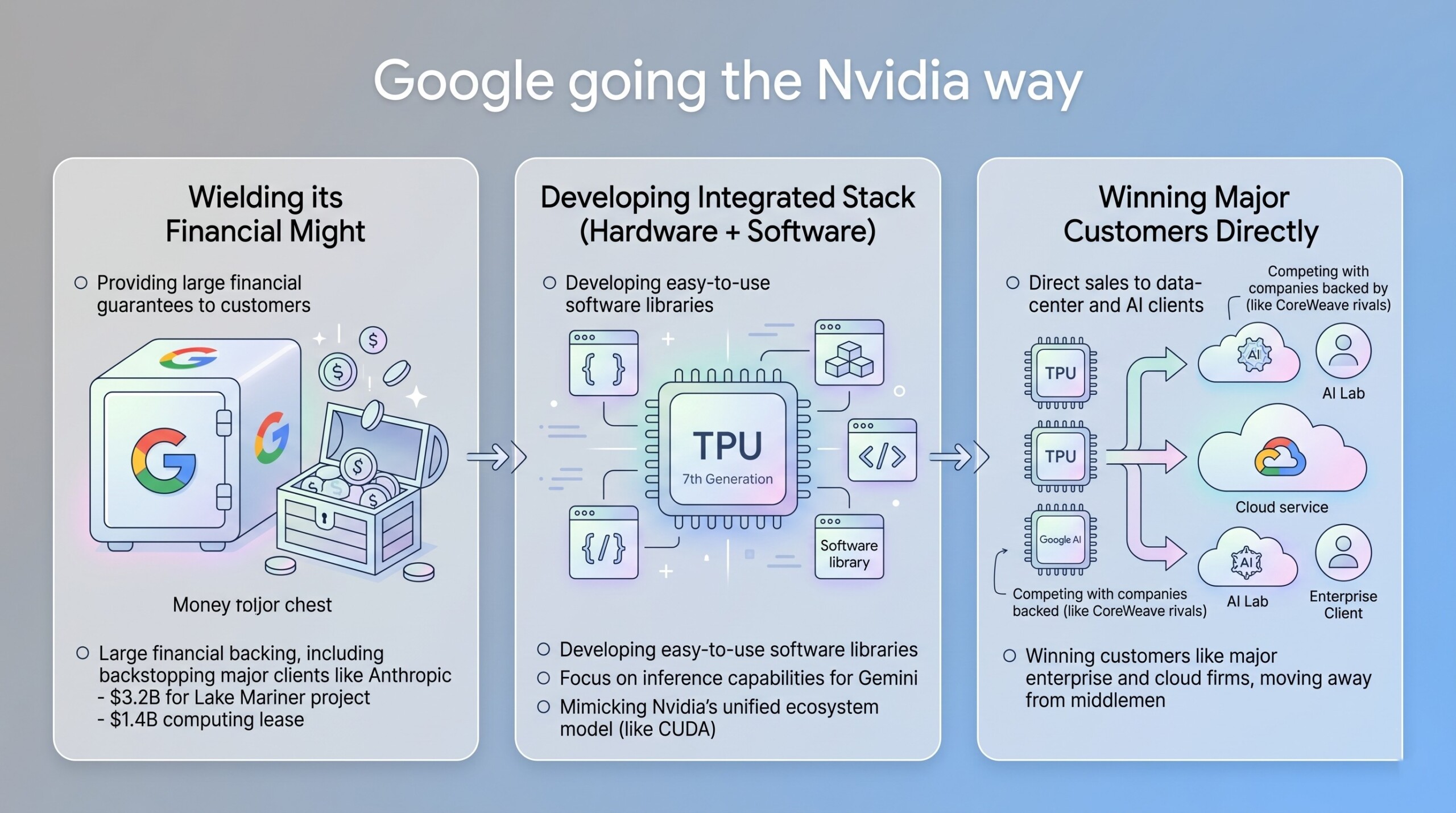
Now Google appears determined to follow a similar path. The company is no longer content with merely being a cloud provider or an AI model developer. Instead, Google is leveraging its enormous financial resources, cloud infrastructure, AI expertise, and custom silicon capabilities to create an alternative AI hardware ecosystem. Its Tensor Processing Units (TPUs), once largely internal tools, are increasingly being offered to external customers through Google Cloud.
The goal is ambitious: reduce dependence on Nvidia, attract AI developers, build a thriving hardware ecosystem, and eventually become a major supplier of AI computing infrastructure. In many ways, Google is beginning to play the same game that made Nvidia one of the world’s most valuable companies.
Let’s dive deep into it.
1. Google Sees AI Chips as the Next Great Market
Artificial intelligence has created a massive demand for computing power. Every AI model, chatbot, image generator, and autonomous system requires enormous processing capabilities.
Google understands that AI chips are becoming the oil wells of the digital economy.
2. TPUs Are Google’s Answer to Nvidia GPUs
For over a decade Google has quietly developed Tensor Processing Units (TPUs) for internal use.
Originally built to power Google Search, YouTube, Maps, and AI services, TPUs are now being positioned as a commercial alternative to Nvidia’s GPUs.
3. Moving Beyond Internal Infrastructure
Historically, Google used TPUs mainly for its own products.
Today the strategy has changed. The company wants outside developers, enterprises, and AI startups to build on Google’s hardware ecosystem.
4. Cloud Customers Need More Computing Power
AI demand has exploded faster than anyone expected.
Companies desperately need computing resources to train and run models. Google sees an opportunity to supply that demand through Google Cloud.
5. Nvidia’s Success Has Become Google’s Blueprint
Google is studying the exact playbook that helped Nvidia dominate AI.
Nvidia did not just sell chips. It built an ecosystem, attracted developers, created software tools, and became deeply embedded in customer workflows. Google is now attempting a similar strategy.
6. Financial Strength Gives Google an Advantage
Few companies possess Google’s balance sheet.
The company can invest billions in chip design, manufacturing partnerships, data centers, and infrastructure without threatening its financial stability. This allows Google to play a very long game.
7. Vertical Integration Is the Ultimate Goal
Google controls almost every layer of the AI stack:
- AI models
- Cloud services
- Data centers
- Software frameworks
- Custom chips
This level of integration gives Google advantages few competitors can match.
8. The TPU Ecosystem Is Expanding
Companies such as Anthropic have already used Google’s TPUs for model training.
Every new customer strengthens the TPU ecosystem and makes Google’s hardware platform more credible.
9. Google Wants to Reduce Nvidia Dependency
Even technology giants depend heavily on Nvidia hardware.
Google understands the strategic risks of relying on a single supplier for critical AI infrastructure.
Developing TPUs gives the company greater independence.
10. AI Infrastructure Is Becoming a Strategic Asset
Cloud computing once determined who led the digital economy.
Now AI infrastructure is becoming equally important.
The companies controlling compute resources may ultimately control the future of AI innovation.
11. Cost Efficiency Could Become Google’s Weapon
One of Google’s biggest selling points is efficiency.
The company claims certain AI workloads can run significantly cheaper on TPUs than on traditional GPU-based systems.
For enterprises managing massive AI workloads, cost matters.
12. A New Battle Is Emerging in AI Hardware
The AI hardware market is no longer a one-company race.
Google, AMD, Cerebras, Amazon, Microsoft, and several startups are all seeking alternatives to Nvidia’s dominance.
Competition is intensifying rapidly.
13. AI Customers Want More Than One Supplier
Businesses rarely want complete dependence on a single vendor.
Many organizations are actively seeking alternative providers to diversify risk, improve pricing leverage, and ensure long-term flexibility.
Google is positioning itself as that alternative.
14. Google Is Building an Entire AI Platform
The company’s ambitions extend far beyond chip sales.
Google is creating an integrated platform that combines:
- Gemini models
- TPUs
- Google Cloud
- AI development tools
- Enterprise solutions
This mirrors Nvidia’s strategy of owning both hardware and software ecosystems.
15. The Real Prize Is Control of AI Infrastructure
The ultimate battle is not simply about selling chips.
It is about becoming the foundation upon which future AI systems are built.
If Google succeeds, it will not merely compete with Nvidia—it will become one of the world’s most important AI infrastructure providers.
Conclusion
Google’s TPU strategy represents one of the most significant shifts in the AI industry. What began as an internal effort to accelerate Google’s own services is evolving into a full-scale challenge to Nvidia’s dominance.
The company is leveraging its financial strength, cloud presence, AI leadership, and custom silicon expertise to create an alternative ecosystem for AI computing. By opening TPUs to external customers and investing heavily in infrastructure, Google is following many of the same principles that helped Nvidia become the defining company of the AI era.
The coming years will determine whether Google can truly rival Nvidia. But one thing is already clear: Google is no longer just building AI models. It is building the infrastructure that could power the next generation of artificial intelligence, and in doing so, it is increasingly going the Nvidia way.