Chinese models update – arriving 2027
Chinese models update – arriving 2027
Introduction
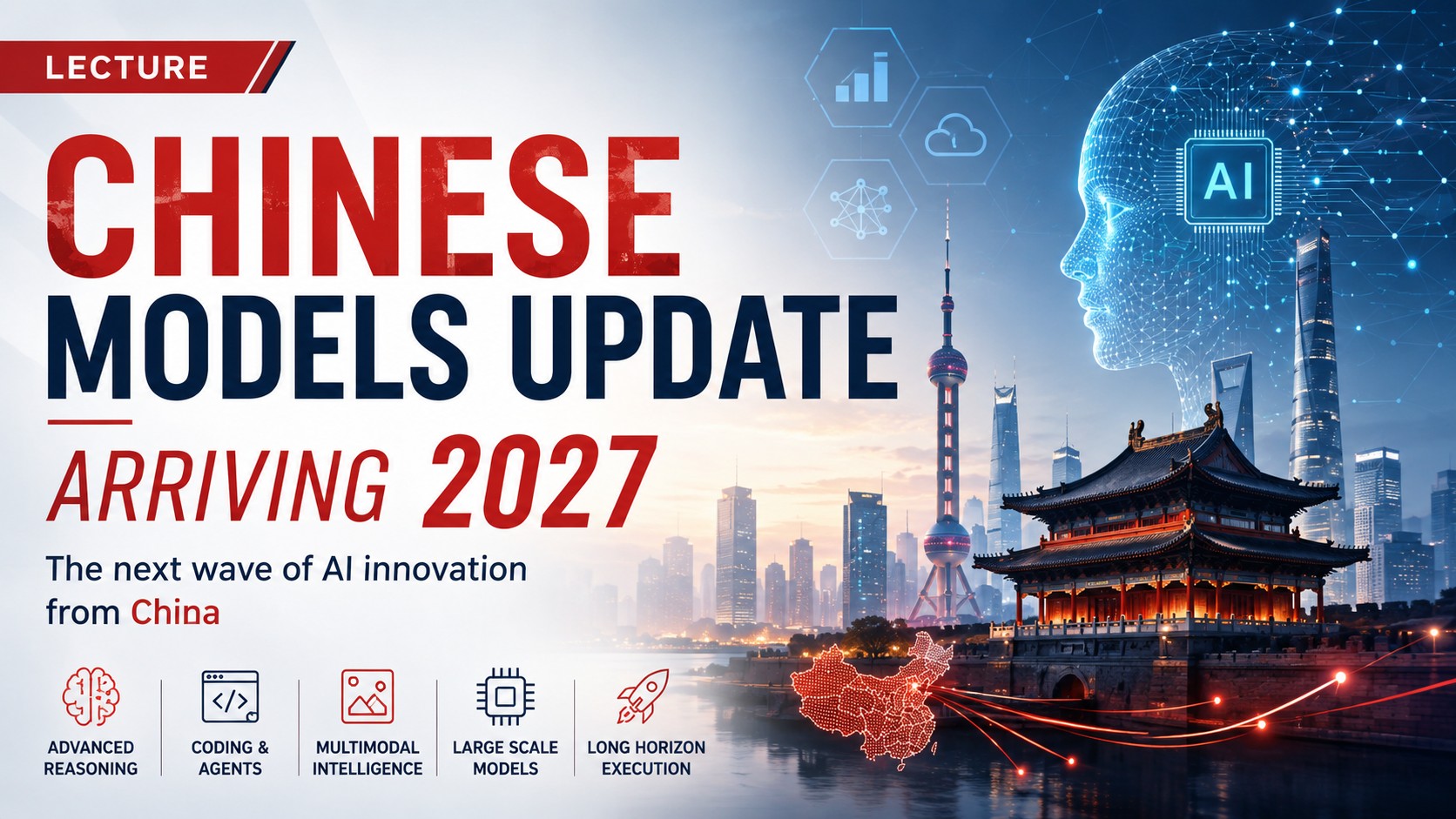
As of August 14, 2026, China’s frontier-AI race has moved well beyond the DeepSeek moment of early 2025. DeepSeek, Alibaba, Moonshot, Z.ai, ByteDance, MiniMax, Xiaomi, Baidu, Tencent and even Meituan are now competing across reasoning, coding, multimodality, long context and autonomous agents. The important question is therefore not simply whether Chinese models are catching up, but what this rapidly accelerating ecosystem is likely to carry into 2027.
Let’s dive deep into it.
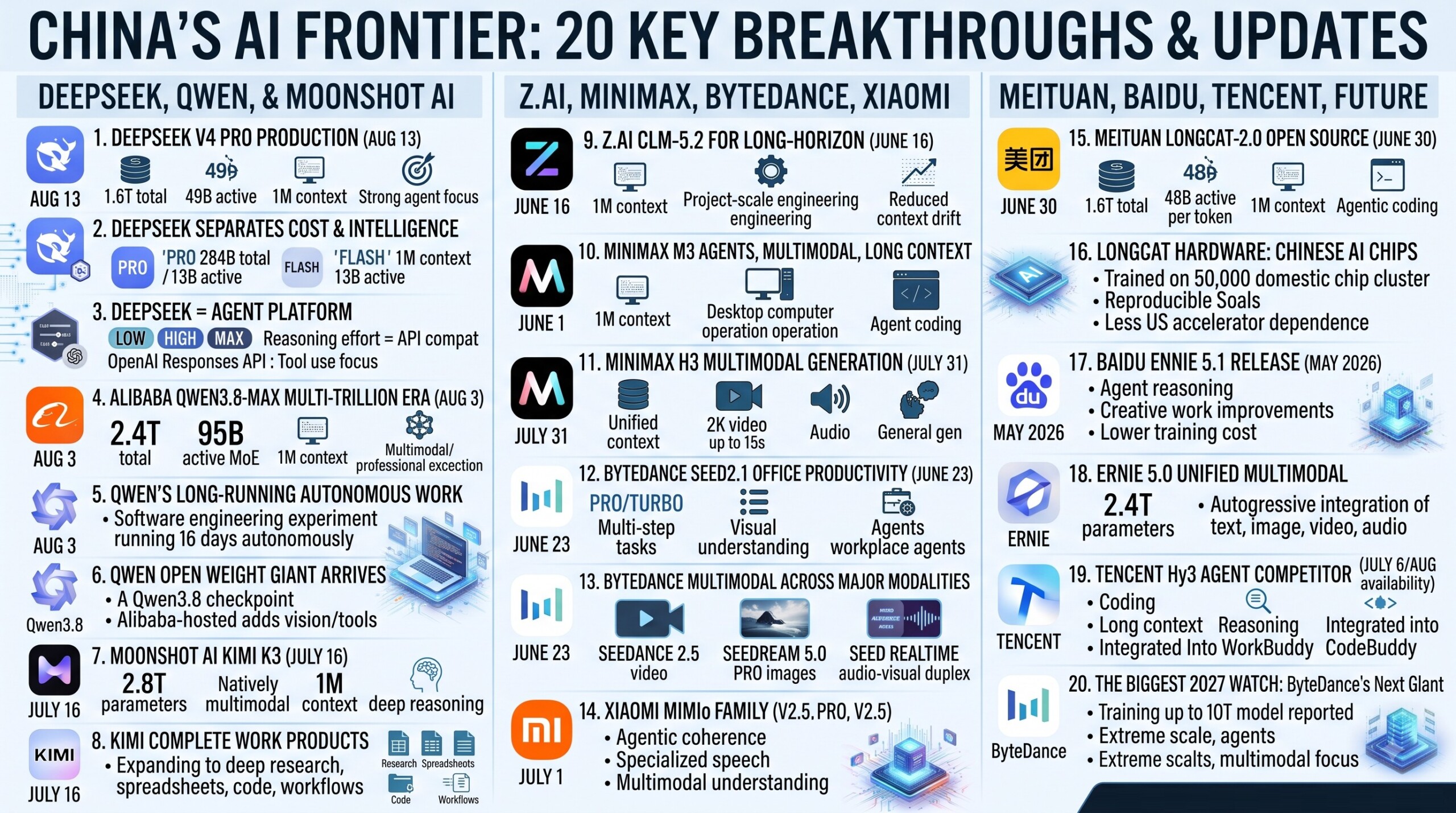
1. DeepSeek V4 Pro is now officially here
DeepSeek released the production version of DeepSeek-V4-Pro on August 13, 2026. The V4 architecture has 1.6 trillion total parameters, about 49 billion active parameters and a 1-million-token context window, while the production update puts particular emphasis on stronger agent performance.
2. DeepSeek is separating intelligence from cost
Alongside V4 Pro, DeepSeek-V4-Flash provides a smaller alternative with 284 billion total and about 13 billion active parameters, while retaining the 1-million-token context window. This Pro/Flash structure shows how Chinese labs are increasingly building different intelligence-cost tiers rather than offering one flagship model for every workload.
3. DeepSeek is becoming an agent platform, not merely a chatbot
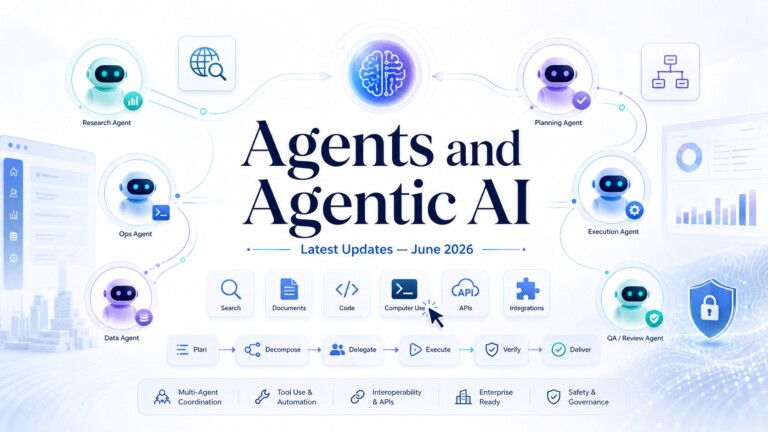
V4 Pro and V4 Flash support selectable low, high and max reasoning effort, while DeepSeek has added native compatibility with the OpenAI Responses API format and integrations aimed at coding-agent workflows. The design priority has clearly shifted toward models that reason, call tools and complete tasks.
4. Alibaba has pushed Qwen into the multi-trillion-parameter league
Alibaba launched Qwen3.8-Max on August 3, 2026, with 2.4 trillion total parameters, approximately 95 billion active parameters through its sparse Mixture-of-Experts architecture and context support reaching 1 million tokens. It is also multimodal and designed for coding, professional work, research and long-horizon execution. An excellent collection of learning videos awaits you on our Youtube channel.
5. Qwen is testing genuinely long-running autonomous work
Alibaba says Qwen3.8-Max completed an internal software-engineering experiment that ran autonomously for 16 days, repeatedly generating code, testing it, examining logs and improving the system. Whatever the benchmark implications, this is an important change in ambition: the target is increasingly days of machine work rather than minutes of chatbot conversation.
6. Qwen’s giant open-weight model has also arrived
The open-weight Qwen3.8-2.4T-A95B checkpoint appeared in August 2026, making a 2.4-trillion-parameter Qwen-Max-class architecture available outside Alibaba’s hosted service. Alibaba’s hosted Qwen3.8-Max remains the richer product, adding features such as vision input, built-in tools and default million-token context handling.
7. Moonshot’s Kimi K3 is even larger
Moonshot AI released Kimi K3 on July 16, 2026. The company describes it as a 2.8-trillion-parameter, natively multimodal model with a 1-million-token context window, specifically aimed at long-horizon coding, knowledge work and deep reasoning.
8. Kimi is expanding from answers to complete work products
Moonshot is increasingly positioning Kimi around practical output: deep research, websites, spreadsheets, presentations, coding and agent workflows. This matters because the competitive unit in 2027 may not be the best answer to a prompt, but the model that completes the largest share of an entire professional workflow. A constantly updated Whatsapp channel awaits your participation.
9. Z.ai’s GLM-5.2 is built explicitly for long-horizon tasks
Released on June 16, 2026, GLM-5.2 offers a 1-million-token context and is optimized for project-scale engineering. Z.ai says the model can work across requirements, implementation and delivery while reducing problems such as context drift and goal forgetting during lengthy tasks.
10. MiniMax M3 combines agents, multimodality and long context
MiniMax M3, released June 1, supports up to 1 million tokens, native multimodal input and agentic coding workflows. MiniMax also says the model can operate a desktop computer, another indication that frontier models are moving from generating text toward acting through software environments.
11. MiniMax H3 is pushing multimodal generation further
MiniMax launched H3 on July 31, 2026 as a general-purpose multimodal generation model capable of understanding text, images, video and audio within a unified context. It can generate video at up to 2K resolution with native stereo audio, with clips up to 15 seconds, showing how Chinese model competition now extends far beyond LLMs.
12. ByteDance Seed2.1 is designed around productivity
ByteDance released Seed2.1 on June 23, 2026 in Pro and Turbo versions. Its focus includes multi-step office work, document and file processing, tool use, software engineering, visual understanding and long-context tasks – capabilities directly suited to workplace agents rather than conventional conversational AI. Excellent individualised mentoring programmes available.
13. ByteDance is building across every major modality
ByteDance’s current model portfolio extends beyond Seed2.1 to Seedance 2.5 for video, Seedream 5.0 Pro for images, Seed Audio 1.0 and SeedRealtime for audio-visual interaction. SeedRealtime, for example, is designed as an audio-visual full-duplex LLM, pointing toward much more natural real-time AI interaction.
14. Xiaomi has become a serious foundation-model player
Xiaomi’s MiMo family now includes MiMo-V2.5-Pro, MiMo-V2.5 and specialised speech models. Xiaomi describes V2.5-Pro around agentic and long-horizon coherence, while V2.5 combines multimodal understanding with agent capabilities and million-token context support.
15. Meituan has entered with a 1.6-trillion-parameter model
Meituan released and open-sourced LongCat-2.0 on June 30, 2026. It contains 1.6 trillion total parameters with roughly 48 billion active per token, supports million-token context and is targeted particularly at agentic coding and long-running tasks.
16. LongCat also matters because of the hardware underneath it
Meituan says LongCat-2.0 was trained on a 50,000-chip cluster using domestically produced Chinese AI chips. If such training becomes reproducible at larger scale, China’s model trajectory into 2027 will depend less exclusively on access to the most advanced American accelerators. Subscribe to our free AI newsletter now.
17. Baidu has reached ERNIE 5.1
Baidu released ERNIE 5.1 in May 2026, emphasizing improvements in agents, reasoning and creative work. Baidu says new training methods allowed it to reach its performance level at a fraction of the pre-training cost of comparable models – another example of China’s strong focus on intelligence per unit of compute and money.
18. ERNIE 5.0 shows where multimodality is heading
Before 5.1, Baidu introduced ERNIE 5.0 as a 2.4-trillion-parameter unified multimodal foundation model trained to integrate text, images, video and audio within a single autoregressive framework. This unified-model direction could become increasingly important as AI moves toward assistants that continuously see, hear, reason and respond.
19. Tencent’s Hy3 brings another major competitor into agents
Tencent officially released Hy3 on July 6, 2026 and expanded its global availability in August. Tencent positions Hy3 around coding, long-context understanding, reasoning and agentic workflows, while integrating the model into products such as WorkBuddy, CodeBuddy and its cloud-agent infrastructure.
20. The biggest 2027 watch may be ByteDance’s next giant model
The Financial Times reported, and Reuters subsequently reported, that ByteDance is training a new foundation model that could reach up to 10 trillion parameters. As of August 2026 it remains in pre-training and ByteDance has not announced an official release date, so a 2027 launch should not yet be treated as confirmed. But it is the clearest indication that China’s next frontier may combine extreme scale with the agent, multimodal and efficiency techniques already visible across the 2026 generation. Upgrade your AI-readiness with our masterclass.
Conclusion
The Chinese AI story heading toward 2027 is therefore larger than DeepSeek. Million-token context, sparse trillion-parameter architectures, open weights, multimodality, coding agents, computer use and long-horizon autonomous execution are appearing simultaneously across multiple Chinese labs. Chinese models are also gaining international attention because openness and aggressive pricing make advanced capability easier to experiment with and deploy. The emerging contest for 2027 will be less about who builds the smartest chatbot and more about which models can reliably perform useful work for hours, days and eventually much longer—with the lowest possible cost and human supervision.