ChatGPT 5.5 launched: From Chatbot to Real-World Work Engine
ChatGPT 5.5 launched: From Chatbot to Real-World Work Engine
Introduction
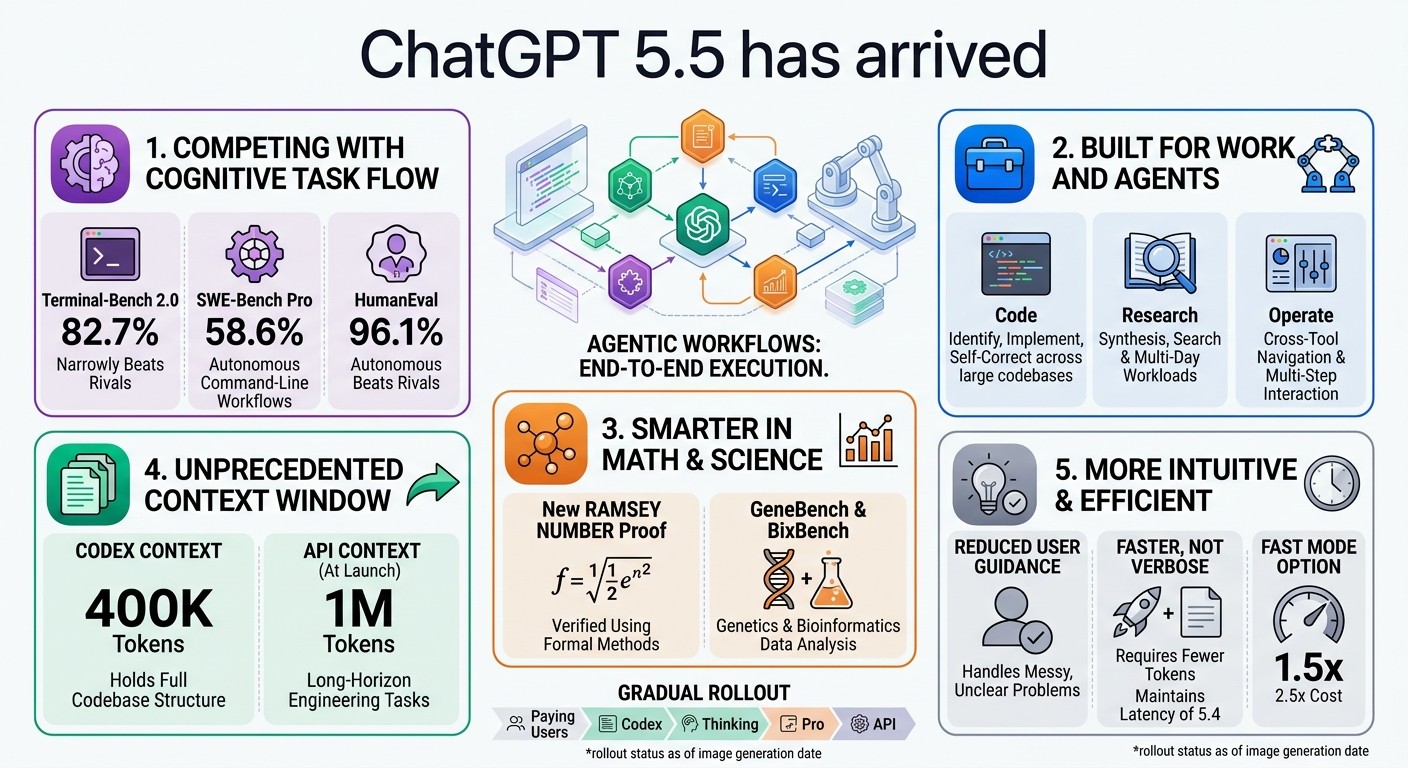
With the release of GPT-5.5, OpenAI is signaling a major shift in how AI systems are designed and used. This is not just another incremental upgrade. GPT-5.5 is explicitly built for real-world work, focusing on complex tasks like coding, research, data analysis, and document-heavy workflows. According to OpenAI, the model is designed to understand goals better, use tools effectively, and persist until tasks are completed, rather than simply generating one-off responses.
What makes this release important is the transition from AI as a conversational assistant to AI as an execution engine. GPT-5.5 is increasingly being used as a collaborator across domains like finance, science, and enterprise operations, where it can analyze large datasets, run workflows, and produce structured outputs with minimal supervision.
10 key insights
1. Designed for complex, real-world work
GPT-5.5 is purpose-built for tasks such as coding, research, document creation, and spreadsheet analysis. It is optimized to operate across tools and workflows, not just generate text.
2. Stronger understanding of tasks with less guidance
Compared to earlier models, GPT-5.5 can grasp user intent earlier and require less step-by-step prompting, reducing the need for micromanagement.
3. Improved agent-like behaviour
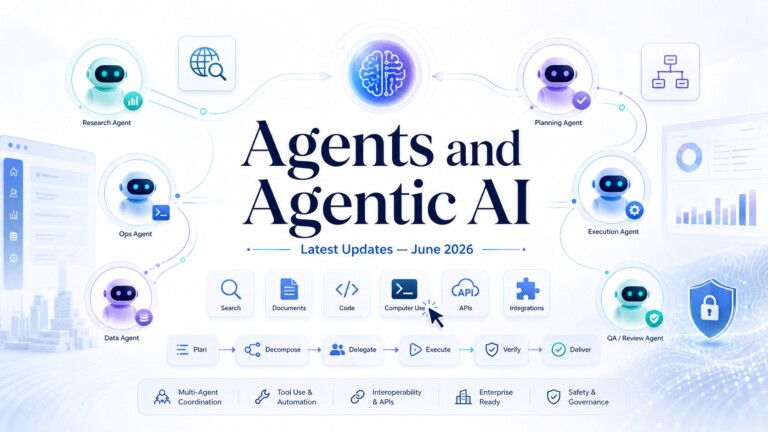
The model can plan, use tools, check its own work, and continue tasks until completion. This makes it closer to an AI agent rather than a chatbot.
4. Better performance in professional workflows
GPT-5.5 excels in coding, research, data analysis, and information synthesis, especially in structured and document-heavy environments.
5. Significant gains in scientific research tasks
The model performs better in multi-step research workflows, including hypothesis testing, data interpretation, and iterative analysis.
6. Demonstrated real enterprise use cases
OpenAI reports practical deployments such as analyzing thousands of financial documents and automating internal workflows, reducing task timelines significantly.
7. Improved reasoning across long workflows
GPT-5.5 is better at persisting across extended reasoning loops, such as moving from question to experiment to conclusion in research scenarios.
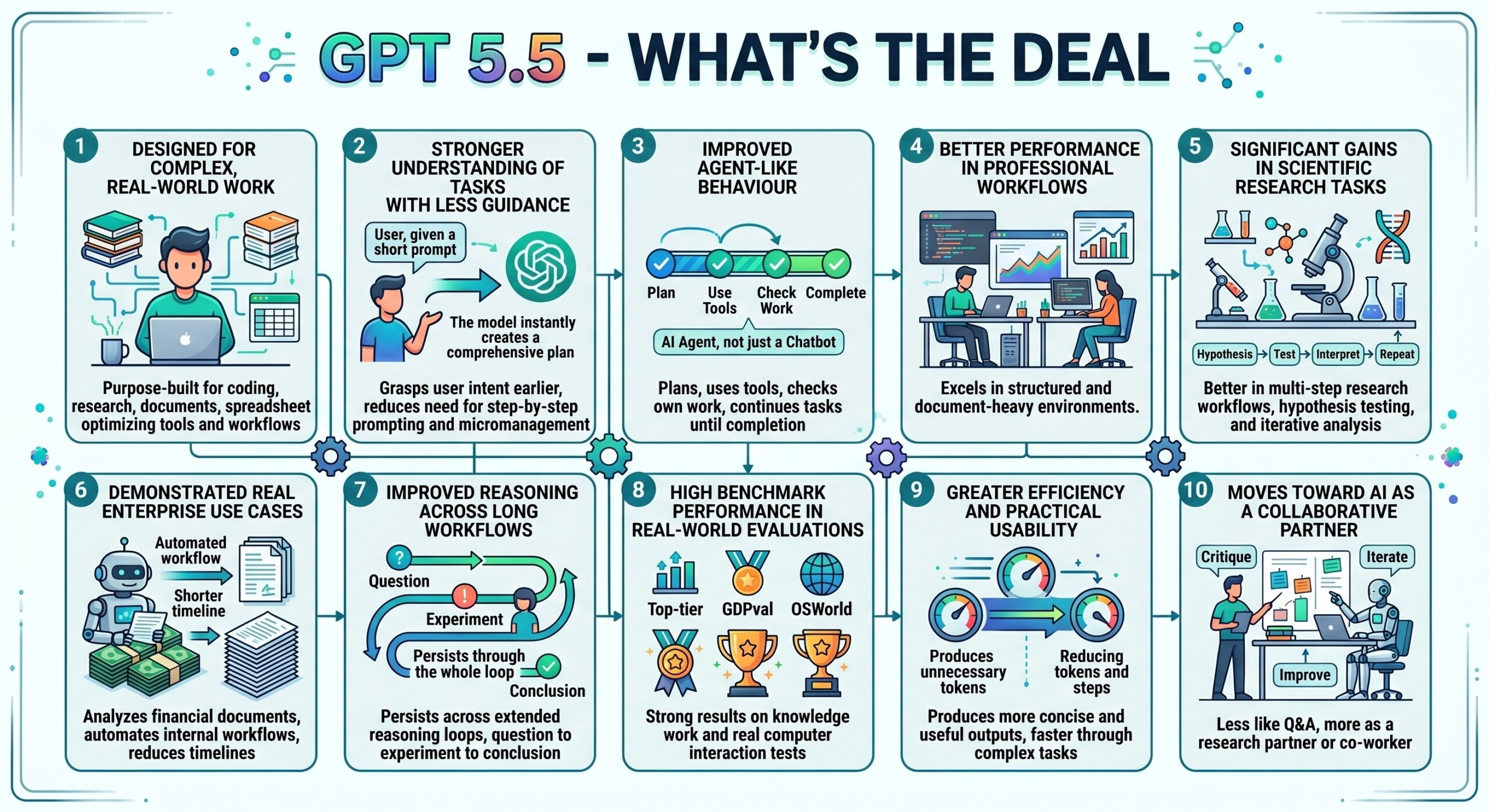
8. High benchmark performance in real-world evaluations
The model achieves strong results on benchmarks like GDPval and OSWorld, which test knowledge work and real computer interaction, not just abstract reasoning.
9. Greater efficiency and practical usability
GPT-5.5 produces more concise and useful outputs, helping users move through complex tasks faster while reducing unnecessary steps and tokens.
10. Moves toward AI as a collaborative partner
Early users treat GPT-5.5 less as a Q&A system and more as a research partner or co-worker, capable of critiquing, iterating, and improving outputs over multiple cycles.
Conclusion
GPT-5.5 represents a clear evolution in artificial intelligence. The focus is no longer just on generating better answers, but on getting meaningful work done. By combining stronger reasoning, tool use, and persistence, OpenAI is pushing toward a future where AI systems act as active collaborators in professional and scientific environments.
The broader implication is significant. As models like GPT-5.5 become more capable of executing workflows independently, the role of humans shifts from doing tasks to guiding, supervising, and integrating AI into decision-making processes. This marks the beginning of a new phase in AI adoption, where the key question is no longer what AI can say, but what it can actually accomplish.